
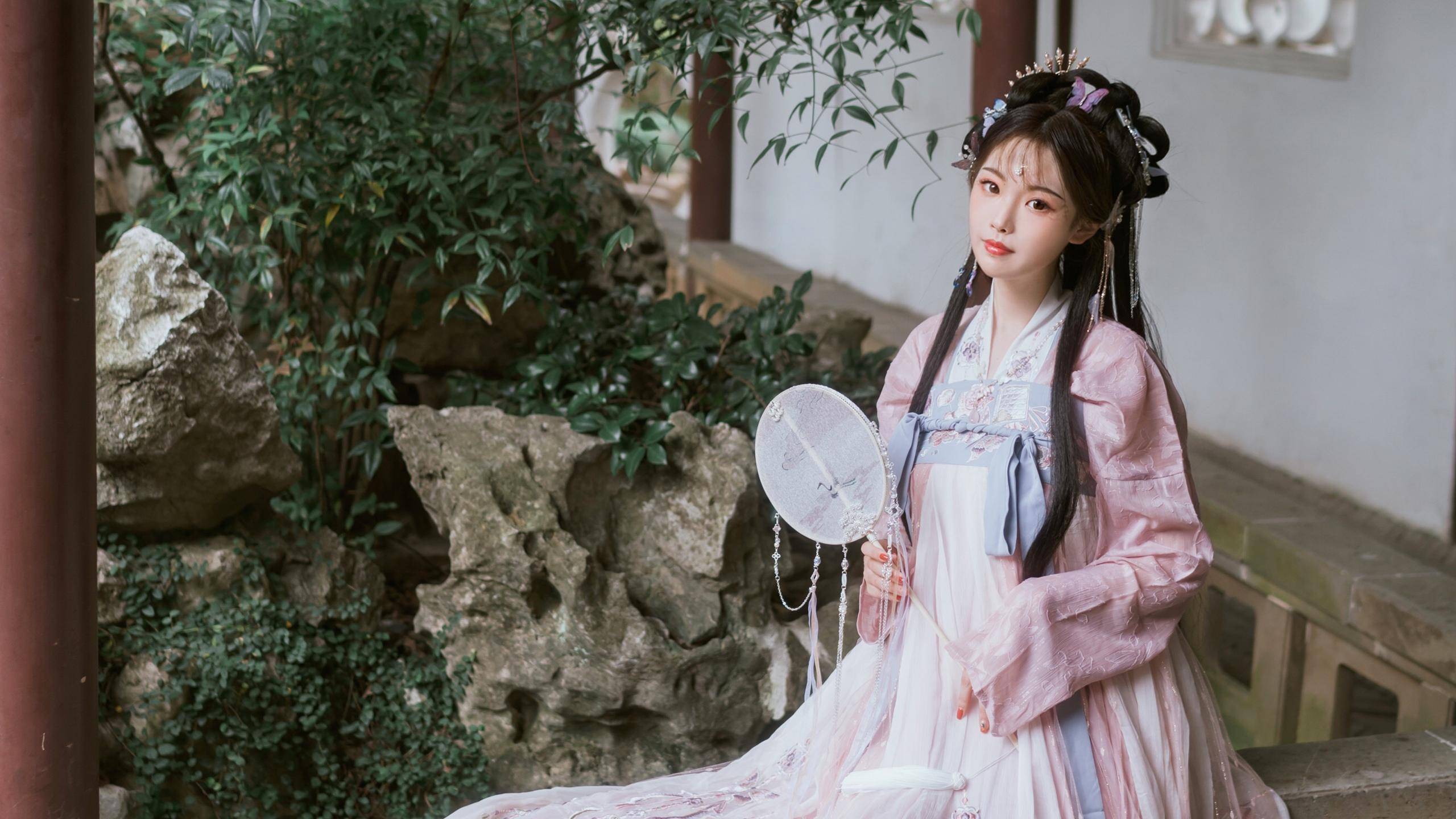
Qingming (清明节), also known as Tomb Sweeping Day, is one of China’s oldest traditional festivals, observed each year around April 4th or 5th. Families visit ancestral graves to clean the tombs, offer food and incense, and pay their respects — a practice rooted in the Confucian value of filial piety that has continued unbroken for over 2,500 years.
But Qingming is not solely a solemn occasion. Its second tradition is equally ancient: tàqīng (踏青), the spring outing. After the graveside rites, families and friends would venture into the countryside to walk among fresh grass and blossoms, fly kites, and welcome the season. This dual character — reverence and renewal — makes Qingming one of the most layered and beautiful festivals in the Chinese calendar.
Cultural context: The word “Qingming” (清明) literally means “clear and bright” — a perfect description of early April skies in much of China. The festival is also one of the 24 Solar Terms of the traditional Chinese lunisolar calendar, marking the moment when the earth warms enough for farming to begin.
Of all the occasions in the Chinese festival calendar, Qingming may be the one that most naturally calls for Hanfu. The outdoor settings — hillside cemeteries, riverside paths, peach orchards in bloom — are exactly the landscapes that classical Chinese poetry and painting have always associated with traditional dress. Wearing Hanfu on Qingming is not a performance; it is a continuation of a visual and cultural language that has always belonged to this day.
For overseas Chinese communities and international Hanfu enthusiasts, Qingming also offers a meaningful entry point into wearing traditional dress in public for the first time — the setting is poetic, the occasion is personal, and the imagery tends to be unforgettable.
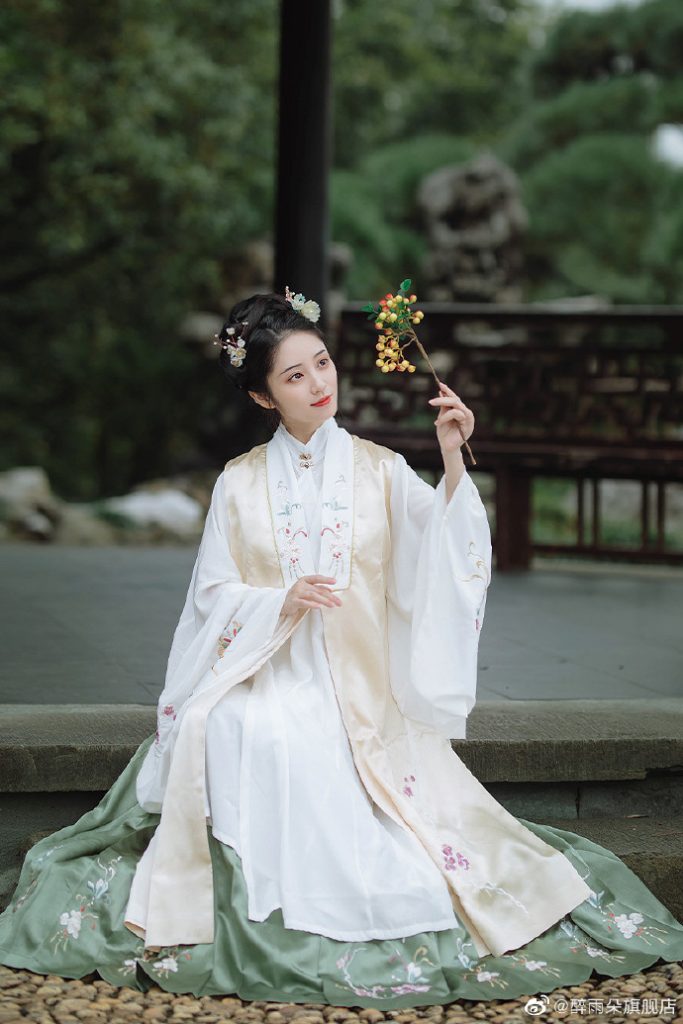
The ideal Qingming outfit balances three practical considerations: it is appropriate for a solemn ancestral rite, comfortable enough for outdoor walking, and suited to the mild, sometimes unpredictable weather of early April. Here are the forms that work best:
- Song-style Ruqun (宋制襦裙): The refined proportions and muted palette of Song-dynasty Ruqun feel especially fitting for Qingming. The layered collar and modest silhouette convey quiet elegance without formality.
- Beizi (褙子) over inner garment: An open-front Beizi layered over a simple ruqun or zhongyi is ideal for changeable spring temperatures — easy to remove and carry as the afternoon warms.
- Ming-style Mamianqun (马面裙): The structured pleats and dignified bearing of the Ming pleated skirt suit the ceremonial aspect of graveside visits. Pair with a plain cross-collar top for a balanced look.
- Zhiduo (直裰) for men: A Ming-dynasty Zhiduo in undyed linen or natural hemp is understated, historically appropriate, and practical for a full day outdoors. Add a simple waist sash to complete the look.
Colour choice matters deeply on Qingming. The day carries a dual mood — the quiet gravity of remembrance and the light-hearted spirit of tàqīng — and your outfit can honour both. The traditional palette for this festival leans toward the natural and understated, with careful avoidance of certain colours associated with celebration.
Recommended colours for Qingming: willow green (柳绿), undyed linen white (本白), mist blue (烟蓝), stone grey (石灰), dry reed (枯苇), pale lavender (浅紫), and sage green (艾草).
What to avoid: Bright red (大红), vivid orange, and heavily embroidered festive patterns are traditionally associated with celebratory occasions such as weddings and New Year. On Qingming, especially during the graveside portion of the day, these colours are considered inappropriate. Opt instead for natural dye tones, ink-wash prints, and botanical motifs.
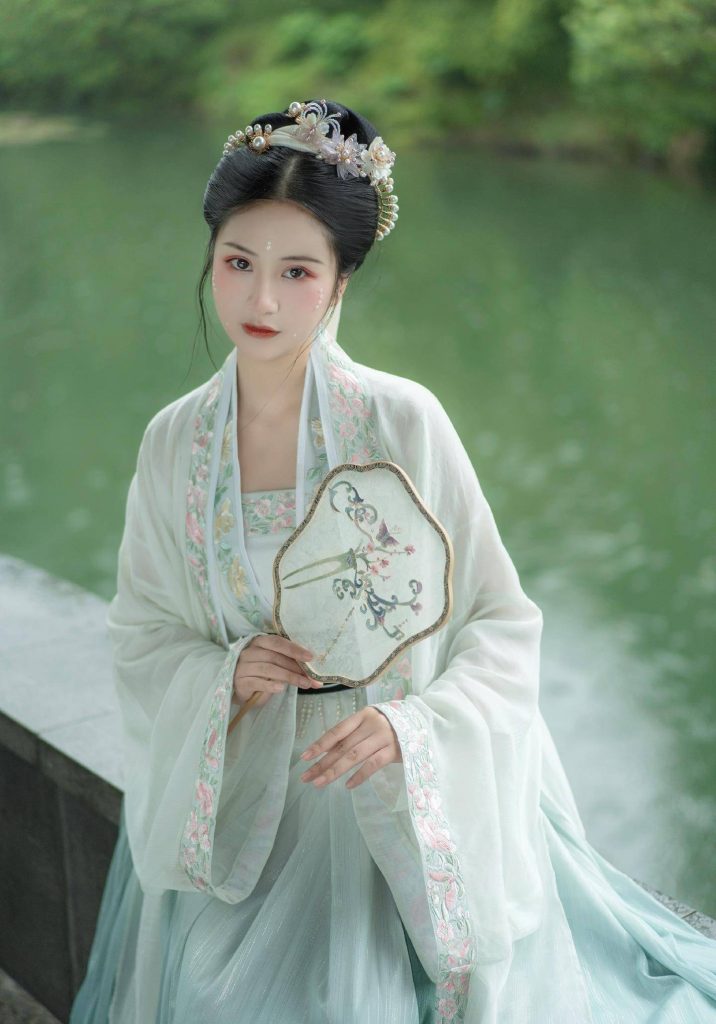
Early April weather varies enormously by region. A Qingming outing in Jiangnan may be mild and overcast; in northern China, mornings can still carry a chill. Plan your layering accordingly:
- Morning (graveside): Layer up — light cotton zhongyi under a linen or ramie outer garment. Bring a beizi or half-arm to add warmth.
- Afternoon (tàqīng walk): Remove outer layers as needed. Thin ramie or cotton chiffon moves beautifully in spring wind and photographs well in open light.
- Evening (if applicable): Temperatures drop quickly after sunset in April. A structured Ming-style outer robe in heavier cotton provides both warmth and elegance.
- Base layer: white or cream zhongyi with cross-collar neckline, visible at the cuffs and collar.
- Main garment: Song-style ruqun in willow green or mist blue linen, high-waist skirt tied just below the chest.
- Outer layer: light beizi in undyed linen or pale grey — worn open-front, providing warmth without bulk.
- Hair: half-up style with a simple jade or wood hairpin. A small silk flower (绒花) in white or pale green adds a delicate seasonal touch.
- Accessories: minimal — a small embroidered pouch at the waist and a folding fan if the afternoon turns warm. Avoid heavy pendant belts for a full day of walking.
- Base layer: white cross-collar shirt (直领中衣), worn as the inner layer visible at the neckline.
- Main garment: Ming-style Zhiduo in natural hemp or undyed linen. The open front and long silhouette are both practical and deeply traditional for outdoor scholarly walks.
- Waist: a simple woven sash (腰带) in dark brown or ink grey. No pendant belt needed.
- Footwear: round-toe cloth shoes in black or dark navy. Avoid heavily embroidered festival shoes.
- Optional: a folding fan (折扇) carried tucked into the waist sash — a classical scholar’s accessory that is both functional and historically resonant.
| Consideration | Recommendation |
|---|---|
| Footwear | Choose cloth-soled shoes with a flat or low platform sole. Avoid highly embroidered or delicate shoes on grassy or uneven cemetery terrain. |
| Skirt length | A floor-length skirt is beautiful but impractical for hillside walks. Consider a mid-length (ankle) option, or pin the hem temporarily with a small clip when climbing. |
| Wind | April wind can be strong. Use discreet hair clips to secure hairpins, and choose fabrics with enough weight to drape without flying. Avoid very wide sleeves on particularly windy days. |
| Smoke from incense | Natural fibres absorb incense smoke more readily than synthetic fabrics. Air your garments thoroughly after the graveside ceremony before continuing to your afternoon outing. |
| Photography | Soft overcast light (common in Qingming weather) is ideal for photographing Hanfu. Avoid harsh midday sun, which flattens fabric texture. Early morning and late afternoon light are best. |
For Chinese diaspora communities in Southeast Asia, North America, Australia, and Europe, Qingming is often observed at local Chinese cemeteries or memorial gardens — and increasingly, participants are choosing to wear Hanfu for the occasion. The visual impact of traditional dress in these settings carries particular meaning: it connects the act of remembrance to an unbroken cultural thread that stretches back millennia.
Even in places far from China, the Qingming outing tradition translates naturally. A walk in a botanical garden, a picnic under cherry blossoms, or a visit to a local park with friends — all of these are legitimate expressions of tàqīng spirit, and all are made more meaningful by dressing with intention.
A note on cultural respect: If you are not of Chinese heritage but wish to wear Hanfu on Qingming, the community is generally welcoming of sincere cultural engagement. Approach the day with curiosity and respect, dress in keeping with the occasion’s tone, and avoid treating traditional dress as a costume. The spirit of Qingming — gratitude, memory, and the quiet joy of spring — belongs to anyone willing to sit with it.
A full day outdoors — including incense smoke, fresh grass, and spring pollen — means your garments will need careful attention after wearing:
- Air first: Hang your garments outside or near an open window for several hours before washing. This removes the majority of incense odour without exposing delicate fabrics to unnecessary washing cycles.
- Spot treat stains: Grass stains on hem edges respond well to cold water and a gentle enzyme detergent applied immediately. Do not rub — blot firmly and let it soak for 10–15 minutes before rinsing.
- Wash gently: Hand wash in cold water, or use a mesh bag on a delicate machine cycle. Linen and ramie may wrinkle more than polyester — this is normal and part of the character of natural fibres.
- Dry carefully: Lay flat or hang in shade. Natural fibres can lose shape if hung while heavily wet — support the garment’s weight by folding it over a wide hanger or drying rack.
Qingming comes once a year, arriving reliably in the first week of April with its particular quality of light and air. Wearing Hanfu on this day is not a grand gesture — it is a quiet one. A choice to show up to the past in clothes that speak its language, and to walk into spring carrying something that has always belonged to this moment.