
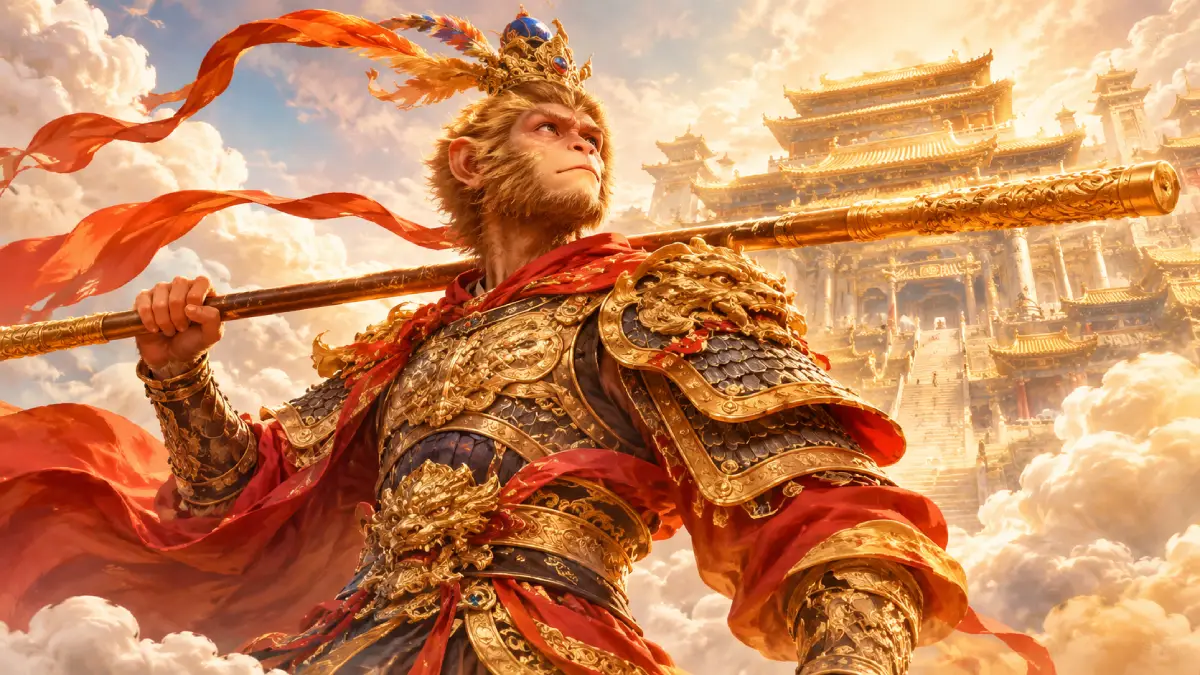
Is Sun Wukong a god? The short answer: it depends on which tradition you ask. In the novel Journey to the West, Sun Wukong begins as a stone-born monkey who becomes an immortal and a rebel against Heaven, and he ends the story as a Buddha. In Chinese folk religion, he is worshipped as a real deity in temples across Fujian, Taiwan, Hong Kong and Southeast Asia. So he is a god in some senses and a fictional character in others, and the full answer is more interesting than a simple yes or no.
Sun Wukong (孙悟空), known in English as the Monkey King, is the main character of Journey to the West, a Chinese novel attributed to Wu Cheng’en and published in the Ming dynasty. The story is loosely based on the real pilgrimage of the Tang dynasty monk Xuanzang, who traveled to India to bring Buddhist scriptures back to China.
In the novel, Sun Wukong is born from a magical stone on Flower-Fruit Mountain. He becomes king of the monkeys, studies Taoist arts under the sage Patriarch Subhuti, and gains extraordinary abilities. His name “Wukong” was given to him by his teacher, and it is often translated as “awakened to emptiness,” a Buddhist idea that foreshadows where his story ends.
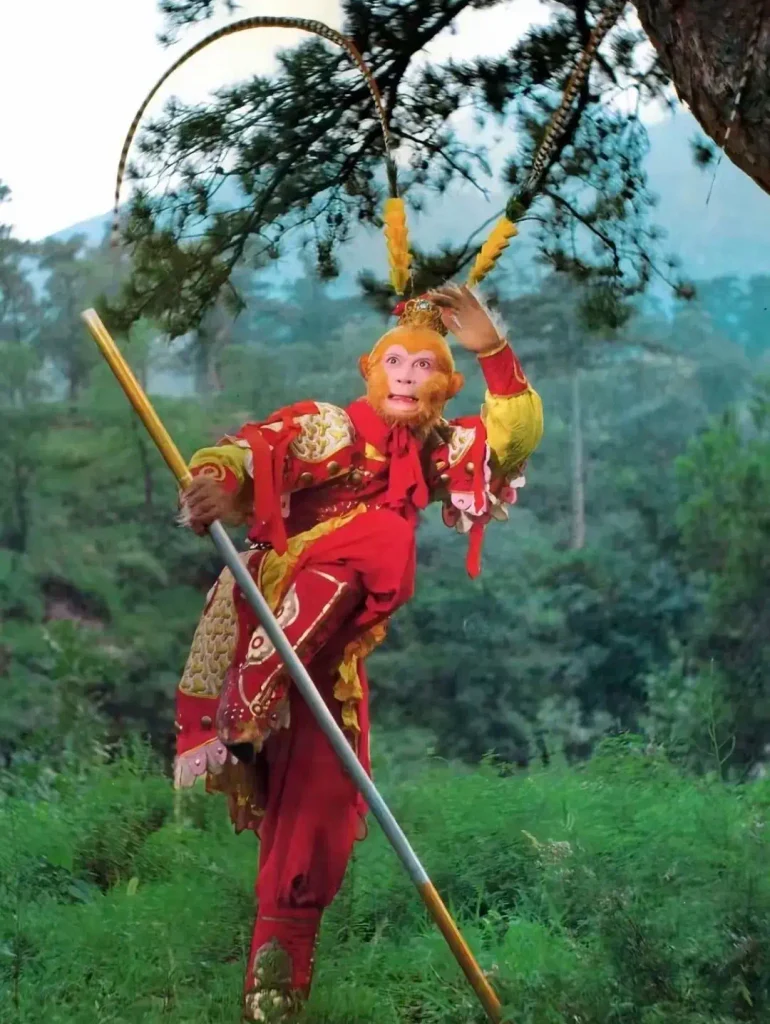
In the first part of the novel, Sun Wukong is an immortal rather than a god in the strict sense. He learns Taoist techniques for long life, and he later makes himself even harder to kill by eating the peaches of immortality in the Heavenly Court and swallowing Laozi’s elixir pills.
The Heavenly Court then tries to manage him by giving him official posts. First he is made keeper of the imperial stables. When he finds out how low that rank is, he rebels and declares himself the Great Sage Equal of Heaven. Heaven answers with an honorary title that carries no real power, and Wukong eventually causes chaos across the heavens until the Buddha traps him under a mountain for five hundred years.
So in the Taoist-flavored first act, Wukong is a powerful immortal who holds a heavenly rank, but he is also the one challenging the gods, not obeying them.
This is where the story gives its clearest answer. After Wukong completes the long journey west and protects the monk Tang Sanzang through eighty-one trials, the Buddha rewards him with a new title: the Victorious Fighting Buddha (斗战胜佛).
That makes him a Buddha, not a god in the Taoist sense. The difference matters. In Chinese religious thinking, gods (神) and immortals (仙) live inside the cosmic order, while a Buddha has gone beyond it. Wukong’s journey is the story of a restless, proud being learning discipline, and the final title is the reward for that growth.
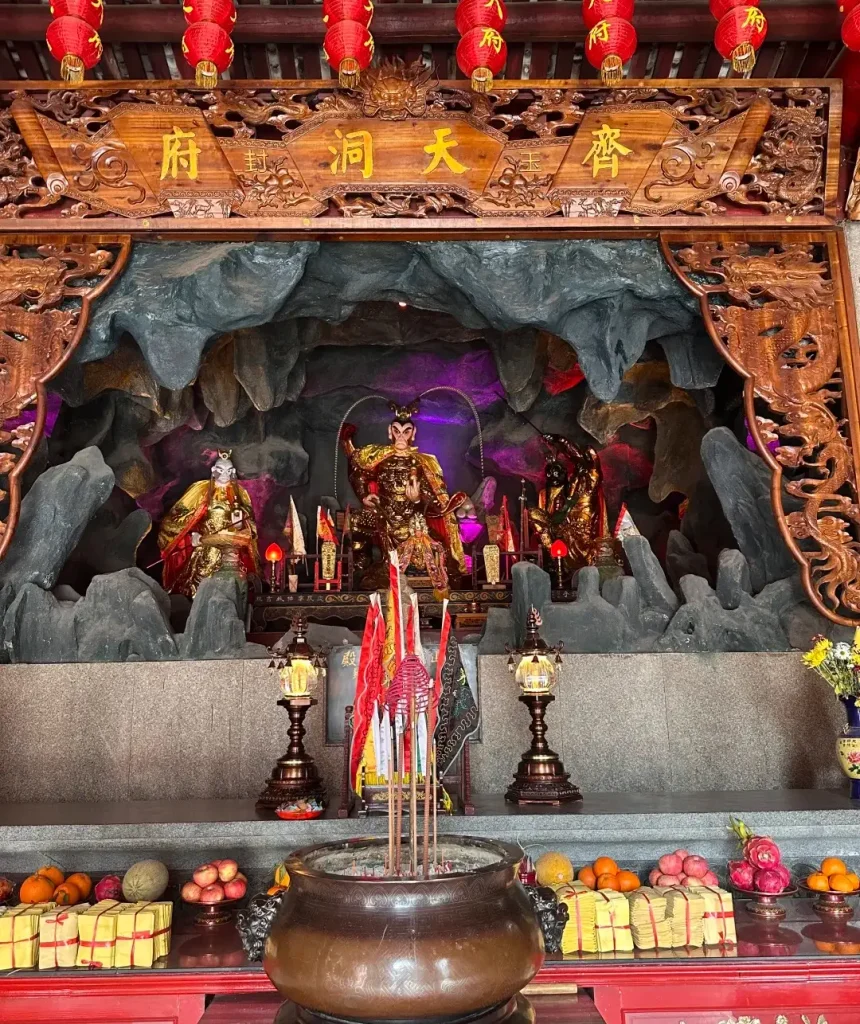
Outside the novel, yes, in a real religious sense. Sun Wukong is worshipped as a deity in parts of southern China, Taiwan, Hong Kong, Singapore and Malaysia, usually under his title Qitian Dasheng (齐天大圣), the Great Sage Equal of Heaven.
Worshippers pray to him for protection, for healing, and for help with problems that need courage and quick wits. Some temples hold festivals on his birthday. This tradition developed over centuries, and it blends the literary character with older monkey-spirit beliefs. To believers, he is not a character in a book. He is a living deity.
Part of the reason people ask whether he is a god is that his abilities look divine. Here are the best-known ones from the novel.
| Power | What It Does |
|---|---|
| 72 Transformations | Turns into animals, objects or people |
| Cloud Somersault | Travels about 108,000 li in one leap |
| Ruyi Jingu Bang | A staff that changes size at will |
| Fiery Golden Eyes | Sees through disguises and demons |
| Hair Cloning | Turns plucked hairs into copies of himself |
| Near-Immortality | Very hard to kill after stealing the elixirs |
Even with all of this, Wukong is not all-powerful. He is defeated by the Buddha, he struggles against some demons who have connections to higher beings, and he often has to ask Heaven or the bodhisattva Guanyin for help. In this story, power alone does not make someone a god.
Many English-speaking readers notice how similar Sun Wukong is to Hanuman, the monkey deity of the Indian epic Ramayana. Both are clever monkeys, both are very strong, both can change their size, and both serve a holy figure on a long journey.
Scholars have argued about this for a long time. Some believe Hanuman influenced the Monkey King, since Buddhist texts and stories moved between India and China for centuries. Others argue that Wukong grew out of Chinese monkey legends and folk tales. There is no settled answer, and the most careful position is that the two characters share traits while remaining very different in personality and religious role.
The biggest difference is the religious setting each one belongs to. Hanuman is a widely worshipped deity in Hinduism, best known for his devotion to Rama, though the stories about his childhood show a playful and mischievous side too. Sun Wukong is a literary hero first and a folk deity later, and his story is built around a rebellious figure slowly learning discipline. The two share a recognizable type of character, but they come from different cultures, with different meanings and different roles.
The title Great Sage Equal of Heaven is something Wukong first gives himself. It claims that he is as great as Heaven itself, which is a bold challenge to the Jade Emperor. The Heavenly Court then grants it as an empty honor, hoping to calm him down without giving him real authority.
That title is why folk worshippers call him Qitian Dasheng today. It captures the part of his character that people admire the most: he refuses to accept a lower place just because he was told to.
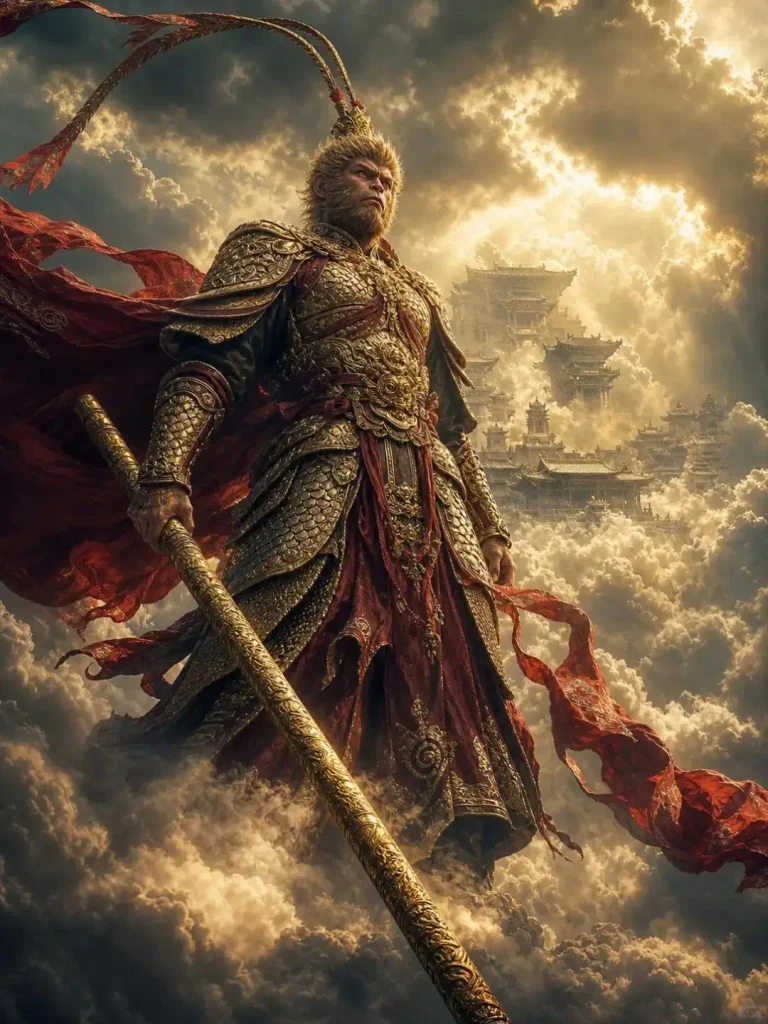
The novel describes Wukong’s clothing in surprising detail. When he visits the Dragon King of the East Sea to find a weapon, he leaves with a phoenix-winged purple-gold crown, a suit of golden chain armor and a pair of cloud-walking boots. Later, on the road west, he is known for the tiger-skin skirt he makes after killing a tiger.
The Heavenly Court around him is modeled on an imperial government, with ranks, titles, ministers and ceremonial dress. Readers in the Ming era would have recognized this world from their own court and officials. This is also why stage, TV and animated versions of the story are rich sources of costume ideas: designers often draw on historical Chinese clothing for the heavenly officials and kings, while the Monkey King himself gets a more stylized look. If you like seeing how mythology and traditional dress overlap, those adaptations are a good place to start.
Is Sun Wukong a god in the novel?
He starts as an immortal with a heavenly rank and ends as a Buddha, so he is a divine being by the end of the story.
Is Sun Wukong a real god?
In fiction, he is a character. In Chinese folk religion, many people worship him as a real deity.
Is Sun Wukong stronger than the gods?
He defeats many heavenly soldiers, but the Buddha stops him easily, so he is not the strongest being in the story.
Is Sun Wukong the same as Hanuman?
No. They are separate characters from separate traditions, though they share some traits and scholars still discuss a possible link.
So, is Sun Wukong a god? In the world of Journey to the West, he moves from monkey to immortal to rebel to Buddha. In the temples of southern China and Southeast Asia, he is a god people pray to. And in modern pop culture, he is one of the most recognizable figures in Chinese storytelling.
If you enjoy Chinese mythology and the historical world behind it, Journey to the West is a good place to see how people of the Ming era imagined power, order and rebellion.