
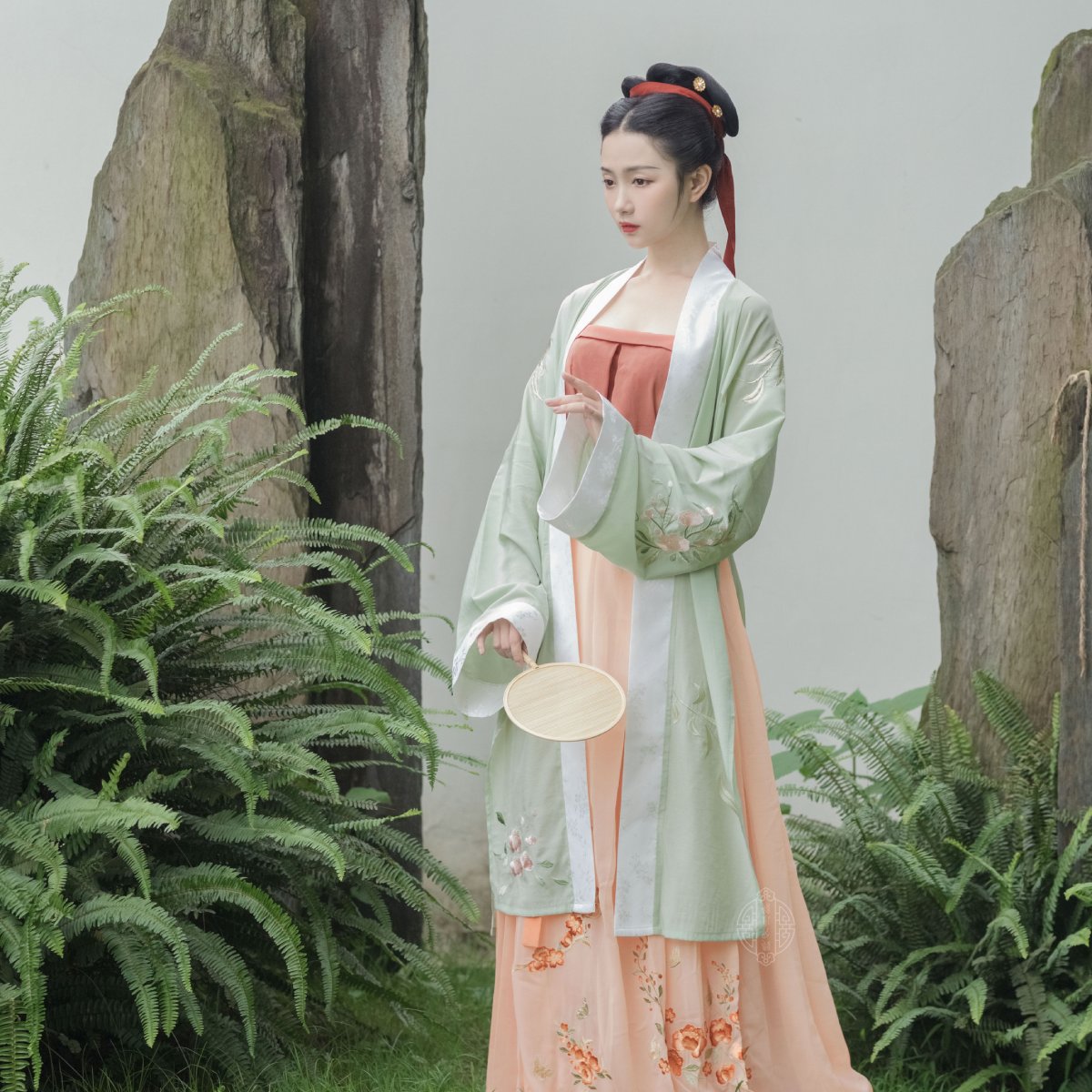
Intro: Of all the garments in the Hanfu wardrobe, few have proven as timeless or as versatile as the Beizi. Worn by empresses and maidservants alike, this elegant open-front coat quietly defined Chinese fashion for over a thousand years.
- Chinese Name: 褙子 (Bèizi) .
- Origin: Reached its peak during the Song Dynasty (960 -1279 CE), with roots in the Sui–Tang era.
- Core Features: Straight parallel collar (对襟, Duìjīn), open front, and side slits.
- Gender: Historically worn by both men and women across all social classes.
- Ming Dynasty Variant: Known as “Pīfēng” (披風).
- Modern Use: A staple piece for contemporary daily Hanfu styling and layering.
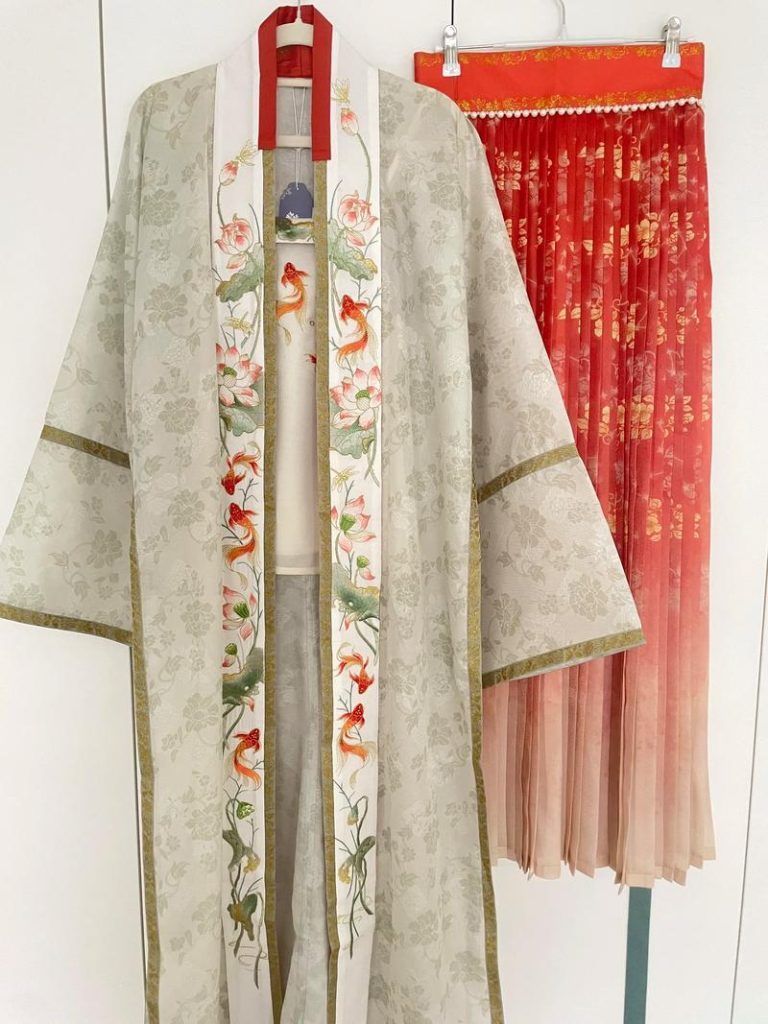
Beizi is a traditional Chinese outer garment falling somewhere between a robe and a coat. It is structured enough for formal occasions yet relaxed enough for daily life.
At its core, the Beizi is defined by three visual features:
- Duijin Collar (对襟): Two parallel front panels that hang open without overlapping or fastening at the chest.
- Side Slits: Open seams that begin near the armpit and extend the full length of the garment.
- Long Sleeves: These range from narrow and practical to dramatically wide, depending on the specific style.
Pronunciation Tip: Bèizi is pronounced with a “z” that sounds like the “ds” in “reads.”
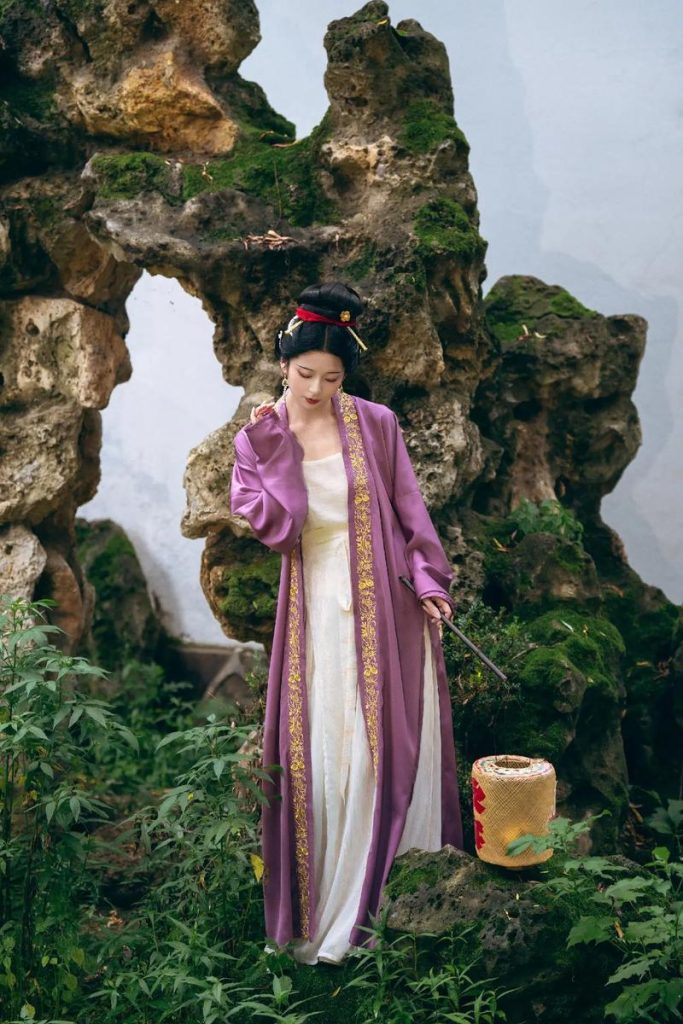
The Beizi evolved gradually over several centuries:
- Sui & Tang Dynasty (581–907 CE): The earliest precursor was a short, often sleeveless outer vest called the Banbi.
- Song Dynasty (960 -1279 CE): This was the “Golden Age” of the Beizi. It became the defining outer garment of the era, used as formal dress for women and informal wear for men.
- Ming Dynasty (1368–1644 CE): The garment was renamed Pīfēng. It featured heavier fabrics and more elaborate embroidery, often used as semi-formal wear.
- Modern Revival: Today, it is one of the most frequently worn silhouettes in the Hanfu movement due to its versatility with modern clothing.
| Style | Dynasty | Key Characteristics |
|---|---|---|
| Wide-Sleeve Beizi | Song | Iconic sweeping sleeves and long body; often has decorative border trim. |
| Narrow-Sleeve Beizi | Song | Practical variant with fitted sleeves; popular for daily work and activity. |
| Pifeng | Ming | Heavier fabrics and richer embroidery; often worn over a full jacket and skirt. |
| Banbi | Tang | A short-sleeved or sleeveless predecessor worn as an outer vest. |
Unlike the crossover collars of other Hanfu types, the Duijin collar hangs straight. It is often held together by a pair of silk ribbons tied at the chest, though it is frequently left open to show inner layers.
The side slits create four panels that flow separately, allowing for full freedom of movement even in floor-length versions.
A hallmark of quality is the Xiāngbiān—contrasting or embroidered fabric strips running along the collar, cuffs, and hem.
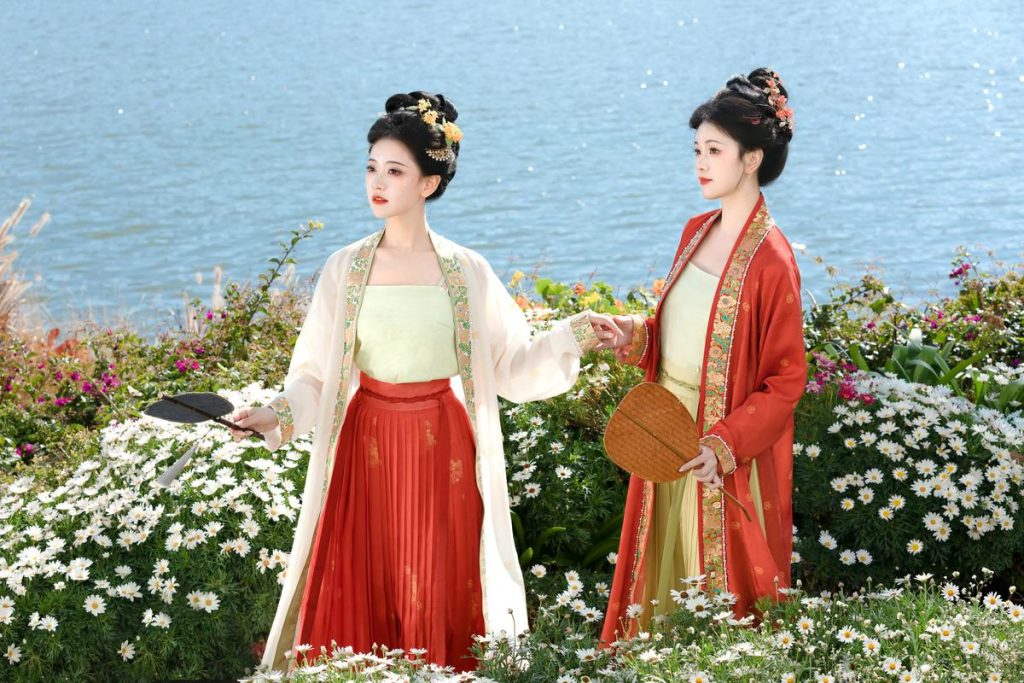
- Song-Style: Pair a wide-sleeve Beizi with a pleated Mamianqun or plain Ruqun in pale tones.
- Ming-Style: Layer a Pifeng over an Aoqun (jacket + skirt) for formal events in cooler weather.
The Beizi works exceptionally well as a “gateway” piece over contemporary clothes:
- Casual: Wear a long linen Beizi over a simple t-shirt and wide-leg trousers.
- Summer: Layer a lightweight silk Beizi over a sundress for added elegance.
Can men wear Beizi?
Yes. Historically, men in the Song Dynasty wore it as casual at-home clothing (Bianfu).
How is Beizi different from a Kimono?
Beizi features a straight parallel-collar open front and characteristic side slits from the armpit to the hem, which are distinct from the construction of Japanese robes.
Is it suitable for daily wear?
Absolutely. Narrow-sleeve versions in cotton or linen are among the most practical Hanfu options for everyday life today.
The Beizi has endured for over a millennium because it is at once formal and relaxed, structured and flowing. Its aesthetic perfectly embodies the Song Dynasty’s ideals of restraint, elegance, and quiet refinement.