

From ancient record-keeping to modern lucky bracelets, the Chinese knot carries thousands of years of culture in a single length of cord. Here’s everything you need to know.
A Chinese knot (中国结, Zhōngguó jié) is a decorative handicraft woven entirely from a single, unbroken length of cord. Two cords enter from the top of the knot, two exit from the bottom — creating a symmetrical, double-layered structure that holds its shape without glue or wire. Beads, jade stones, and tassels are often added as finishing touches.
What separates Chinese knots from ordinary decorative rope work is their depth of meaning. Each knot shape has a specific name, and each name carries a specific cultural wish — for luck, love, longevity, or protection. The knot itself, made from one continuous cord, is a visual metaphor for unbroken connection.
Red is by far the most traditional color, linked to luck and celebration in Chinese culture. But knots are crafted in every color, each carrying its own symbolism.
Long before paper or characters existed, ancient Chinese people used knotted cords to record events and govern communities. The Yi Jing (I Ching, ~168 BCE) describes it directly: “big events were recorded with complicated knots; small events with simple knots.”
Bone tools used specifically for tying and untying knots have been dated to at least 100,000 years ago. The oldest decorative knot artifact — a woven rattan piece featuring a double coin knot pattern — has been traced to China’s Liangzhu culture, roughly 4,000 years ago.
By the Tang Dynasty (618–907 CE), Chinese knots had become a mark of social standing. They adorned imperial furniture, court clothing, and gift packages sent to foreign dignitaries. A 7th-century Japanese emperor was reportedly so taken with Chinese knotted gifts that he encouraged his people to adopt the practice — giving rise to Japan’s own tradition, hanamusubi.
The Ming and Qing Dynasties (1368–1911) were the craft’s golden age. Elaborate flower knots appeared on jade pendants, embroidered bags, fans, parasols, and the waistbands of women’s robes. The craft had spread from imperial courts to every level of society.
By the early 20th century, Chinese knotting had nearly vanished. The only living practitioners were in isolated villages in China and Taiwan.
The rescue came through one woman: Lydia Chen (陈夏生), a researcher at the National Palace Museum in Taiwan. Beginning in the 1960s, she systematically documented surviving techniques. Her 1971 book Chinese Knotting sparked a worldwide revival that continues today. Chinese knots are now collected, practiced, and gifted across Asia, Europe, and North America.
In Chinese, the character 结 (jié) — “knot” — carries a cluster of meanings: reunion, warmth, friendship, marriage, love. Giving someone a Chinese knot isn’t just handing them a decorative object. It’s a statement of intent.
Core symbolic themes:
- Good fortune — present in almost every knot type
- Love and marriage — knots as romantic gifts and wedding decorations
- Longevity — key in knots given to elders and the elderly
- Unity — the single unbroken cord is itself the metaphor
- Protection — especially in red string knots worn on the body
| Color | Symbolic Meaning |
|---|---|
| 🔴 Red | Luck, happiness, celebration — the universal choice |
| 🟡 Yellow / Gold | Wealth, prosperity, imperial nobility |
| 🟢 Green | Health, longevity, harmony |
| 🔵 Blue | Reunion, happiness, tranquility |
| 🟣 Purple | Wisdom, success, nobility |
The red string lucky knot is the most internationally recognized form of Chinese knotting. Worn as a bracelet or anklet, it draws from an ancient folk belief: red cord protects the wearer from bad luck and illness while inviting good fortune in.
This practice crosses many traditions — Chinese folk belief, Buddhist culture, and broader East Asian custom. Red string bracelets are given at birth, during recovery from illness, at New Year, and between close friends or romantic partners. A handmade red lucky knot carries far more weight than anything mass-produced.
Eight loops, eight “ears,” no visible beginning or end. This is the most iconic Chinese knot, and a central symbol in Buddhism where it’s known as the Endless or Mystic Knot. It represents continuous good fortune and eternal connection. Widely used in fine jewelry and wall hangings.

Two overlapping circles that resemble ancient Chinese bronze coins. Symbolizes wealth and love. A silk painting featuring this pattern was found in the 2,000-year-old Mawangdui tombs, where it was connected to the gods of marriage. Popular in pendants and earrings.
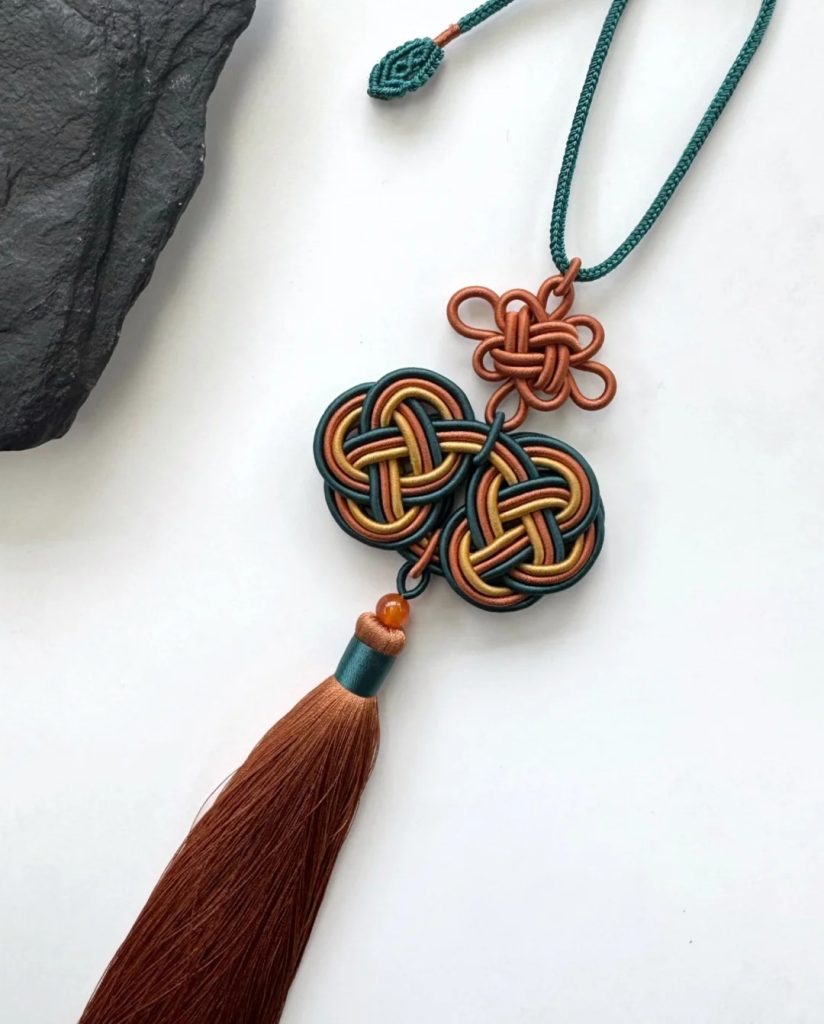
Its name, 吉祥 (jíxiáng), literally means “lucky and auspicious.” A variation of the cross knot, it’s one of the most common decorative knots given as gifts and hung in homes or offices to attract positive energy.

Ruyi (如意) means “as you wish” — an expression of the deepest possible goodwill. This knot symbolizes fulfillment of one’s heart’s desires. A classic gift for friends, family, and business associates.

Shaped like a four-leaf clover, this knot is recognized across cultures as a lucky charm symbol. Tang Dynasty paintings show it hanging from palace furniture. Used in belt accessories and traditional garment decoration.
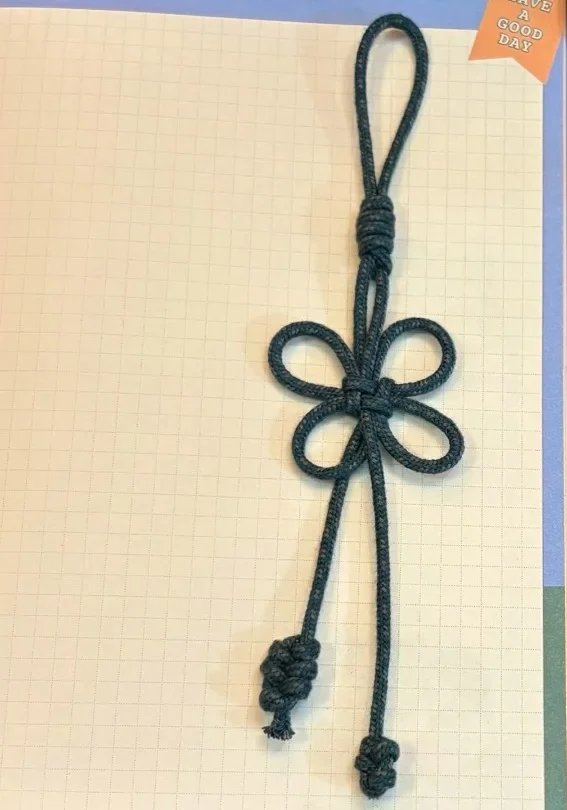
The functional ancestor of the decorative pāo kòu (盘扣) buttons found on Hanfu, Qipao, and Tang suits today. A Tang Dynasty red embroidered bag in the Gansu Museum features multiple button knots on its drawstrings. Now used in bracelets and jewelry clasps.

Built around the character 喜喜 — “double happiness” — this knot is almost exclusively used at weddings. One of the most popular wedding gifts in Chinese tradition, expressing the wish for two people to share one joyful life.

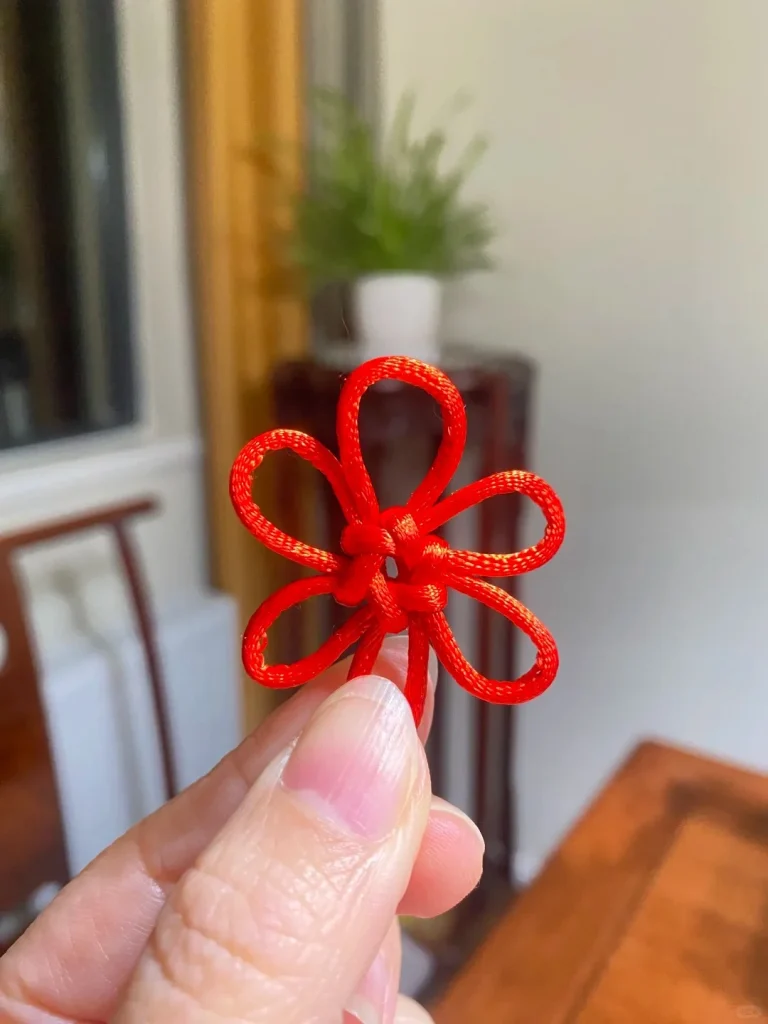
Also called the six-flower knot. Its full, rounded, flower-cluster shape represents reunion and a bright future. Found on Tang Dynasty silverwork and used at family reunions and festivals.
Home decoration: Red Chinese knots are displayed at Lunar New Year to invite good fortune. Large decorative knots work as year-round wall art in both traditional and contemporary interiors.
Jewelry: Modern artisans combine traditional knotting with beads, jade, crystals, and precious metals to create bracelets, necklaces, earrings, and keychains. Chinese knot jewelry is one of the most accessible entry points into traditional crafts for international buyers.
Hanfu and traditional fashion: Button knots and tassel pendants are essential elements of traditional Chinese garments. Collectors and Hanfu enthusiasts treat handmade knot accessories as key finishing pieces.
Gift-giving: Different knots serve different occasions — the double happiness knot for weddings, the longevity knot for elders’ birthdays, the lucky knot for New Year or new beginnings.
Travel talismans: Hanging a Chinese knot from a car’s rearview mirror is a widespread practice across East Asia, believed to bring protection during travel.
The best starter knots for beginners are the flat knot and the button knot — both achievable in under an hour with a little patience.
You’ll need: knotting cord, a foam board, T-pins, and scissors. The single biggest factor in how a finished knot looks is the quality of your cord. Cheap substitutes fray, tangle, and lose their shape. A proper knotting cord holds its structure through the weaving process and keeps its sheen afterward.
What is a Chinese knot used for? Home decoration, jewelry, clothing accessories (especially on Hanfu and Qipao), gift-giving, and as good-luck charms. Historically, knotted cords were also used to record events and information.
What does a red Chinese knot mean? Red knots symbolize good luck, happiness, and protection. Red is the most auspicious color in Chinese culture. Red string knots are worn as protective talismans and given as lucky gifts.
What are Chinese knots made of? Traditionally, silk thread. Most modern Chinese knots use nylon cord, which is more durable, colorfast, and widely available. Cotton, waxed cord, and leather are used for contemporary designs.
Is a Chinese knot the same as macramé? No. Both involve decorative knotting, but Chinese knotting is a distinct folk art with its own techniques, symbolic vocabulary, and 4,000+ year history. Macramé originated separately in the Arab world.
What is the luckiest Chinese knot? The Panchang (Endless) Knot is considered the most auspicious overall, while the red lucky knot bracelet is the most widely worn as a protective charm.