
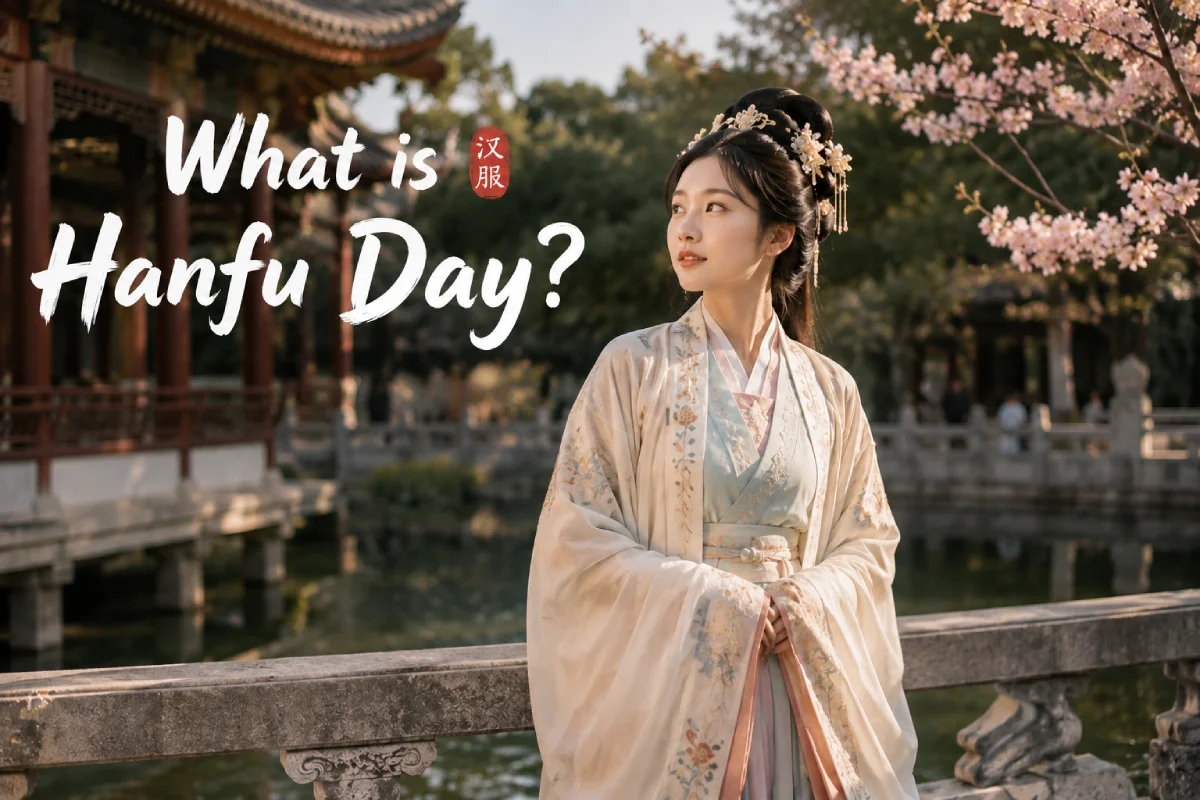
If you’ve been following the Hanfu revival movement, you’ve probably heard the term Hanfu Day. But what exactly is it — and is there just one date, or several? The answer might surprise you.
Unlike a single national holiday, Hanfu Day refers to a collection of grassroots cultural observances created by Hanfu enthusiasts to celebrate and promote traditional Han Chinese clothing. There is no single government-mandated date — instead, the community has organically established multiple meaningful days throughout the year, each with its own history and spirit.
This guide covers every major Hanfu Day, where each one comes from, and how people around the world take part.
Hanfu Day (汉服日, Hàn Fú Rì) is a cultural memorial day — or series of days — spontaneously established by Hanfu enthusiasts to celebrate Hanfu culture and traditional Chinese heritage. It is not a legal public holiday in China, but it carries significant meaning within the Hanfu community both domestically and internationally.
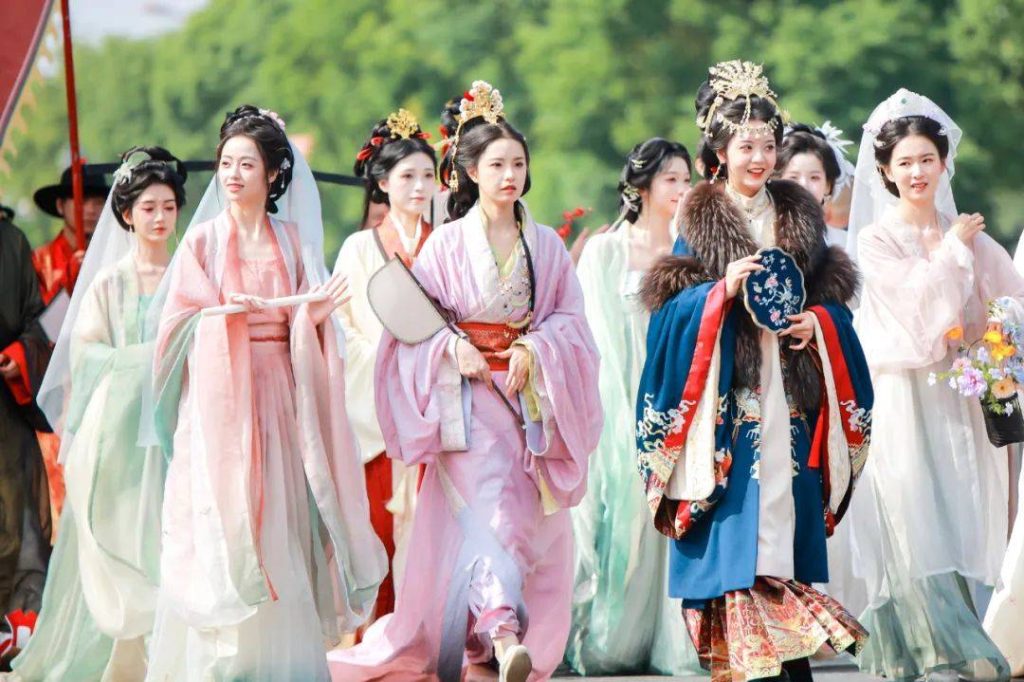
On Hanfu Day, participants typically dress in traditional Hanfu garments, take part in parades and fashion shows, attend cultural lectures, and share their photos and experiences on social media. The goal is both personal celebration and public awareness — showing the world the beauty of China’s ancient clothing traditions.
There are three dates most widely recognized by the Hanfu community. Each has a distinct origin and character.
1. Shangsi Festival — The 3rd Day of the 3rd Lunar Month (Chinese National Costume Day / 华服日)
The most culturally rooted of all Hanfu Days falls on the third day of the third lunar month — the ancient Shangsi Festival (上巳节). This date marks Chinese National Costume Day (华服日, Huáfú Rì), a state-endorsed cultural event that officially showcases traditional attire from all 56 of China’s recognized ethnic groups. Because Hanfu is by far the most widely worn costume at these events, many Hanfu enthusiasts casually refer to it as “Hanfu Day” — though the two terms are not technically interchangeable.
The Shangsi Festival has origins stretching back thousands of years in China. In ancient times, it was a day for purification rituals, spring outings, and gathering by rivers. It is also traditionally associated with the legendary Yellow Emperor (Huangdi), widely regarded as an ancestor of the Chinese people. Choosing this day for Hanfu celebration connects the modern movement to China’s deepest cultural roots.

The first official Chinese National Costume Day, hosted by the Central Committee of the Communist Youth League of China together with streaming platform Bilibili, was held on April 18, 2018, at the Zichen Hall of the Daming Palace National Heritage Park in Xi’an — one of China’s great ancient capitals. Since then, celebrations have been held each year in cities across China and among overseas Chinese communities.
| Year | Location |
|---|---|
| 2018 (1st) | Daming Palace National Heritage Park, Xi’an |
| 2019 and beyond | Multiple cities across China and internationally |
2. November 22 — Hanfu Travel Day (汉服出行日)
The second major Hanfu Day is November 22, observed as Hanfu Travel Day (汉服出行日). This date commemorates a single historic moment that sparked the entire modern Hanfu revival movement.
On November 22, 2003, a man named Wang Letian, an ordinary power worker from Zhengzhou, Henan Province, made history. He stepped out onto the streets wearing a handmade Hanfu — a long quju-style (曲裾) robe with a cocoon silk outer garment — clothing styles that had largely disappeared from daily life for over 350 years since the fall of the Ming Dynasty. (It is worth noting that many mass-produced quju designs seen today are modern artistic interpretations; the only fully authenticated quju forms come from the Mawangdui Han Tomb excavations, and Han Dynasty dress also prominently featured the straight-cut zhiju (直裾) robe.)
Wang Letian walked calmly through a shopping mall, a public square, and the busiest streets of Zhengzhou, facing ridicule and confusion from many passersby, but also sparking curiosity. A Singaporean-Chinese writer named Zhang Congxing witnessed the event and wrote an article about it, later published in Singapore’s Lianhe Zaobao newspaper. That article helped ignite the broader Hanfu Movement across China and the Chinese diaspora.
In honor of Wang Letian’s courageous act, the Hanfu community designated November 22 as Hanfu Travel Day. Every year around this date, Hanfu associations and individuals across China and worldwide organize parades, meetups, and street walks — putting Hanfu into public spaces, just as Wang Letian did over two decades ago.
3. The Xitang Hanfu Culture Week (Late October – Early November)
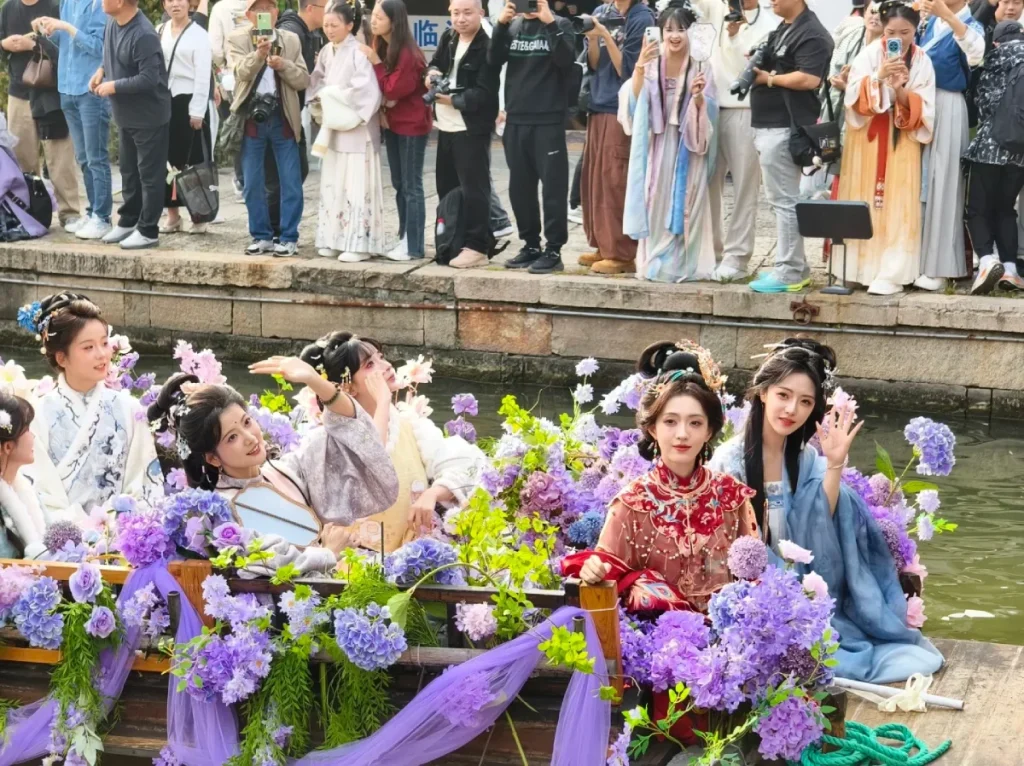
While not a single “day,” the Xitang Hanfu Culture Week (西塘汉服文化周) deserves mention as one of the most important annual Hanfu events in the world.
Initiated by famous lyricist Fang Wenshan, this festival is held every year from late October to early November in Xitang Ancient Town, Jiaxing City, Zhejiang Province — a picturesque water town whose canals and traditional architecture provide the perfect backdrop for Hanfu photography and performance.
The week-long event includes: Dynasty Carnival parades, Hanfu Catwalk Shows, Hanfu Night Parties, Traditional Archery Tournaments, Armor Exhibitions, Chinese Classical Makeup Classes, Hanfu Development Summit Forums, and Chinese Studies Lectures.
Thousands of Hanfu enthusiasts from across China and beyond descend on Xitang each year, making it arguably the largest Hanfu cultural gathering in existence.
The existence of several Hanfu-related observances reflects the grassroots nature of the Hanfu revival movement. Unlike a top-down national holiday declared by the government, these dates emerged from the community itself — each one marking a different aspect of Hanfu culture.
The Shangsi Festival date roots Hanfu in ancient cultural tradition. November 22 honors the modern revival and the courage of ordinary people. Xitang Culture Week provides a large-scale showcase for the artistry and diversity of Hanfu.
It’s also worth noting that there have been proposals to establish an official national Hanfu Day in China. In 2021, NPC deputy Cheng Xinxiang formally proposed designating a national holiday for Hanfu, sparking widespread online discussion — the hashtag received over 220 million views on Weibo. While the government has not yet created a legal Hanfu holiday, the proposal itself shows how mainstream Hanfu culture has become.
Whether it’s the Shangsi Festival date, November 22, or another Hanfu occasion, celebrations tend to share common elements.
Hanfu Parades and Street Walks
Groups of Hanfu enthusiasts dress in garments spanning different dynasties — from the flowing robes of the Han Dynasty to the structured layers of the Tang, Song, and Ming — and walk through city streets, ancient towns, and parks. The visual impact draws attention and naturally invites conversations about Chinese cultural history.
Hanfu Fashion Shows
Staged showcases highlight Hanfu from different historical periods, often accompanied by background context explaining the design features, materials, and cultural significance of each style. These events help audiences understand that “Hanfu” is not a single uniform style but a rich, evolving tradition spanning over 3,000 years.
Cultural Lectures and Seminars
Scholars, designers, and Hanfu researchers give talks on topics ranging from the historical origins of specific garment styles to the philosophy of Chinese dress culture and the challenges of the modern revival movement.
Social Media Participation
A major part of modern Hanfu Day celebrations happens online. Enthusiasts worldwide share photos and videos dressed in Hanfu, contributing to hashtags that often trend nationally in China and reach international audiences through platforms like Instagram, TikTok, and YouTube.
Traditional Arts and Rituals
Many events incorporate traditional arts that complement Hanfu — classical music, calligraphy demonstrations, traditional dance, tea ceremony, and ancient ritual reenactments. The goal is to present Hanfu not just as clothing but as a living part of a broader cultural system.
Hanfu Day is no longer just a Chinese domestic phenomenon. Chinese diaspora communities in the United States, Canada, the United Kingdom, Australia, Southeast Asia, and elsewhere have organized their own Hanfu Day events — holding parades in Chinatowns, hosting cultural exhibitions, and coordinating online participation with the events taking place in China.
For non-Chinese Hanfu admirers and enthusiasts of East Asian culture, Hanfu Day offers a meaningful opportunity to engage with Chinese heritage in a respectful and celebratory way.
| Event | Date | Focus |
|---|---|---|
| Chinese National Costume Day (华服日) | 3rd day, 3rd lunar month | All traditional Chinese ethnic dress; official cultural event |
| Hanfu Travel Day (汉服出行日) | November 22 | Commemorates the 2003 Hanfu revival moment; street walks |
| Xitang Hanfu Culture Week | Late Oct – early Nov | Large-scale festival; fashion, performance, forums |
| Flower Festival (花朝节) | 12th/15th day, 2nd lunar month (varies by region) | Traditional folk festival; Hanfu worn as customary dress |
Is Hanfu Day an official public holiday in China?
No. To date, there is no government-designated national Hanfu Day in China. All current Hanfu Day observances are community-organized cultural events, not legal public holidays. There have been proposals to create one, but none have been enacted.
When Is Hanfu Day This Year?
The two most widely observed dates are: the Shangsi Festival (3rd day of the 3rd lunar month) — which falls in late March or early April depending on the lunar calendar that year — and November 22 (Hanfu Travel Day), which is fixed on the solar calendar every year.
Do You Have to Be Chinese to Celebrate Hanfu Day?
The Hanfu community is generally welcoming to anyone who appreciates Chinese culture and history. Many non-Chinese Hanfu enthusiasts participate in Hanfu Day events around the world, and the celebration’s organizers typically frame it as cultural sharing rather than an ethnically exclusive observance.
What Should I Wear on Hanfu Day?
Any authentic Hanfu style is appropriate — whether it’s a casual ruqun (襦裙), a formal shenyi (深衣), a layered beizi (褙子), or any other historically grounded style. The important thing is the spirit of celebrating traditional Han Chinese dress culture. If you’re new to Hanfu, there are beginner-friendly modern Hanfu styles available that are easier to wear for everyday occasions.
Important distinction: Hanfu is not the same as the ancient-style costumes seen in film studios or costume rental shops (yǐnglóu gǔzhuāng, 影楼古装). Authentic Hanfu follows real historical garment structures; modern improved Hanfu simplifies the cuts for everyday wear while retaining the core structural principles. Film and studio costumes, by contrast, are largely fictional designs created for visual effect and are not grounded in actual historical dress systems. Knowing this difference will help you shop more confidently and avoid disappointment.
Hanfu Day is more than a costume event. It’s an expression of cultural identity, historical memory, and the desire to keep living traditions alive in the modern world. The Hanfu revival movement that Wang Letian helped ignite in 2003 has grown from a few dedicated hobbyists into a movement with millions of participants, a thriving industry, and a genuine influence on Chinese fashion, entertainment, and cultural policy.
For many participants — whether in China or abroad — dressing in Hanfu on Hanfu Day is an act of connection: to ancestors, to history, and to a cultural identity that transcends the boundaries of any single era or dynasty.
Whether you’re a longtime Hanfu lover or just beginning to explore traditional Chinese dress, Hanfu Day is the perfect occasion to step into something ancient, beautiful, and deeply meaningful.