
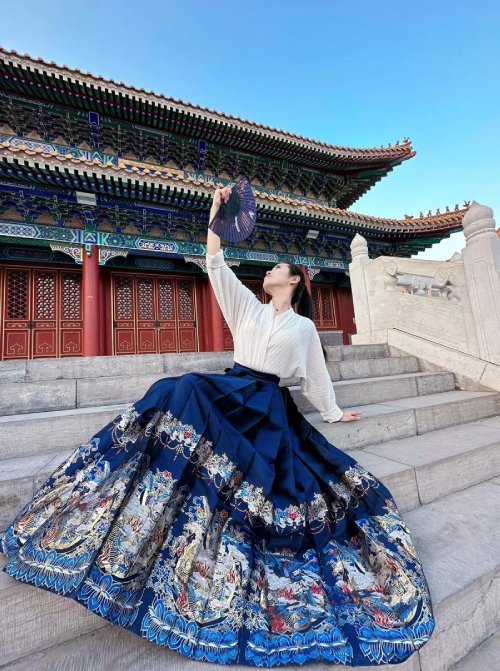
In the flowing silhouettes of traditional Chinese dress, few garments capture the eye—and the imagination—quite like the Mamianqun (马面裙), or “horse-face skirt.” With its structured front panels, graceful pleats, and often dazzling embroidery, the Mamianqun is more than just a skirt; it is a canvas of cultural memory, woven with centuries of artistry, symbolism, and social meaning. Today, as the global Hanfu movement gains momentum, this once-forgotten garment is stepping back into the spotlight—not as a relic, but as a living emblem of Chinese heritage and modern identity.
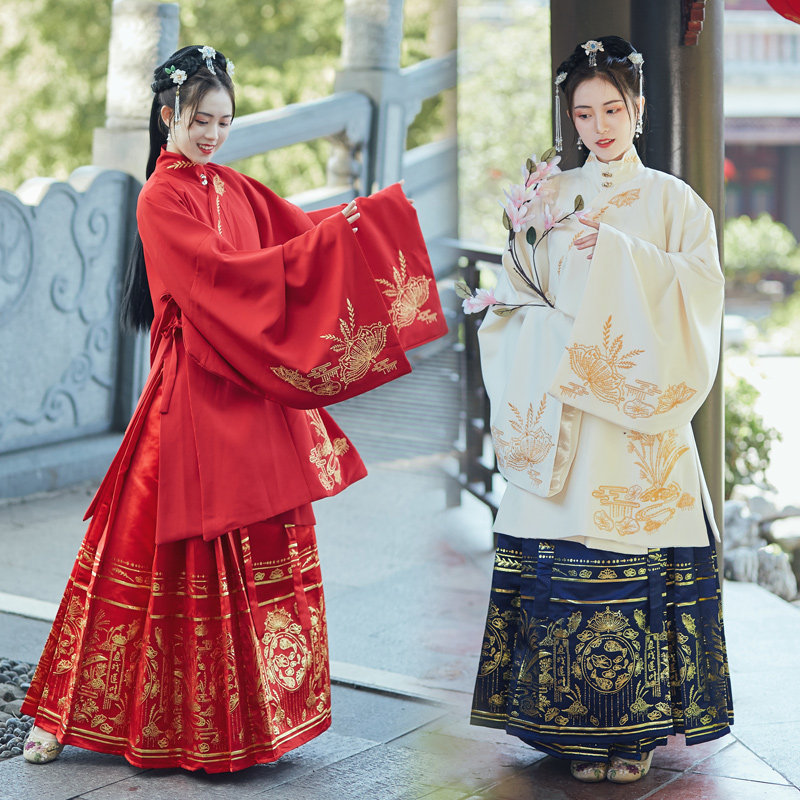
The Mamianqun first rose to prominence during the Ming Dynasty (1368–1644), when it became standard formal wear for women across elite and merchant classes. Its name—“horse-face”—refers not to equine imagery, but to the architectural term mamian, describing a protruding bastion on ancient city walls. The skirt’s distinctive front and back panels, which overlap to form a smooth, flat surface when worn, resemble these fortified structures, hence the poetic moniker.
Despite the fall of the Ming and the rise of the Manchu-led Qing Dynasty (1644–1912), the Mamianqun endured. While Manchu women favored the long, straight qipao-style robes, Han Chinese women continued wearing the Mamianqun, adapting it with richer fabrics and bolder patterns. It remained a staple of ceremonial and festive attire well into the early 20th century.
But with rapid modernization and the dominance of Western fashion in the Republican era and beyond, traditional dress—including the Mamianqun—faded from daily life. For decades, it existed mostly in museum collections and historical dramas.
That changed in the early 21st century. Fueled by a surge of cultural pride among China’s youth, the Hanfu revival movement brought the Mamianqun back—not as costume, but as conscious choice. Today, it is worn at weddings, festivals, university graduations, and even casual outings, reimagined for a new generation.

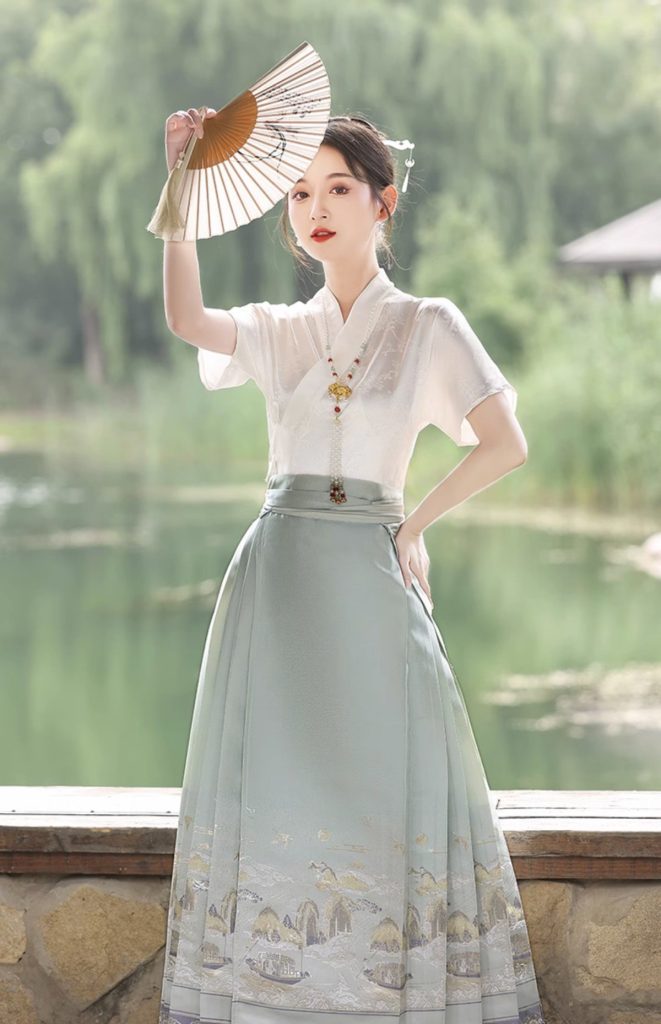
What makes the Mamianqun instantly recognizable is its ingenious construction. Unlike a typical wrap skirt, it features two overlapping panels at the front and back, each with a central unpleated section—the “horse-face” panel—flanked by deep, accordion-like pleats on the sides. This design allows for both modesty (the overlapping layers ensure no skin is exposed when walking) and freedom of movement (thanks to the flexible pleats).
Traditionally crafted from luxurious silk brocade, damask, or satin, the Mamianqun was often dyed in auspicious colors: crimson for joy, indigo for dignity, gold for prosperity. Embroidery played a crucial role—phoenixes symbolized noble femininity, peonies represented wealth and beauty, and cloud motifs evoked heavenly blessings. Regional styles also emerged: Suzhou artisans favored delicate floral patterns, while northern versions leaned toward bolder geometrics.
The waistband, typically fastened with ties or hidden hooks, ensured a snug yet comfortable fit—a testament to the practical wisdom embedded in traditional tailoring.
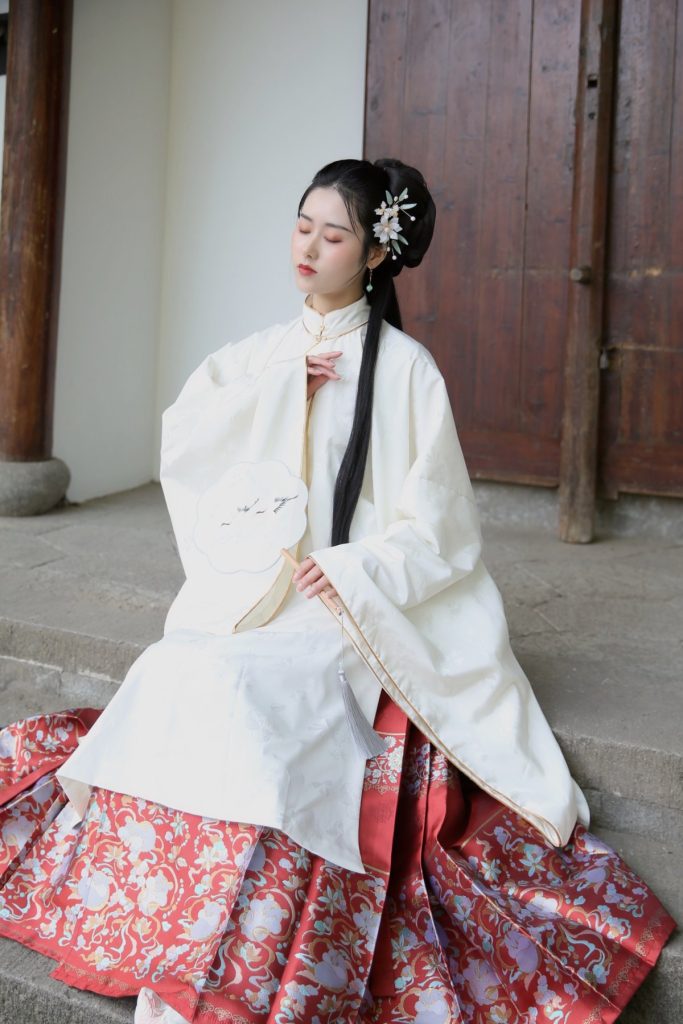
In imperial China, clothing was never merely functional—it was a language. The Mamianqun spoke volumes about a woman’s status, marital state, and occasion. Brides wore red Mamianqun adorned with dragons and phoenixes; scholars’ wives might choose subdued blues with scholarly motifs like plum blossoms or scrolls.
Beyond social signaling, the skirt reflected core Confucian and Daoist values: harmony, balance, and modesty. Its symmetrical panels mirrored cosmic order; its layered structure embodied restraint; its fluid motion echoed the natural grace prized in classical aesthetics.
Even the act of wearing it was performative—a reminder to move with poise, speak with care, and carry oneself with dignity.
In recent years, the Mamianqun has transcended cultural boundaries. Sparked by social media platforms like Xiaohongshu (Little Red Book) and Instagram, young people worldwide are embracing Hanfu—not as nostalgia, but as cultural expression and fashion innovation.
High-profile designers have taken note. Guo Pei, famed for her couture worn by Rihanna at the Met Gala, has drawn direct inspiration from Mamianqun silhouettes in her collections. Meanwhile, independent Hanfu brands—from Beijing to Los Angeles—are producing both historically accurate reproductions and contemporary hybrids (think Mamianqun paired with crop tops or sneakers).
Universities now host Hanfu clubs; cities hold annual Hanfu parades; and international fashion weeks increasingly feature Chinese traditional dress. The Mamianqun, once confined to history books, now walks confidently down urban streets from Shanghai to San Francisco.
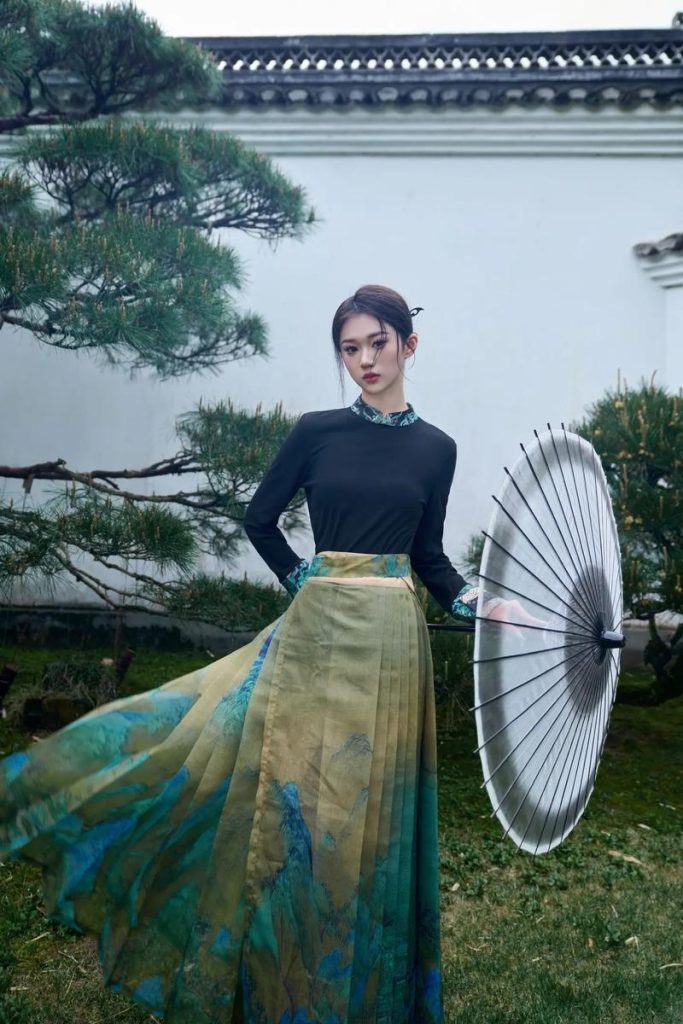
For newcomers, styling a Mamianqun is both accessible and deeply rewarding:
- Pair it with a matching or contrasting upper garment (ru blouse or ao jacket)—often featuring similar embroidery or complementary colors.
- Accessorize thoughtfully: Hairpins (zan), silk sashes, and jade pendants enhance authenticity without overwhelming.
- Footwear: Traditional embroidered slippers or minimalist modern flats both work beautifully.
- Occasions: While perfect for festivals like Lunar New Year or Mid-Autumn Festival, many now wear simplified Mamianqun for photoshoots, tea ceremonies, or even office events in creative industries.
Beginners should prioritize fit and fabric—a well-tailored cotton or linen version offers comfort and ease, while silk brocade suits special occasions.
The revival of the Mamianqun isn’t just about aesthetics—it’s an act of cultural preservation. Artisans in Suzhou and Hangzhou are reviving ancient weaving and dyeing techniques, often training apprentices to keep these skills alive. Museums like the China National Silk Museum in Hangzhou display historic Mamianqun alongside interactive exhibits that explain their construction.
At the same time, the garment is evolving. Sustainable Hanfu brands now use eco-friendly dyes and ethical production methods. Digital communities share tutorials on sewing your own Mamianqun, fostering global participation in this living tradition.
This balance—honoring heritage while embracing innovation—is what makes the Mamianqun so powerful today.

The Mamianqun is far more than a piece of clothing. It is a thread connecting past and present, East and West, tradition and individuality. In its folds lie stories of empresses and merchants, poets and revolutionaries—and now, of students, artists, and dreamers reclaiming their roots.
As you admire its symmetry or run your fingers over its embroidery, remember: you’re not just looking at fabric. You’re witnessing 500 years of resilience, beauty, and cultural continuity—all wrapped around the waist of a new era.
So whether you wear it once or every day, may your Mamianqun be a reminder: that elegance can be inherited, reimagined, and proudly shared with the world.