
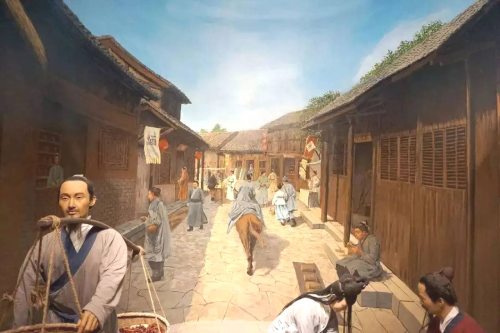
The Han Dynasty (206 BCE – 220 CE) was a golden age of economic development in ancient China. Through innovations in agriculture, state-led fiscal policies, standardized currency, and long-distance trade—especially via the Silk Road—the Han created a stable and integrated economy that supported one of the world’s largest empires. This system not only sustained imperial rule for over four centuries but also shaped China’s economic model for generations to come.
Agriculture formed the backbone of the Han economy. The vast majority of the population were peasant farmers who cultivated staple crops like millet in the north and rice in the south. Smallholder farming was encouraged by the state, which viewed a self-sufficient rural society as essential to social harmony and political stability.
Technological advances significantly boosted productivity. Iron plows pulled by oxen allowed deeper tilling, while improved irrigation systems—such as canals and wells—ensured more reliable harvests. Crop rotation and the use of organic fertilizers further increased yields.
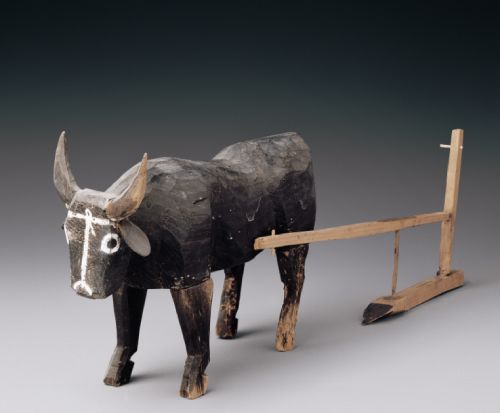
The government supported agriculture through:
- Light taxation (typically 1/30th of the harvest)
- Famine relief
- Symbolic practices like the emperor’s annual “first plowing” ceremony
However, over time, land concentration became a serious problem as wealthy elites acquired large estates, displacing independent farmers and contributing to social instability.
The Han state played an active role in managing the economy, especially under Emperor Wu (r. 141–87 BCE). Facing financial strain from military campaigns against the Xiongnu nomads, he introduced sweeping reforms, most notably state monopolies on salt, iron, and later liquor.

These monopolies sparked significant debate:
- Confucian scholars criticized them as immoral and harmful to the people
- Pragmatic officials defended them as necessary for revenue and national security
Despite controversy, the monopolies provided stable income for the imperial treasury and strengthened central power during the Western Han period.
In addition to monopolies, the state imposed:
- Grain and cash taxes
- Annual corvée labor (one month for adult males)
Although moderate by ancient standards, these obligations became more burdensome during times of corruption or natural disaster.
Early Han coinage lacked consistency due to private minting, leading to inflation and reduced trust in currency. In 118 BCE, Emperor Wu introduced the Wu Zhu coin, a standardized bronze coin weighing about 3.2 grams.
- Unified the monetary system
- Stabilized the economy
- Supported long-distance trade
- Remained in circulation for over 700 years
By banning private minting and centralizing production, the Han government restored economic confidence and improved market integration across the empire.

One of the Han Dynasty’s most significant achievements was the establishment of the Silk Road, inspired by Zhang Qian’s diplomatic missions to Central Asia in the 2nd century BCE. This vast network connected China with regions including Persia, India, and eventually the Roman Empire.
- Exports: Silk, lacquerware, metal goods
- Imports: Horses, glassware, spices, grapes, alfalfa
Domestically, trade thrived in market towns linked by an extensive road and river network. Government granaries helped stabilize grain prices, while licensed merchants facilitated regional commerce.
Despite being ranked at the bottom of the Confucian social hierarchy, merchants grew increasingly wealthy and influential, especially in major urban centers.
Cities such as Chang’an (Western Han capital) and Luoyang (Eastern Han capital) emerged as major economic hubs. Chang’an, home to more than 250,000 residents, featured lively markets, administrative centers, and imperial workshops.
Artisans produced:
- High-quality silk
- Lacquerware
- Bronze mirrors
- Ceramics

State-run workshops manufactured weapons, coins, and luxury goods for the imperial court, while private workshops supplied the broader population. Standardized regulations for weights, measures, and product quality helped ensure fair commercial practices.
In the later centuries, the Han economy deteriorated under growing internal pressures.
- Concentration of land among elite families
- Tax evasion by wealthy households
- Rising poverty among peasants
- Corruption by officials and eunuchs
- Increasing tax and labor burdens
The Yellow Turban Rebellion (184 CE) highlighted the growing instability of rural society. State monopolies became corrupt and inefficient, currency was debased, and warlords began to dominate regional economies. By 220 CE, weakened by financial strain and political fragmentation, the dynasty collapsed.
The Han Dynasty left a long-lasting economic legacy that shaped subsequent Chinese empires. Key principles included:
- Agrarian stability as the foundation of society
- Strategic government intervention in key industries
- Integration of domestic and international trade networks
- Advanced bureaucratic practices for taxation, granaries, and currency regulation
The Silk Road continued to flourish in later dynasties, including the Tang and Song, contributing to China’s role as a global trade center.
The Han Dynasty’s economy was a dynamic and well-structured system that supported one of the most influential empires in world history. By balancing agricultural productivity, state oversight, and commercial expansion, the Han laid the foundation for China’s long-term prosperity and set economic precedents that endured for centuries.