
Yes, green tea does have caffeine — but probably less than you think. A standard 8-ounce cup contains somewhere between 25 and 50 mg of caffeine, which is roughly half the amount in a cup of coffee. If you’ve been drinking green tea hoping it’s caffeine-free, this guide will set the record straight. And if you’re trying to manage your caffeine intake, it will also help you understand exactly how much you’re getting and how to control it.
Green tea naturally contains caffeine. It comes from the Camellia sinensis plant, the same plant used to make black tea and white tea — all of which contain caffeine. The difference is in how the leaves are processed. Green tea leaves are minimally oxidized, which preserves their natural compounds, including caffeine.
So while green tea is often marketed as a “gentle” or “natural” alternative to coffee, it is not a caffeine-free beverage. That said, the caffeine content is significantly lower than in coffee, and green tea contains a unique amino acid called L-theanine that changes how you experience that caffeine — more on that below.
The short answer: an 8-ounce (230 ml) cup of green tea typically contains between 25 and 50 mg of caffeine. The average is around 35 mg per cup.
Here’s how green tea compares to other common drinks:
| Drink (8 oz / 230 ml) | Caffeine (approx.) |
|---|---|
| Green tea (standard) | 25–50 mg |
| Matcha green tea | 60–80 mg |
| Black tea | 45–75 mg |
| Brewed coffee | 95–165 mg |
| Energy drinks | 70–240 mg |
| Herbal tea (most types) | 0 mg |
As you can see, green tea sits comfortably in the low-to-moderate range. It’s stronger than herbal teas (which contain no caffeine), but lighter than black tea, and far below coffee in caffeine content.
The caffeine in your cup is not fixed — it depends on several variables. Understanding these factors gives you real control over how much caffeine you consume.
Tea variety
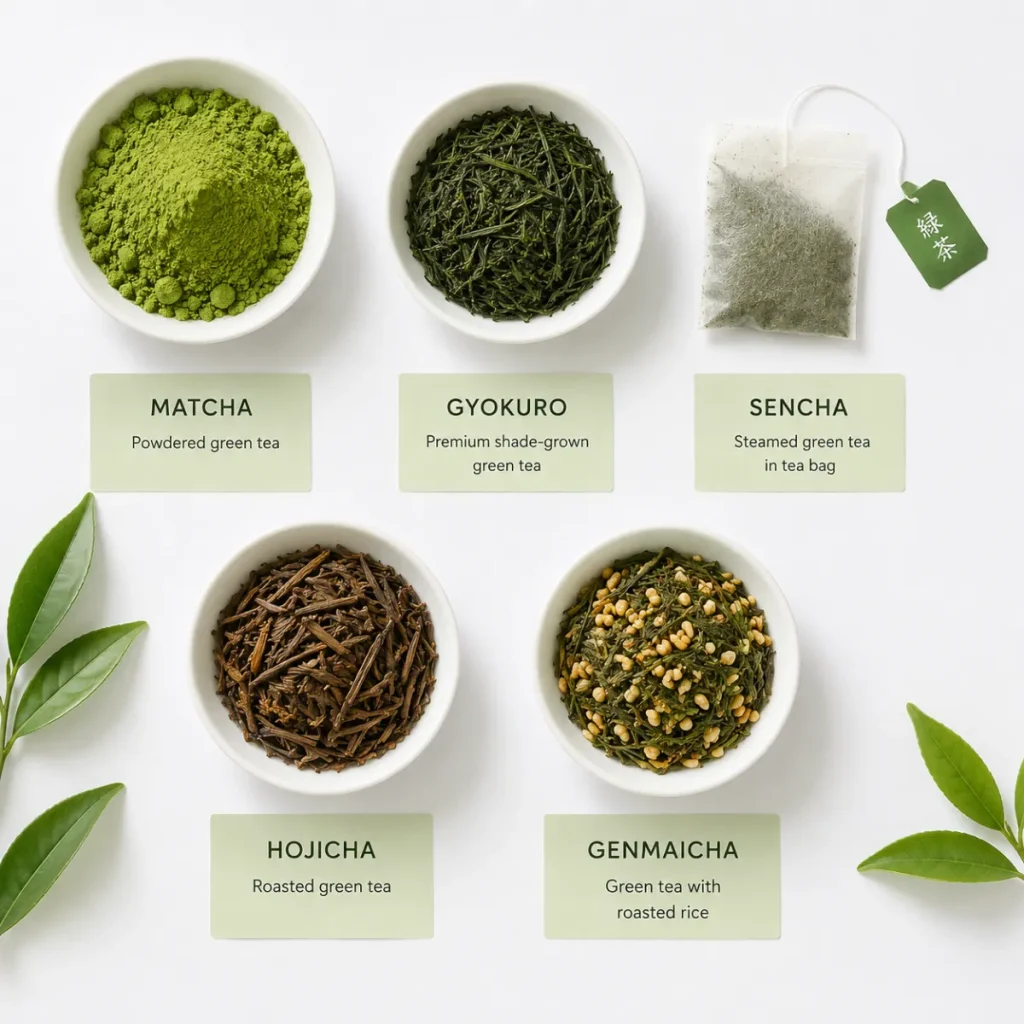
Different types of green tea have different caffeine levels. Matcha, for example, is made by grinding whole tea leaves into powder. When you drink matcha, you consume the entire leaf, not just the brewed water — which is why it can contain 60–80 mg of caffeine per serving. Gyokuro, a shade-grown Japanese green tea, also tends to be higher in caffeine because shading the plant increases the concentration of certain compounds including caffeine. Standard sencha, the most common everyday green tea, falls in the middle range at around 25–40 mg per cup.
Leaf age and part of the plant
Younger tea leaves and buds naturally contain more caffeine than older, mature leaves. This is why premium teas made from early spring harvests (first flush teas) often have higher caffeine content than teas made from later harvests. Stems and older leaves, used in teas like kukicha, contribute far less caffeine to the final brew.
Tea bag vs. loose leaf
Tea bags tend to release more caffeine than loose leaf tea. The leaves inside tea bags are usually crushed into small particles, which increases surface area and makes caffeine extraction faster and more complete. With loose leaf tea, whole or larger leaves release caffeine more slowly, resulting in a lower concentration in the cup.
Water temperature
Hotter water extracts more caffeine from tea leaves. Green tea is typically brewed at 150–185°F (65–85°C), which is lower than the boiling point. Using cooler water reduces caffeine extraction. This is also why green tea brewed at the correct temperature (not boiling) naturally produces a milder caffeine level than black tea, which is typically brewed with near-boiling water.
Steeping time
The longer you steep, the more caffeine ends up in your cup. Green tea is typically steeped for one to three minutes. Steeping for five or more minutes will noticeably increase the caffeine content — and will also make the tea more bitter. If you want a lower-caffeine cup, keep your steeping time short.
Not all green teas are the same. Here is a quick look at the caffeine levels across the most popular varieties:
| Green Tea Type | Caffeine per Cup (8 oz) |
|---|---|
| Matcha | 60–80 mg |
| Gyokuro | 35–70 mg * |
| Sencha | 25–40 mg |
| Genmaicha | ~15–20 mg |
| Hojicha | 10–20 mg |
| Kukicha (twig tea) | ~10 mg |
| Decaf green tea | 2–5 mg |
* Gyokuro is shade-grown and naturally higher in caffeine than most green teas. Traditional brewing methods using a larger leaf-to-water ratio can push caffeine toward the higher end of this range.
Genmaicha — green tea blended with roasted brown rice — is naturally lower in caffeine because the rice dilutes the tea leaf content. Hojicha is made from roasted tea leaves and stems; the roasting process reduces caffeine, making it a popular choice for evening drinking. Kukicha uses mainly stems rather than leaves, resulting in one of the lowest caffeine levels of any green tea.
Green tea has roughly one-third to one-half the caffeine of a regular cup of brewed coffee. A standard 8-ounce coffee contains 95–165 mg of caffeine, while the same amount of green tea averages around 35 mg. That’s a significant difference.
But many people notice something beyond the numbers: green tea’s caffeine seems to feel different from coffee’s. There’s a reason for that.
Green tea contains L-theanine, an amino acid that promotes calm focus. L-theanine works together with caffeine in a way that smooths out the energy boost — you get increased alertness and concentration without the jitteriness, crash, or sudden spike that coffee sometimes causes. This is why many people describe green tea as producing a “clean” or “focused” energy rather than a sharp stimulant effect.
Coffee contains no L-theanine, which is why the caffeine hits differently even when the amounts are comparable.
For most healthy adults, yes. The FDA considers up to 400 mg of caffeine per day safe for healthy adults. A single cup of green tea at 35 mg puts you well under that threshold. Even drinking four or five cups a day keeps you within a reasonable range.
However, certain groups should pay attention to their intake:
Pregnant women are generally advised to limit caffeine to 200 mg per day. Green tea in moderation is usually fine, but it’s worth consulting a healthcare provider.
People sensitive to caffeine may feel the effects of even a small amount — racing heart, anxiety, or sleep disruption. If you’re sensitive, start with one cup per day or choose low-caffeine varieties like hojicha or kukicha.
Those with anxiety disorders may find caffeine worsens symptoms, even in moderate amounts. The L-theanine in green tea can help offset this for some people, but individual responses vary.
Children have lower caffeine tolerances than adults and should limit intake accordingly.
It’s also worth noting that green tea is rich in antioxidants, particularly EGCG (epigallocatechin gallate), along with polyphenols and other beneficial plant compounds. The caffeine is just one component of a complex beverage that has been associated in various studies with benefits for heart health, brain function, and metabolic health.
Yes — and it’s straightforward. Here are the most effective methods:
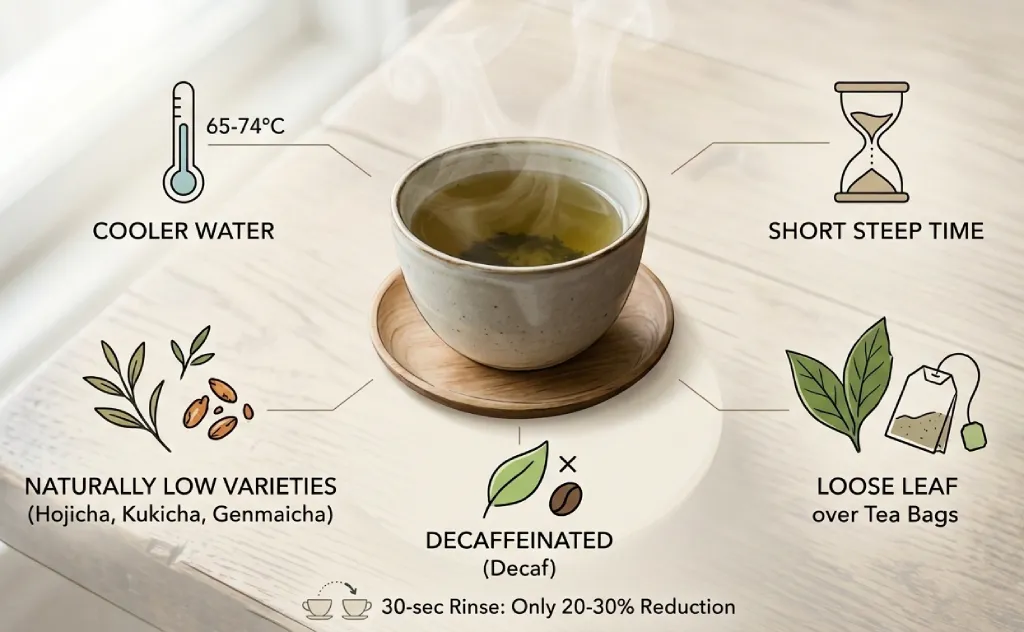
Use cooler water. Brew at around 150–165°F (65–74°C) instead of near-boiling water. Lower temperatures extract less caffeine while still producing a flavorful cup.
Shorten your steep time. A 30-second to 1-minute steep will produce noticeably less caffeine than a 3-minute steep. You’ll get a lighter brew, but it will still have plenty of flavor.
Choose loose leaf over tea bags. Whole or larger leaf tea releases caffeine more slowly than crushed tea bag contents. Switching to loose leaf can meaningfully reduce your caffeine intake per cup.
Pick a naturally low-caffeine variety. Hojicha, kukicha, and genmaicha are all green teas with much lower caffeine levels. They’re worth trying if you want the ritual and taste of green tea with minimal stimulant effect.
Try decaffeinated green tea. Decaf green tea is processed to remove most of its caffeine, leaving just 2–5 mg per cup. It retains many of the antioxidants, though the decaffeination process does reduce some of the beneficial compounds.
A note on the “first rinse” method. You may have heard that discarding the first steep — sometimes called a “tea wash” — removes most of the caffeine. The idea is appealing, but the reality is more modest. Research shows that a 30-second rinse removes only around 20–30% of the caffeine, not the majority. It’s a small reduction, not a reset. If significantly lower caffeine is your goal, choosing a low-caffeine variety or shortening your steep time will have a much greater effect than rinsing alone.
Most commercial bottled green teas do contain caffeine, though the amounts vary widely by brand and formulation. Some bottled teas add extra caffeine beyond what’s naturally in the tea itself. Others are lightly brewed and contain less. Bottled green teas often also contain added sugars or sweeteners, so it’s worth checking the label if you’re tracking either caffeine or calories.
A few brands offer caffeine-free or low-caffeine bottled green teas, typically labeled clearly on the packaging. If caffeine is a concern, look for these specifically — and when in doubt, brewed tea at home gives you the most control over what ends up in your cup.
This is a common question, and the answer is no — at least not per cup as typically brewed. Green tea leaves, pound for pound, do contain a significant amount of caffeine. But because you use far less tea per cup than you do coffee grounds, and because brewing temperatures and times for green tea are lower, the caffeine in your finished cup is much less than in coffee.
One exception: matcha. Because you’re consuming the entire powdered leaf rather than just brewed water, matcha can approach — or occasionally exceed — the caffeine level of some weaker coffees. But standard green tea, brewed normally, will always contain significantly less caffeine than coffee.
Caffeine has a half-life of roughly five to six hours in most adults, meaning half of the caffeine you consume is still in your system five to six hours later. If you’re sensitive to caffeine and want to be asleep by 10 PM, it’s a good idea to have your last cup of green tea by 4 PM at the latest. Many sleep experts suggest avoiding any caffeinated beverage six to eight hours before bedtime.
That said, green tea’s relatively low caffeine content means many people can tolerate it later in the afternoon without it significantly affecting sleep. This is especially true for varieties like hojicha or genmaicha, where the caffeine levels are genuinely low. Individual sensitivity varies considerably — some people can drink green tea after dinner with no effects, while others feel the impact strongly from a single morning cup.
Green tea does have caffeine — typically 25 to 50 mg per 8-ounce cup depending on the variety and brewing method. That’s meaningful, but it’s considerably less than black tea or coffee. More importantly, the L-theanine in green tea works alongside the caffeine to produce a calmer, more focused kind of energy that many people find more comfortable than coffee’s sharp kick.
If you’re watching your caffeine intake, you have plenty of tools at your disposal: choose a lower-caffeine variety like hojicha, brew with cooler water, steep for less time, or switch to decaf. And if you’re simply curious how green tea compares to your morning coffee, the comparison is easy — about one-third the caffeine, with a very different feel.
Green tea has been central to Chinese tea culture for over a thousand years, prized not just for its taste but for its balanced, gentle energy. Understanding the caffeine in your cup is one more way to drink it mindfully.