

Chinese silk fabric is one of the most celebrated textiles in human history. For over 5,000 years, China has been the birthplace and heartland of silk production, weaving a material so prized that ancient trade routes were named after it. Whether you’re a textile enthusiast, a fashion designer, or simply curious about one of the world’s most luxurious fabrics, this guide covers everything you need to know about Chinese silk fabric — its history, types, weaving techniques, quality markers, and how to buy it.
Chinese silk fabric is a natural textile made from the protein fibers produced by the silkworm (Bombyx mori) as it spins its cocoon. China domesticated the silkworm over 5,000 years ago, and the country remains the world’s largest silk producer today, accounting for roughly 70–80% of global raw silk output.
What makes Chinese silk fabric distinctive is not just the raw material, but the centuries of accumulated craftsmanship behind it. Different regions of China developed their own weaving traditions, dyeing methods, and embroidery styles, producing a remarkable diversity of silk textiles — each with its own texture, weight, sheen, and cultural significance.
The story of Chinese silk fabric begins around 2700 BCE, when, according to legend, Empress Leizu discovered silk after a silkworm cocoon fell into her tea and unraveled into a long, lustrous thread. Whether or not the legend is true, archaeological evidence confirms that sericulture — the cultivation of silkworms for silk — was practiced in China by at least 3500 BCE.
For centuries, China guarded the secret of silk production under penalty of death. Silk became a symbol of imperial power and social status, reserved for emperors, nobles, and the elite. It was used as currency, tribute, and diplomatic gift. By the 2nd century BCE, Chinese silk fabric was reaching the Mediterranean via the famous Silk Road, dazzling cultures from Persia to Rome.
The monopoly on silk production eventually ended when, according to historical accounts, silkworm eggs were smuggled out of China in the 6th century CE. But even as silk production spread to Korea, Japan, India, and later Europe, Chinese silk fabric retained its reputation as the finest in the world — a status it maintains to this day.
China produces a wide variety of silk fabrics, each with distinct characteristics suited to different uses. Here are the most important types:
Charmeuse is one of the most popular types of Chinese silk fabric for clothing. It has a smooth, glossy surface on one side and a matte finish on the reverse. The fabric drapes beautifully, making it ideal for blouses, dresses, lingerie, and scarves. Charmeuse is lightweight and has a subtle stretch, but it can snag easily and requires careful handling.

Silk satin is woven using a satin weave that produces a highly reflective, smooth surface. Chinese silk satin is heavier and more structured than charmeuse, giving it a luxurious, formal appearance. It is widely used in evening wear, bridal gowns, and decorative applications. Chinese satin silk is often embroidered with traditional motifs.

Silk chiffon is a sheer, lightweight fabric with a slightly rough texture due to alternating S- and Z-twist yarns in the weave. It has an ethereal quality and is commonly used for scarves, overlays, and flowing garments. Chinese silk chiffon is especially prized for its refined transparency and soft drape.

Also known as “China silk,” habotai is a plain-weave silk that is smooth, lightweight, and relatively affordable. It is one of the most common types of Chinese silk fabric found in the market. Habotai is used for linings, scarves, lightweight blouses, and as a base fabric for printing and dyeing.
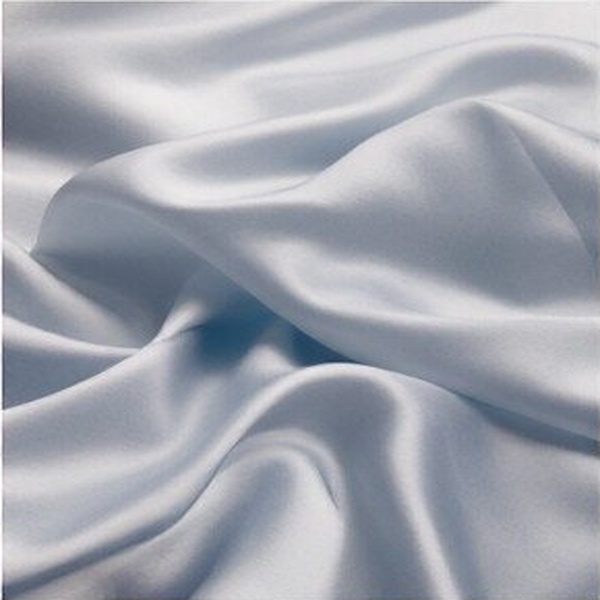
Dupioni silk is woven from threads reeled from two silkworms that have spun their cocoons together. This creates a fabric with characteristic slubs — irregular thickened areas — that give it a crisp texture and slightly rustic appearance. Chinese dupioni silk is popular for structured garments, home décor, and accessories.
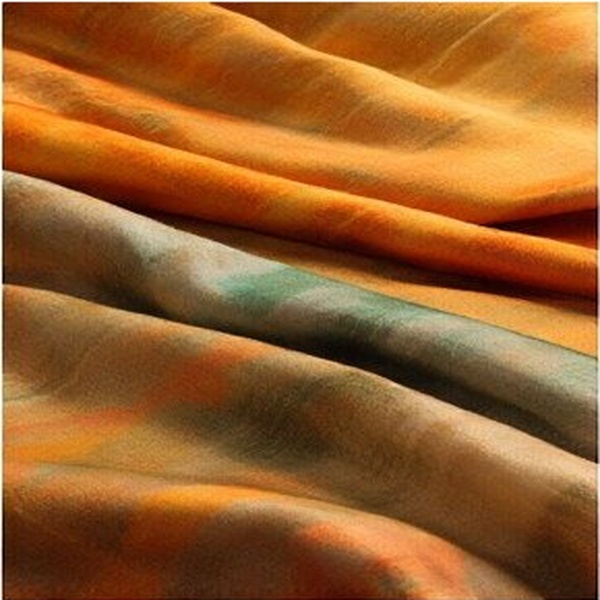
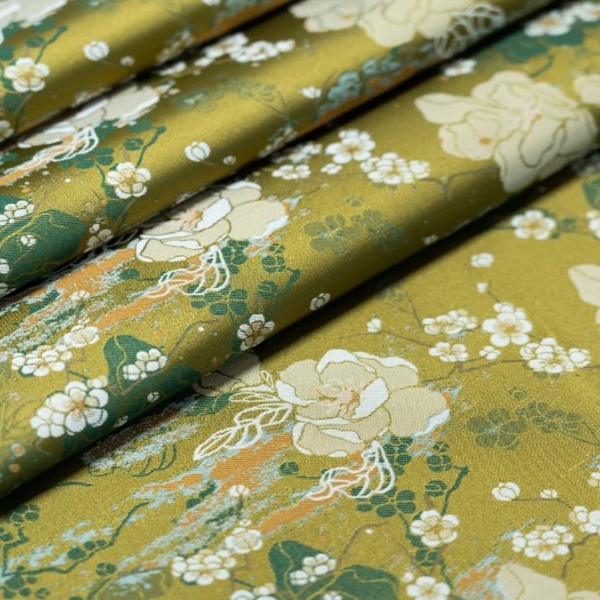
Chinese silk brocade is one of the most visually spectacular types of Chinese silk fabric. It is woven on a jacquard or dobby loom with supplementary weft threads that create raised, embossed patterns — typically flowers, dragons, phoenixes, or geometric designs — against a contrasting ground. The most famous varieties include Nanjing Yunjin (云锦), Sichuan Shu Brocade (蜀锦), and Suzhou Song Brocade (宋锦).
Raw silk fabric retains more of the natural sericin (gum) from the cocoon, giving it a slightly stiff, textured feel compared to degummed silks. Chinese raw silk is durable and holds its shape well, making it suitable for structured clothing, bags, and upholstery.

Suzhou embroidered silk is technically a finished textile art rather than a base fabric type, but it deserves mention as one of China’s greatest silk traditions. Suzhou, in Jiangsu Province, has been a center of silk embroidery for over 2,000 years. Skilled artisans use silk threads so fine they must be split into fractions to achieve photographic-level detail in their embroideries.

Beyond silk fabric itself, China is renowned for its four major regional embroidery traditions, all executed on Chinese silk fabric:
- Suzhou Embroidery (苏绣) — Known for delicate, precise stitching and use of gradated silk threads to create naturalistic imagery.
- Hunan Embroidery (湘绣) — Characterized by bold, lifelike depictions of animals, especially tigers and lions, with dramatic shading.
- Sichuan Embroidery (蜀绣) — Distinguished by smooth, even stitches and vibrant colors, often depicting fish, birds, and flowers.
- Guangdong Embroidery (粤绣) — Noted for rich gold and silver thread work and vivid, densely packed compositions.
China’s silk industry is concentrated in several key regions, each associated with specific fabric types and quality levels:
- Suzhou and Hangzhou (Jiangsu & Zhejiang) — The historical heart of Chinese silk production. Suzhou and Hangzhou silks are regarded as the finest in China, prized for their softness, luster, and intricate weaving. Suzhou Song Brocade and Hangzhou woven silk are particularly celebrated.
- Nanjing (Jiangsu) — Famous for Yunjin brocade (云锦), one of the most technically complex woven silks in the world, historically used for imperial court robes.
- Chengdu, Sichuan — The home of Shu Brocade (蜀锦), one of the oldest Chinese silk fabrics, with a history spanning over 2,000 years.
- Guangzhou and Pearl River Delta (Guangdong) — A major center for silk fabric production and export, known for high-volume manufacturing and export-grade silks.
- Zhejiang and Jiangsu provinces overall — Account for the majority of China’s raw silk production, with thousands of silk mills producing a full range of fabric types.
The production of Chinese silk fabric involves several stages:
- Sericulture — Silkworms are raised on mulberry leaves. When ready to pupate, each worm spins a cocoon from a single continuous silk filament that can be 300–900 meters long.
- Reeling — Cocoons are softened in hot water to loosen the sericin binder, and filaments from several cocoons are reeled together to form a raw silk thread.
- Throwing — Multiple raw silk threads are twisted together to create silk yarn of different strengths and textures.
- Weaving — Silk yarn is woven on looms — from traditional hand looms to modern power looms and computerized jacquard looms — to create the desired fabric structure.
- Degumming and Finishing — Most silk fabric is boiled to remove the sericin, which increases softness and luster. Additional finishing processes may include dyeing, printing, embossing, or embroidery.
The market for Chinese silk fabric includes many synthetic imitations. Here are reliable ways to test for authenticity:
This is the most reliable at-home test. When you hold a flame to genuine silk, it burns slowly, smells like burning hair (it’s a protein fiber), and the ash crumbles to a fine powder. Synthetic fabrics melt, bead, produce black smoke, and smell like burning plastic.
Authentic Chinese silk fabric feels smooth and cool to the touch. It warms up quickly when held in the hand. Synthetics tend to feel uniformly slippery or plasticky and do not warm up in the same way.
Genuine silk is expensive to produce. High-quality Chinese silk fabric typically costs significantly more per meter than synthetic alternatives. If the price seems too good to be true, it likely is.
Real silk has a natural, soft luster that changes with the angle of light — it can appear white, cream, or subtly iridescent. Synthetic silk often has an overly bright, uniform shine that doesn’t shift with the light angle.
When buying from reputable Chinese silk vendors or certified manufacturers, look for silk content labels (100% silk), industry certifications, or tests reports. Reputable producers of premium Chinese silk fabric will provide documentation of silk content.
Chinese silk fabric is not limited to clothing. It has a rich tradition in interior design and decorative arts:
- Silk curtains and drapes — The natural luster of Chinese silk creates an opulent effect in formal interiors.
- Silk cushion covers and upholstery — Brocade and dupioni silks are popular for decorative cushions, headboards, and furniture accents.
- Silk wall panels — Embroidered silk panels are used as decorative art pieces in homes, hotels, and cultural institutions worldwide.
- Silk bedding — Silk-filled duvets and silk pillowcases (particularly from Suzhou and Hangzhou) are prized for their temperature-regulating properties and smooth texture beneficial for skin and hair.
Chinese silk fabric requires more careful handling than most synthetic textiles:
- Washing: Hand wash in cool water with a gentle, pH-neutral detergent, or dry clean. Machine washing can damage silk fibers.
- Drying: Never wring silk. Roll it in a towel to absorb excess water, then lay flat or hang to air dry away from direct sunlight, which degrades silk fibers over time.
- Ironing: Iron on the lowest heat setting while the fabric is still slightly damp, or use a pressing cloth to prevent direct contact between the iron and the silk.
- Storage: Store silk garments folded in acid-free tissue paper or in a cool, dark place. Avoid plastic bags, which can trap moisture and cause yellowing.
For buyers seeking authentic Chinese silk fabric, there are several options depending on your needs and budget:
- Suzhou Silk Market — The Suzhou Silk Museum area and local fabric markets in Suzhou offer a wide selection of authentic silk fabrics at various price points.
- Hangzhou Silk City (丝绸城) — One of China’s largest silk fabric markets, with hundreds of vendors selling every type of Chinese silk fabric.
- Online retailers — When shopping online, look for sellers who clearly state “100% mulberry silk” and provide a momme (mm) weight specification. Avoid listings that only say “silky” or “satin” without specifying fiber content.
- International importers and specialty stores — For buyers outside China, established importers and specialty fabric stores often carry certified Chinese silk fabrics.
No discussion of Chinese silk fabric would be complete without mentioning its role in Hanfu — the traditional clothing system of the Han Chinese people. Silk was the prestige fabric of Hanfu throughout Chinese history, from the flowing robes of the Han dynasty to the embroidered court dress of the Ming and Qing dynasties. Today’s Hanfu revival has reignited demand for traditional Chinese silk fabrics: Yunjin brocade, Song brocade, ramie-silk blends, and hand-embroidered silks are all used by Hanfu artisans and enthusiasts seeking historically authentic or artistically inspired garments. The craftsmanship behind Chinese silk fabric and the aesthetic vocabulary of Hanfu are deeply intertwined, each expressing a shared heritage of refined beauty and cultural continuity.
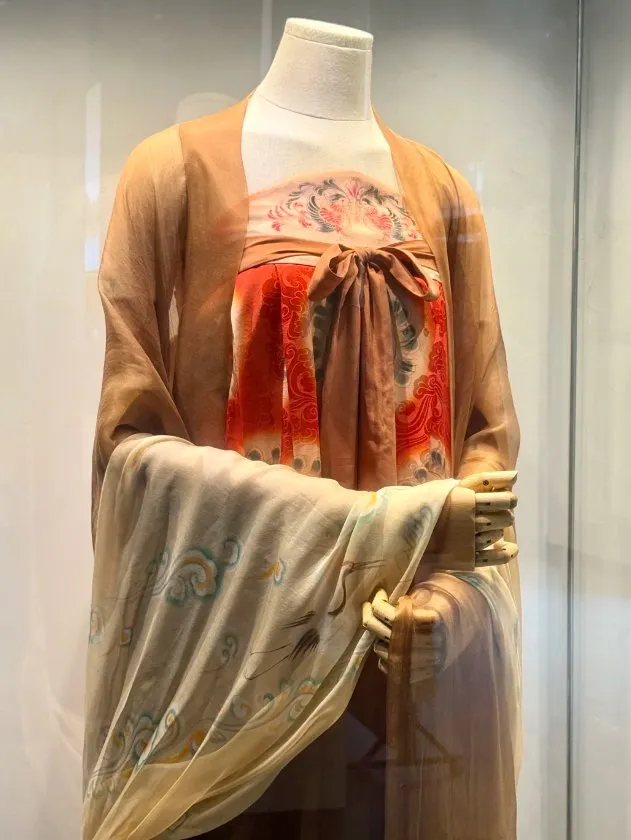
Chinese silk fabric is far more than a luxury material — it is a living cultural heritage, a technological achievement thousands of years in the making, and a textile of genuine practical beauty. Whether you encounter it in a brocade panel, a Suzhou embroidery, a flowing charmeuse blouse, or a piece of contemporary Hanfu, you are engaging with one of humanity’s most enduring creative traditions. Understanding what makes Chinese silk fabric distinctive — its types, its origins, its feel, and its care requirements — allows you to appreciate and use it with a deeper sense of what it truly represents.