

If you’ve ever seen a woman in flowing Hanfu gracefully unfolding a painted fan, you’ve witnessed one of the most enduring images in Chinese culture. The Chinese fan is far more than a tool for keeping cool — it is a work of art, a social symbol, and an essential accessory that has accompanied traditional Chinese clothing for over three thousand years.
Whether you’re drawn to Chinese culture, exploring Hanfu fashion, or looking for the perfect accessory to complete your look, understanding the Chinese fan is a wonderful place to start.
The story of the Chinese fan begins in the Shang Dynasty, roughly 3,000 years ago. The earliest fans were crafted from colorful bird feathers and were used by emperors to shield themselves from wind and dust during outdoor ceremonies. From the very beginning, fans were symbols of status and ritual.
By the Western Han Dynasty (206 BC – 24 AD), fans had become a common tool for creating a cool breeze, spreading beyond the imperial court into everyday life. During the Eastern Han Dynasty (25 – 220 AD), craftsmen began making fans from silk rather than feathers. These silk fans took the shape of a full moon or other elegant forms, with handles carved from bamboo, wood, bone, or even ivory. Their surfaces were painted with flowers, birds, and mountain landscapes — turning a simple object into a canvas for fine art.
A major turning point came during the Three Kingdoms Period (220 – 280 AD), when the practice of writing calligraphy on fans became fashionable among scholars. The legendary military strategist Zhuge Liang is famously depicted carrying a white feather fan, and that image became a lasting symbol of wisdom and brilliance in Chinese culture.
By the Tang Dynasty (618 – 907 AD), fans had fully transformed into fashion accessories. Women at the imperial court carried round silk fans as a mark of refinement and femininity. During the Ming and Qing Dynasties, the folding fan reached the height of its development, with craftsmen using the finest materials — sandalwood, ivory, gold thread, and hand-painted silk — to create fans that were true masterpieces.
China earned the title of “Fan-making Kingdom” for good reason.
Chinese fans come in a wide variety of styles, each with its own history, materials, and cultural meaning. Here are the most important types you should know.
The round fan is perhaps the most iconic image associated with Hanfu culture. Circular or gently oval in shape, it features a silk or cotton surface stretched over a bamboo or wooden frame, often adorned with embroidered flowers, birds, or classical figures.
Round fans were especially beloved by women during the Tang and Song Dynasties. They were carried at the waist, held gently in hand, or used as a modest screen to partially conceal the face — a gesture considered elegant in classical Chinese etiquette. Chinese brides also used a special moon-shaped round fan called a queshan in traditional wedding ceremonies, holding it before their face to represent shyness and to ward off evil spirits.
Today, the round fan is the most popular choice for pairing with Hanfu, particularly with Ruqun and Qiyao styles from the Han and Tang dynasties.

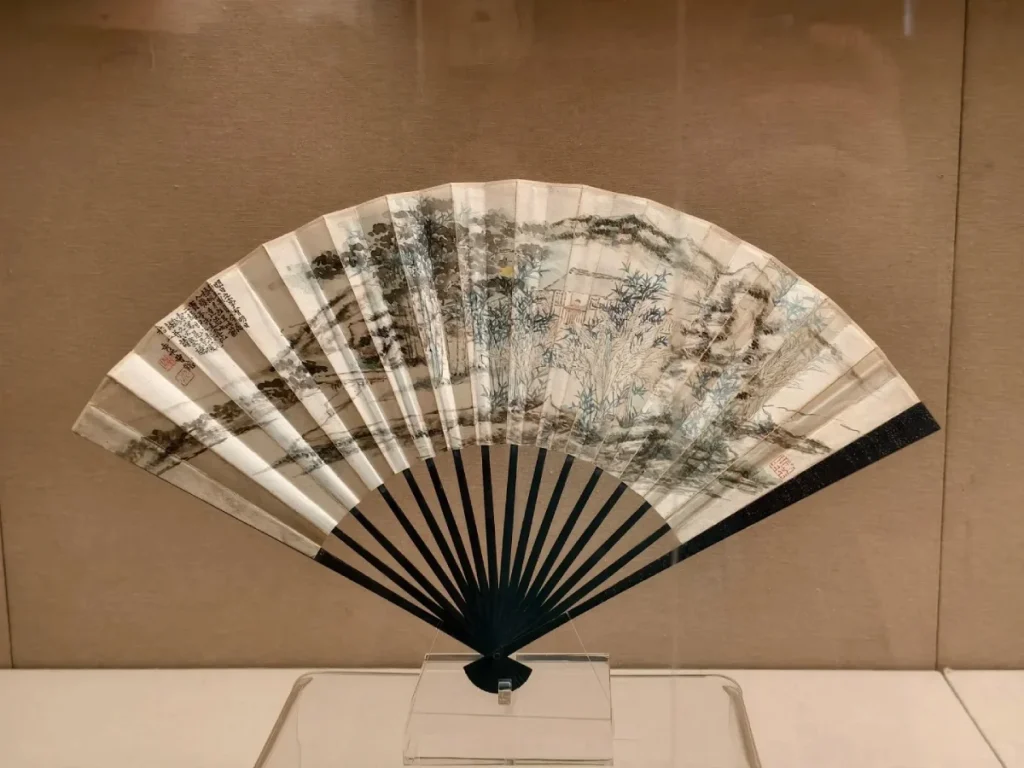
The folding fan is what most people picture when they think of a Chinese fan. It consists of a series of thin ribs — typically made from bamboo, sandalwood, or bone — connected by a pivot at the base and covered with paper or silk on the upper portion.
Folding fans became mainstream during the Song Dynasty and reached their golden age in the Ming and Qing Dynasties. Scholars and literati treated the folding fan as a personal statement: the ribs might be engraved with poetry, and the surface painted with ink-wash landscapes or plum blossoms. Owning a beautifully crafted folding fan was a way to display one’s artistic taste and social standing.
The folding fan’s greatest practical advantage is its portability — it folds compactly and can be tucked into a sleeve or held at the wrist. For Hanfu wearers today, folding fans pair particularly well with Ming-dynasty style robes and scholarly male Hanfu looks.
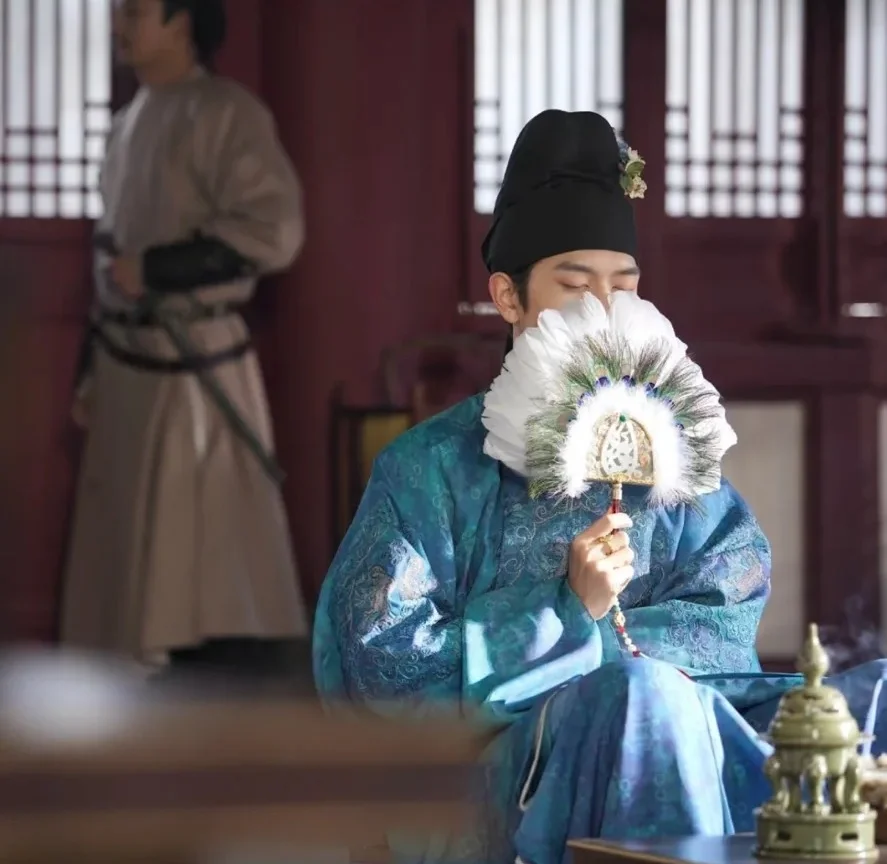
Made from the feathers of large birds such as cranes, peacocks, or geese, the feather fan is the oldest type of Chinese fan and carries powerful symbolic weight. Its association with Zhuge Liang — who used one to orchestrate his military campaigns from a position of calm authority — made it a permanent symbol of wisdom and composure in Chinese literature and opera.
Feather fans are lighter and softer than other types and create a gentle, natural breeze. In Hanfu photography and historical drama, they are frequently used to evoke the atmosphere of ancient scholars and immortal figures.
The waist fan is a lesser-known but historically significant style, dating back to the Qin and Han Dynasties. As its name suggests, it was designed to be tucked into the waistband rather than held in the hand, leaving both hands free. Waist fans typically feature a long bamboo handle and a silk surface with dyed patterns in harmonious, muted tones.
This style has seen a strong revival among Hanfu enthusiasts who want to recreate Han-dynasty aesthetics with historical accuracy.

The palm-leaf fan is the most humble and practical of all Chinese fan types. Woven from the dried leaves of the Chinese fan palm, it requires no special craftsmanship and has been used by ordinary people for centuries. These fans are common at rural festivals and outdoor events, and carry a cultural association with simplicity and a connection to the natural world.

In Chinese culture, a fan is never just a fan. Its symbolic meanings run deep.
- Wisdom and intellect: The feather fan, linked to Zhuge Liang, represents strategic thinking and calm under pressure.
- Femininity and grace: The round fan has been associated with refined womanhood since the Tang Dynasty, frequently appearing in classical paintings of court ladies.
- Literary achievement: Writing calligraphy or poetry on a folding fan was a way for scholars to demonstrate their education and artistic sensibility.
- Social status: The materials used — silk versus paper, bamboo versus ivory — immediately communicated the owner’s rank and wealth.
- Spiritual protection: Fans were used in ceremonies to ward off evil spirits, and the round wedding fan played an important ritual role in traditional Chinese marriages.
The Chinese word for fan, shan (扇), sounds similar to a word meaning “to scatter” — symbolizing the dispersal of bad fortune and the invitation of good luck.
Pairing the right fan with your Hanfu can elevate your entire look. Here is a quick reference guide:
| Hanfu Style | Recommended Fan |
|---|---|
| Han Dynasty Ruqun | Round fan or waist fan |
| Tang Dynasty Hanfu | Round silk fan with floral embroidery |
| Song Dynasty Hanfu | Small round fan or simple folding fan |
| Ming Dynasty Hanfu | Folding fan with painted paper surface |
| Male Hanfu | Folding fan or feather fan |
| Hanfu for Photography | Feather fan, painted round fan, or large folding fan |
A few tips to keep in mind when choosing:
- Match your color palette. Choose a fan whose colors complement your Hanfu’s main hues. For soft, pastel Hanfu, pick fans in blush, ivory, or pale blue. For richly colored Tang-style Hanfu, deeper jewel tones work beautifully.
- Consider the occasion. A casual Hanfu outing calls for a simple bamboo fan. A formal photoshoot or cultural event deserves a hand-embroidered silk fan.
- Think about materials. Silk fans feel luxurious and are best for special occasions, while bamboo fans are lightweight and durable for everyday wear.
- Don’t overlook the tassel. Matching the tassel color to your hairpin or belt ornament creates a polished, coordinated look.
A quality Chinese fan, properly cared for, can last for years and even become a treasured keepsake.
- Keep it dry. Avoid exposure to water or high humidity, which can warp bamboo frames and stain silk surfaces.
- Store it closed. Folding fans should be stored in their closed position to preserve the shape of the ribs.
- Clean gently. Wipe the surface lightly with a soft dry cloth. Never scrub embroidered silk.
- Avoid direct sunlight. Prolonged sun exposure can fade painted and dyed surfaces.
- Use a fan sleeve or box. Many high-quality fans come with a protective sleeve or wooden box — always use it.
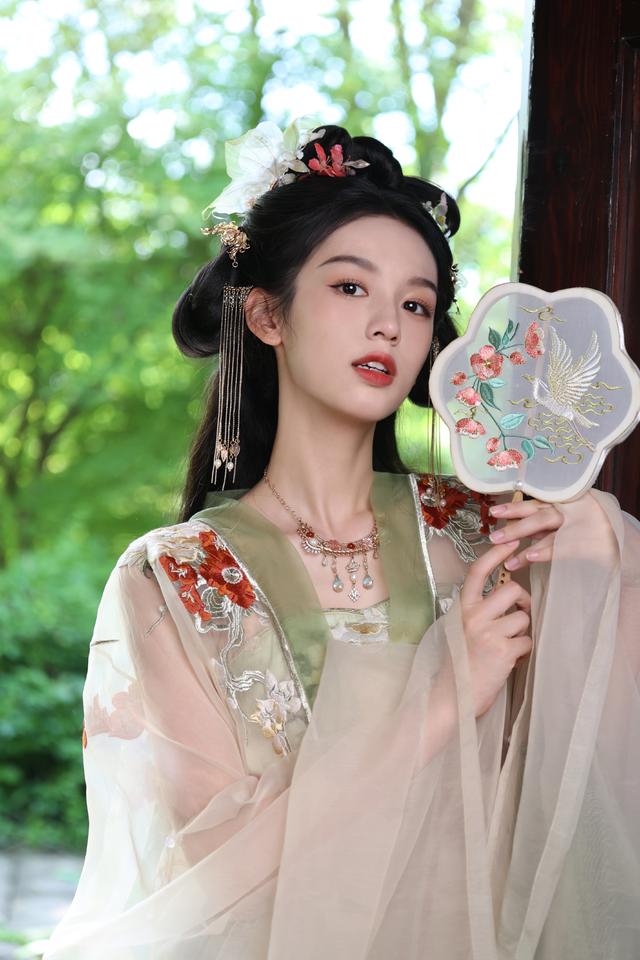
The revival of Hanfu over the past two decades has brought the Chinese fan back into everyday life. You’ll see fans carried at Hanfu festivals, used as props in traditional photography, and worn as accessories at cultural events around the world. For many Hanfu enthusiasts, the fan is not an afterthought — it is the finishing touch that transforms a beautiful garment into a complete cultural statement.
Social media platforms have played a huge role in this revival. Videos of elegant Hanfu wearers unfolding round silk fans or posing with painted folding fans have introduced millions of people outside China to the beauty of this tradition.
The Chinese fan is a small object that carries centuries of history, artistry, and meaning. From the imperial courts of the Han Dynasty to Hanfu festivals today, it has served as a cooling tool, a canvas for art, a mark of status, a spiritual object, and a fashion accessory — sometimes all at once.
If you’re exploring Hanfu for the first time, adding a Chinese fan to your look is one of the easiest and most rewarding ways to connect with this living tradition. And if you’re already a Hanfu enthusiast, you know that the perfect fan doesn’t just complete an outfit — it tells a story.