

Few items in world fashion carry as much cultural weight as Chinese shoes. Over thousands of years, footwear in China evolved from simple animal-hide wrappings into finely embroidered works of art, reflecting social rank, regional identity, and dynastic taste. Whether you are drawn to traditional Chinese shoes for their Hanfu styling, their intricate embroidery, or their cultural story, this guide covers everything you need to know — from the earliest straw sandals to the iconic platform soles of the Qing Dynasty.
The story of Chinese shoes begins long before written history. Archaeological evidence shows that ancient Chinese had learned to make articles of daily use from plant fibers as early as 7,000 years ago. The earliest confirmed pair of shoes found in China — sheepskin boots unearthed in Loulan, Xinjiang — are estimated to be over 4,000 years old, making them among the earliest excavated shoes in the world.
In the Paleolithic age, people tied animal skins around their feet using thin strips of leather. As textile skills developed during the Shang Dynasty, three broad categories of Chinese shoes took shape based on raw material:
- Straw shoes (草鞋, cǎoxié) — woven from cattail leaves, bamboo shoots, corn leaves, or kudzu; worn by commoners across nearly all regions
- Cloth shoes (布鞋, bùxié) — made from silk, hemp, damask, brocade, or crepe; ranging from everyday wear to elaborately decorated court footwear
- Leather shoes (皮鞋, píxié) — crafted from tanned hides; associated with nobility, military use, and cold northern climates
Climate played a decisive role in which styles became dominant in each region. People in the warmer coastal south favored light straw sandals, while those in the colder north wore thick leather shoes and knee-high boots.
Each major dynasty left its mark on Chinese footwear. Understanding the evolution of traditional Chinese shoes by historical period is the best way to appreciate how deeply shoes were intertwined with culture, status, and identity.
During the Shang Dynasty, strict rules governed the color, material, and pattern of shoes in accordance with the clothing system. Silk-weaving technology had already become sophisticated, and silk textile shoes were popular among the nobility. Commoners and slaves were limited to cloth or straw, while nobles wore colorful leather shoes or silk-embroidered designs. This was the beginning of shoes as a marker of social hierarchy in China.
One of the most significant turning points in traditional Chinese shoe history came during the Warring States Period (475–221 BC), when King Wuling of the State of Zhao replaced his cavalry’s traditional wooden-soled, flax-fabric shoes with leather boots modeled on the attire of the northern nomadic Hu people. This was the first major innovation in Chinese shoe culture: boots transformed military mobility and quickly spread into everyday civilian life across the country.
By the Han Dynasty, shoes were formally called lü (履), and styles were named after their raw materials — leather shoes, silk shoes, grass shoes. Cloth shoes from this period often featured bifurcated (split) toe caps, with soles made of hemp fibers. One enduring design principle emerged during this era: the toe cap was slightly raised at the front, a feature that persisted for centuries. Men wore square-toed shoes; women wore round-toed designs.

The Tang Dynasty (618–907 AD) represents a high point of variety and craftsmanship in traditional Chinese shoes. Footwear was made from brocade, silk, and woven grass. Tang grass sandals for women were so exquisitely woven that they became fashion statements rather than purely utilitarian items. Boots were commonly worn by both men and women during this cosmopolitan era, reflecting the era’s openness to outside influences.

Song Dynasty men typically favored small-headed leather shoes, while women wore rounded, flat, or pointed-toe shoes embroidered with flower and bird motifs. The early Song followed the style of previous dynasties, but gradually refined silhouettes became the fashion ideal. It was also during the Song period that women’s boots appeared for the first time.

During the Ming Dynasty (1368–1644), men’s shoes were thick and solid with a wide range of materials and styles. Regional differences were pronounced: people in northern China often wore diamond-patterned shoes, while southern regions favored brown linen shoes. The diversity of Ming footwear reflected both the era’s prosperity and its vast geographic diversity.
Perhaps no era produced more distinctive traditional Chinese shoes than the Qing Dynasty (1644–1911). Two iconic styles defined the period:
- Manchu Platform Shoes (花盆底鞋, huāpén dǐ xié) — Women from the Manchu ethnic group wore long dresses and added tall wooden soles shaped like flowerpots (wide at the top, narrowing to a small base). These “flowerpot-sole shoes” could be 1–5 inches high. The elevated sole was said to make women appear more graceful and slender.
- Men’s Brocade Shoes — Men’s formal shoes in the Qing court were made of brocade in summer and autumn, and silk fabrics in winter. Designs featured embroidered scepter-shaped (ruyi) toe caps.
Beyond the dynastic overview, several specific types of traditional Chinese shoes deserve special attention, as they remain culturally significant and widely recognized today.
The most globally recognized style of traditional Chinese shoes, xiuhuaxie (literally “embroidered flower shoes”), has a history of more than 3,000 years. This craft is believed to have originated during the Spring and Autumn Period (approximately 771–476 BC) in Shanxi Province, and has been passed down through generations of Chinese women.
Xiuhuaxie are defined by their elaborate, colorful embroidery covering the entire shoe — from heel to toe, across the sole, and even on the shoe padding. Common embroidery motifs carry symbolic meaning:
- Lotus seeds — symbolize the birth of children
- Pomegranate — symbolizes multiple offspring and prosperity
- Dragon and phoenix (龙飞凤舞) — symbolize marital harmony and the union of yin and yang
- Flowers and birds — represent beauty, nature, and good fortune
Xiuhuaxie continue to serve as traditional Chinese wedding shoes and are worn as Hanfu footwear today. In the early 20th century, they were even exported to the United States where they were sold as boudoir slippers.

The humble cloth shoe is arguably the most enduring form of Chinese footwear. Made from silk, cotton, hemp, or brocade with hand-stitched layered soles, cloth shoes have been worn by Chinese people of all social classes for millennia. Although rare in urban China today, they remain a beloved part of folk culture and are experiencing a revival among Hanfu enthusiasts and traditional craft collectors.

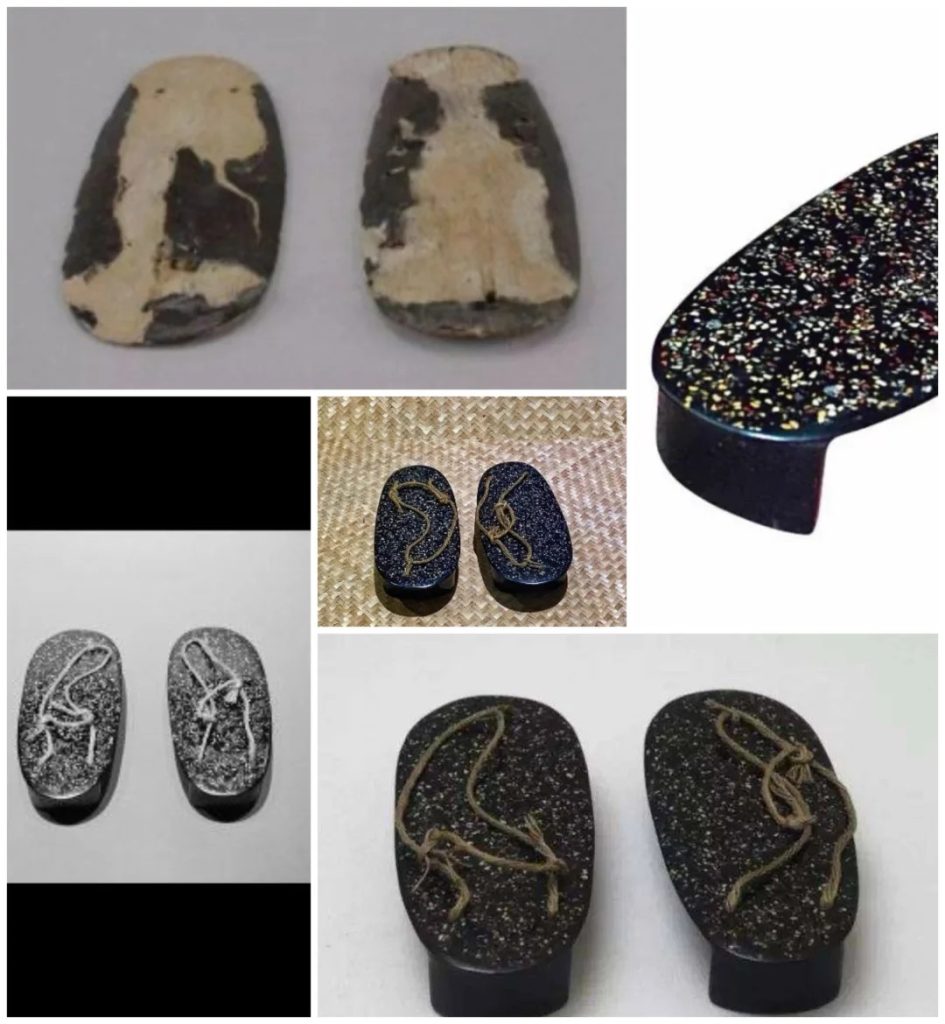
Wooden clogs hold a special place in traditional Chinese shoe culture. The oldest known wooden clog was discovered at a late Neolithic site in Ningbo, Zhejiang Province. Poet and mountaineer Xie Lingyun (385–433 AD) famously invented removable ridges for his clogs so they could be adjusted for uphill and downhill climbing. Clogs served as indoor footwear during the Jin Dynasty and were widely used across different social classes.
Straw sandals are deeply associated with Chinese folk culture and the spirit of simplicity. Ancient wanderers, monks, and scholars famously wore them. Different regional styles existed: thick straw boots in the cold north, light woven sandals in the humid south. In Shandong Province specifically, straw boots were attached to wooden soles, creating a unique hybrid design.
Flat-soled shoes worn with Hanfu ensembles emphasize clean, understated lines. These shoes are designed so that the footwear complements — rather than competes with — the flowing silhouette of Hanfu garments. Modern Hanfu shoe designs often blend traditional silhouettes with contemporary materials for everyday wearability.

In ancient China, shoes were far more than protective footwear. They were a language of identity. Under the etiquette system, only nobles could wear colorful leather or silk-embroidered shoes, while commoners wore plain cloth or straw. Specific shoe types were prescribed for specific occasions — weddings, court appearances, mourning, and everyday life each had their own footwear codes. Shoes were always removed upon entering a home, a custom that persists in Chinese culture to this day.
The craft of shoemaking was traditionally the domain of Chinese women, tied to the cultural concept of nángēng nǚzhī (男耕女织) — “men plough, women weave.” The ability to produce exquisitely embroidered shoes was considered a mark of feminine skill and virtue.
The global Hanfu revival has brought traditional Chinese shoes back into contemporary fashion. Modern designers are reinterpreting ancient silhouettes using modern materials, and xiuhuaxie have appeared on international fashion runways. Several trends are shaping the contemporary landscape of Chinese shoes:
- Hanfu shoes in daily wear — Young Chinese consumers are pairing traditional shoe styles with both full Hanfu ensembles and modern outfits
- East-West fusion — Some designers incorporate Western shoe construction techniques into traditional Chinese upper designs
- Artisanal cloth shoes — Handmade cloth shoes with traditional embroidery are experiencing a craft revival both within China and internationally
- Wedding shoes — Embroidered xiuhuaxie remain popular as traditional Chinese wedding shoes, often featuring red fabric with gold phoenix and dragon motifs
The most well-known types are embroidered shoes (xiuhuaxie), cloth shoes (bùxié), wooden clogs (jī), straw sandals (cǎoxié), and Manchu platform shoes (huāpén dǐ xié).
Hanfu is typically paired with flat-soled cloth shoes or embroidered silk shoes. The exact style depends on the Hanfu type and the historical dynasty being referenced. Tang-style Hanfu often pairs with cloud-toe shoes, while Ming-style outfits suit flat-soled brocade shoes.
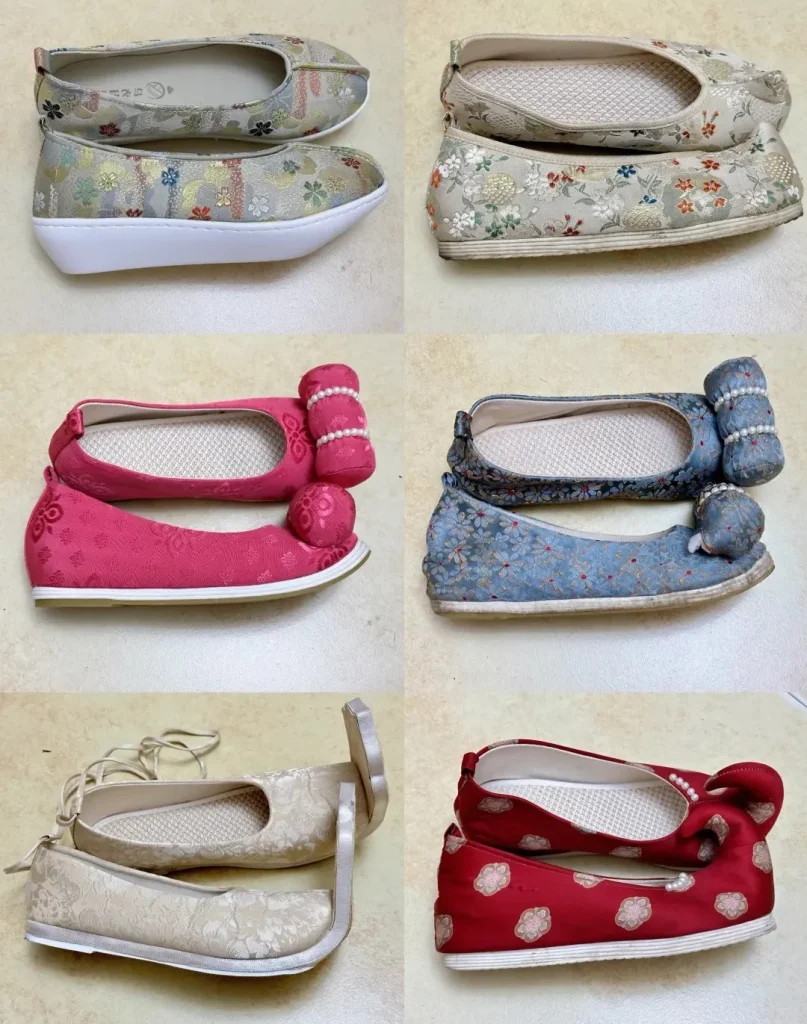
Traditional embroidered shoes are made from silk or brocade fabric for the upper, with hand-layered cotton cloth soles. Embroidery is done using silk threads in rich colors, often depicting flowers, birds, dragons, and phoenixes.
Yes. Artisan workshops across China continue to produce handmade cloth and embroidered shoes, particularly in regions like Shandong, Shanxi, and Suzhou. They are sold as cultural goods, Hanfu accessories, and collectors’ items both domestically and internationally.
Chinese shoes represent one of the world’s oldest and richest footwear traditions. From the practical straw sandals of ancient farmers to the breathtaking embroidered silk shoes of the Tang court, from the ingenious wooden clogs of the Jin Dynasty to the towering Manchu platform shoes of the Qing — every style tells a story about Chinese civilization, craftsmanship, and cultural values.
Whether you are a Hanfu enthusiast, a cultural history lover, or simply someone fascinated by fashion across time, traditional Chinese shoes offer an endlessly rewarding subject. As China’s traditional culture continues to capture global interest, these ancient designs are stepping confidently into the modern world — carrying 7,000 years of history with every step.