
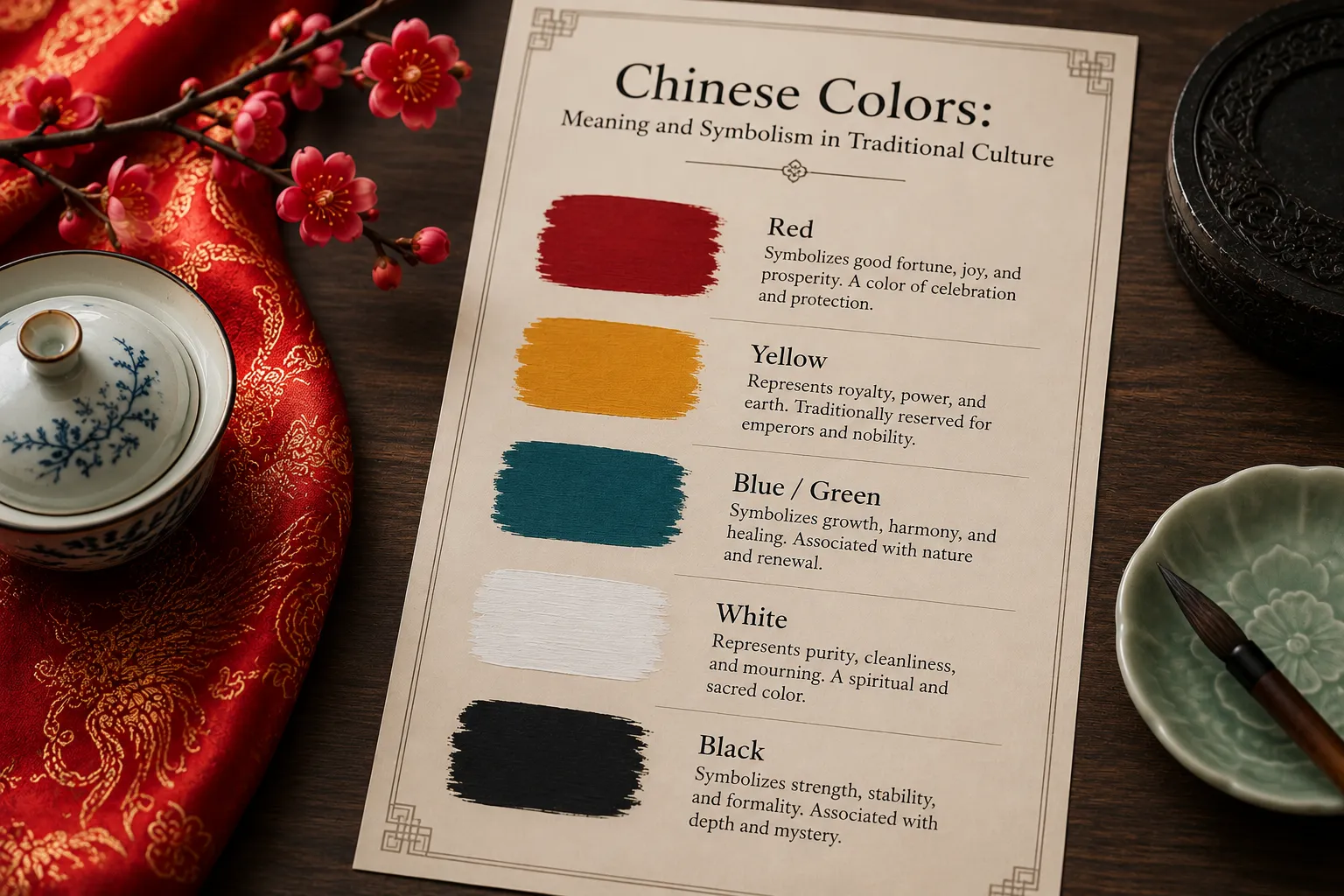
Color in Chinese culture has never been just decoration. For thousands of years, color has carried meaning tied to the five elements, the four seasons, social rank, and spiritual belief. Long before Hanfu was simply “beautiful clothing,” the color of a robe could tell you a person’s status, the season, or even which direction they honored. Understanding Chinese colors is one of the fastest ways to understand Chinese culture itself.
This guide walks through the traditional Chinese color system, the deeper meaning behind red, the colors associated with Chinese New Year, the symbolism behind dragon colors, and which colors are considered lucky in Chinese tradition.
Traditional Chinese color theory is built on Wu Xing, the five elements: wood, fire, earth, metal, and water. Each element corresponds to a color, a direction, a season, and even an organ in traditional Chinese medicine. This system, sometimes called Wu Se (五色), or the “five correct colors,” shaped everything from imperial architecture to court clothing for over two thousand years.
| Color | Element | Direction | Season | Symbolism |
|---|---|---|---|---|
| Green / Cyan (青) | Wood | East | Spring | Growth, renewal, vitality |
| Red (赤) | Fire | South | Summer | Joy, celebration, good fortune |
| Yellow (黄) | Earth | Center | Late Summer | Imperial power, the emperor, the center of the universe |
| White (白) | Metal | West | Autumn | Purity, mourning, death |
| Black (黑) | Water | North | Winter | Mystery, wisdom, the heavens |
Only these five colors were originally considered “proper” or “correct” colors, worthy of use by nobility and officials. Every other shade was seen as a mixed or “impure” color, generally reserved for commoners. This is part of why yellow became so closely tied to the emperor. As the color of the earth and the center direction, yellow represented the emperor’s role as the axis of the universe, and for much of imperial history, ordinary citizens were forbidden from wearing it.
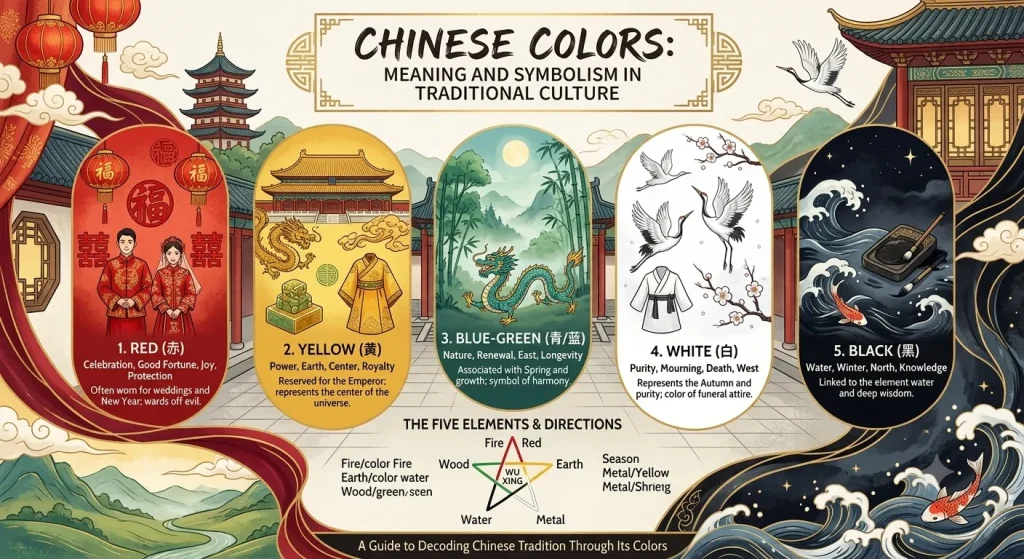
Qing (青) is one of the more fascinating colors in Chinese tradition, since the word itself doesn’t map neatly onto a single color in English. Depending on context, qing can mean blue, green, or even a blue-green somewhere in between, which is part of why this color plays such a flexible role across Chinese art and philosophy.
As the color of wood and the east in the five-element system, qing represents spring, new growth, and the beginning of the yearly cycle. This is the color of bamboo groves, jade, and the earliest tea leaves picked each season, all of which carry connotations of freshness, vitality, and quiet strength in Chinese culture.
Qing is also deeply tied to Chinese ceramics and painting traditions. Qinghua porcelain, or blue-and-white porcelain, remains one of the most recognizable styles of Chinese ceramic art, while landscape painters have used shades of qing for centuries to render mountains, rivers, and mist. For a closer look at how this color developed its own distinct place in Chinese art and material culture, see our full guide to the meaning of Chinese blue.
Of all the colors in Chinese culture, red carries the strongest and most consistent meaning: luck, happiness, and celebration. Red appears at weddings, New Year celebrations, birthdays, business openings, and nearly every major life milestone in Chinese tradition.
The roots of this belief run deep. Ancient folklore tells of a beast called Nian that terrorized villages every New Year. Villagers discovered the creature feared the color red, along with loud noises and fire, which is why red lanterns, red couplets, and firecrackers became permanent fixtures of the New Year season. Over time, red evolved from a practical defense against a mythical beast into a broader symbol of protection and prosperity.
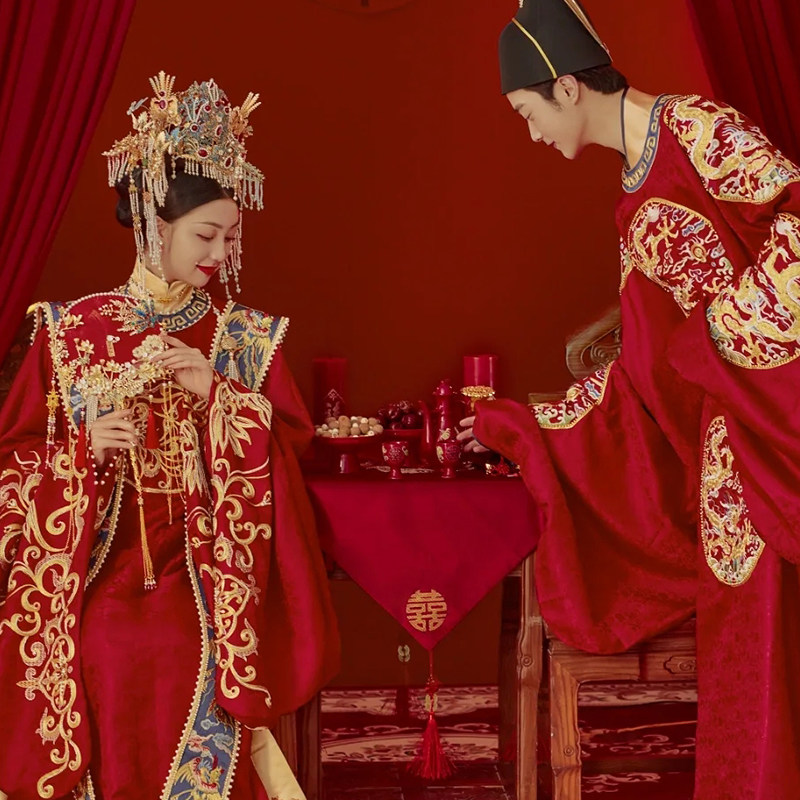
Red also plays a central role in Hanfu and traditional Chinese wedding attire. Brides traditionally wore red rather than white, since white was historically associated with mourning. Even today, many modern Chinese weddings include a red qun kua or red-toned Hanfu for at least part of the ceremony, blending ancient color symbolism with contemporary celebration.
Red envelopes, or hongbao, extend this same logic. Money given in a red envelope is believed to carry extra luck, which is why red packets are used for New Year gifts, wedding gifts, and graduation gifts alike. The envelope itself is considered nearly as meaningful as the money inside.
Chinese New Year is the most color-coded holiday in Chinese culture. Walking through any Chinatown or Chinese household during the Spring Festival, the color palette is unmistakable.
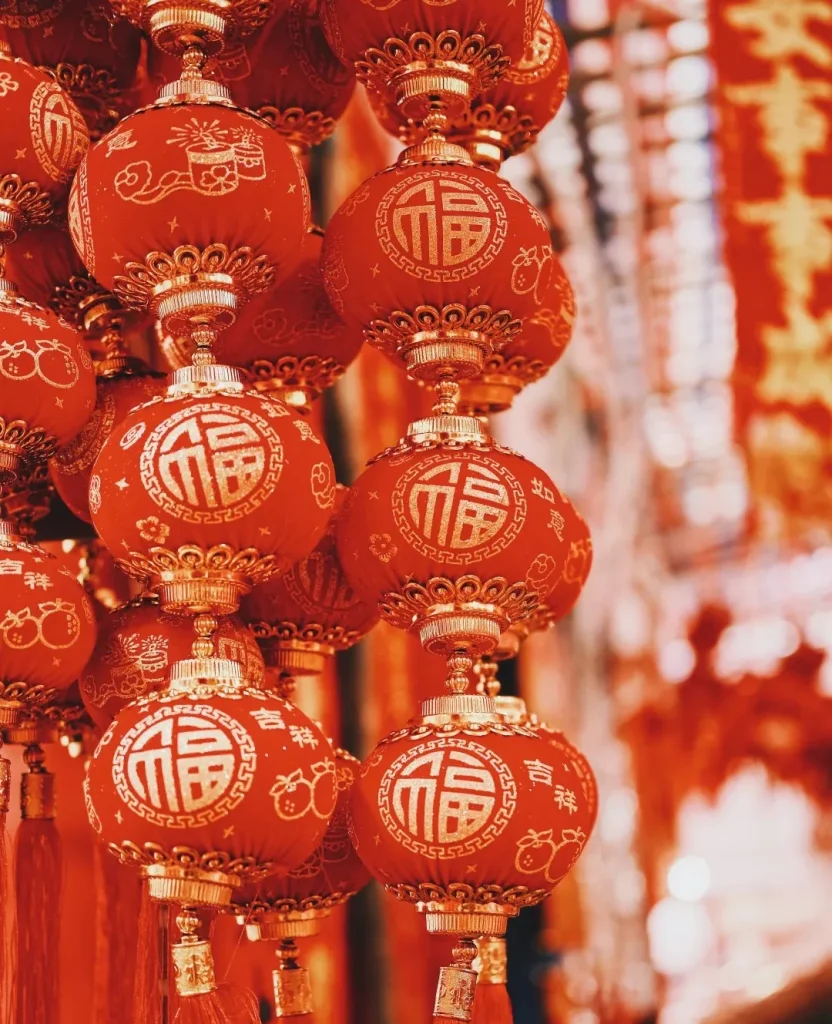
Red dominates, from lanterns and door couplets to clothing and envelopes, carrying the same protective and prosperous meaning described above. Gold is the second essential color of the season, symbolizing wealth, prosperity, and a good harvest for the year ahead. Red and gold together form the visual identity of the holiday, often paired in decorations, clothing trim, and gift wrapping.
Beyond red and gold, the zodiac animal of the year often introduces a secondary seasonal color. Families may choose accent colors, home decor, or clothing details that reflect the zodiac animal’s traditional associations, layering personal or yearly meaning on top of the fixed red-and-gold foundation.
One color to avoid during Chinese New Year is black or all-white clothing, since both are linked to mourning and are considered inappropriate for a celebration focused on renewal and good fortune. Choosing the right colors for the New Year isn’t just aesthetic preference, it’s considered a way of inviting the right kind of energy into the year ahead.
The Chinese dragon, or long (龙), is one of the most recognizable symbols in Chinese culture, and its color has always carried specific meaning rather than being an artistic afterthought.
The golden or yellow dragon is the most iconic, historically tied to the emperor and imperial authority. This connects directly back to the five-element color system, where yellow represents the earth and the center, reinforcing the emperor’s symbolic position as the axis of the world. Imperial robes, throne rooms, and royal architecture frequently featured golden dragons for this exact reason.
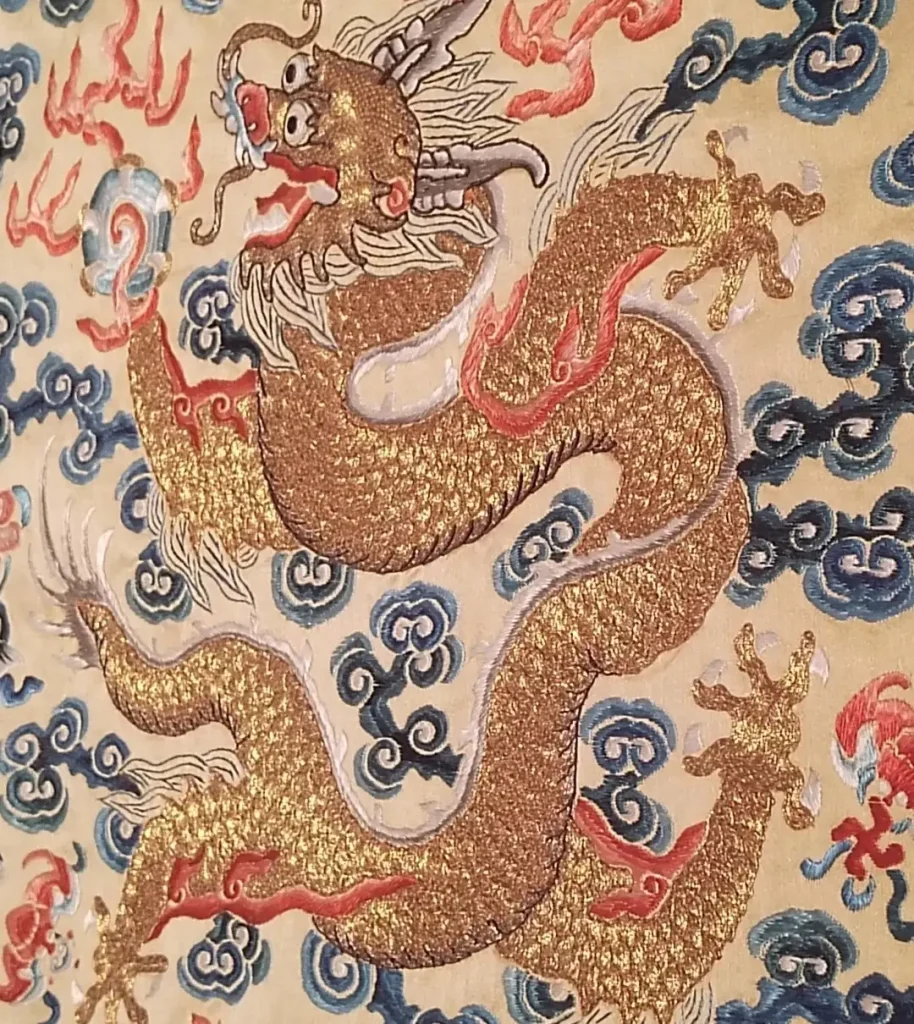
The blue-green or azure dragon, known as Qinglong, represents the east and the element of wood. It is one of the Four Symbols of Chinese constellations, alongside the Vermilion Bird of the south, the White Tiger of the west, and the Black Tortoise of the north. Qinglong is associated with spring, growth, and renewal.
Black dragons are tied to the water element and the north, often linked to wisdom, mystery, and depth. Red dragons carry the same fire and celebration symbolism found throughout Chinese color culture, and are commonly used in festival decorations and dragon dance performances, especially around Chinese New Year and the Dragon Boat Festival.
Beyond the five-element system, certain colors have earned a broader reputation as universally lucky in Chinese tradition.
Red remains the single luckiest color, appropriate for nearly any celebratory occasion. Gold and yellow follow closely behind, tied to wealth, prosperity, and imperial status. Purple holds a special place as well, historically associated with high nobility and spiritual attainment, and is still considered a color of good fortune and honor today.
Green carries positive meaning tied to growth, health, and harmony, making it a popular choice for everyday luck rather than major celebrations. On the other end of the spectrum, white and black are generally avoided for celebratory contexts, since both carry strong associations with mourning and death in traditional Chinese belief.
It’s worth noting that luck in Chinese color tradition is contextual. A color considered lucky for a wedding might not be the right choice for a business opening, and a color perfect for the New Year could feel out of place at a funeral. Understanding the occasion is just as important as understanding the color itself.
Traditional Chinese colors haven’t stayed frozen in history. Modern Hanfu makers continue to draw on the five-element palette, seasonal associations, and dragon symbolism when designing new pieces, often pairing historically accurate colors with contemporary silhouettes. For anyone exploring Hanfu, Chinese home decor, or traditional art, understanding the meaning behind a color adds another layer of appreciation, turning a simple aesthetic choice into a connection with thousands of years of cultural history.
Whether it’s choosing a red Hanfu for a celebration, decorating a home in gold and red for the New Year, or simply understanding why the emperor’s dragon was always gold, Chinese color symbolism offers a window into how deeply intertwined color, nature, and meaning have always been in Chinese tradition.