

From ancient imperial courts to modern living rooms, the Chinese tea ceremony is one of the world’s most beautiful and meaningful cultural rituals. Whether you’re curious about its history, want to host your own ceremony, or are planning a Chinese wedding — this guide covers everything you need to know.
The Chinese tea ceremony — known in Mandarin as Gongfu Tea (also written as Gongfu Cha, 功夫茶) or Chá Lǐ (茶礼) — is far more than a method of brewing tea. It is a symbolic ritual that embodies respect, mindfulness, harmony, and deep appreciation for nature and human connection.
Unlike pouring a quick cup of tea in the kitchen, the Chinese tea ceremony transforms the entire process of preparing and serving tea into an art form. Every movement is deliberate. Every vessel is chosen with care. Every sip is meant to be savored.
The ceremony can take place in many contexts:
- A quiet, meditative session between friends or family
- A formal cultural event or tea house experience
- A sacred part of a Chinese wedding, where it carries profound symbolic weight
At its core, the ceremony is about slowing down. In a world that moves fast, Gongfu Tea invites you to be fully present — with the tea, with the people around you, and with yourself.
The story of Chinese tea culture stretches back thousands of years. According to legend, Emperor Shennong discovered tea around 2737 BCE when tea leaves accidentally fell into his boiling water. While this origin is mythological, it speaks to how deeply embedded tea is in Chinese civilization.
The practice of ceremonial tea drinking, however, took shape much later:
- Tang Dynasty (618–907 AD): Tea became a cultural institution. Lu Yu, often called the “Sage of Tea,” wrote the Classic of Tea (茶经, Chájīng) — the world’s first comprehensive text on tea cultivation, preparation, and aesthetics. During this era, tea was often compressed into bricks, powdered, and whisked.
- Song Dynasty (960–1279 AD): Tea culture blossomed into a true art form. Competitions were held to judge the finest teas. Loose-leaf brewing emerged, and porcelain teaware became prized for its elegance.
- Ming and Qing Dynasties (1368–1912): The Gongfu Tea method, originating in Fujian Province, was refined into the ceremony we recognize today. It emphasized skill, precision, and the gradual extraction of flavor through multiple short steepings. Tea culture also spread from Fujian to Taiwan, where it remains deeply practiced.
Today, the Chinese tea ceremony endures as a living heritage — practiced in tea houses, family homes, and cultural events around the world.
To truly understand the Chinese tea ceremony, you need to understand the philosophies woven into it.
Daoism contributes the values of harmony with nature, simplicity, and naturalness. The ceremony encourages you to slow down, be present, and attune yourself to the environment — the warmth of the cup, the color of the leaves, the rising steam.
Confucianism brings the principles of respect, hierarchy, and etiquette. How tea is served, and to whom, reflects social relationships and shows genuine honor to guests and elders.
Buddhism adds the dimension of mindfulness and inner calm. The meditative quality of the ceremony — the quiet focus, the deliberate movements — is deeply rooted in Buddhist contemplative practice.
In traditional Chinese thought, tea also represents harmony between the four elements: water, fire, earth, and air. The act of preparing and serving tea is considered a form of moving meditation.
Many people searching for “Chinese tea ceremony” are looking for one of two very different things. It’s important to know the distinction:
Gongfu Tea (功夫茶) — The Cultural Tea Ceremony
This is the classic Chinese tea ceremony practiced for enjoyment, mindfulness, and cultural appreciation. The name “Gongfu” means skill, time, and effort — it implies that brewing tea this way is a craft that requires practice and dedication.
Gongfu Tea is characterized by:
- Small clay or porcelain brewing vessels (teapot or gaiwan)
- A high ratio of tea leaves to water
- Very short steeping times (seconds, not minutes)
- Multiple infusions of the same leaves — each round revealing a different layer of flavor
- A calm, focused atmosphere

Chinese Wedding Tea Ceremony (婚礼茶礼)
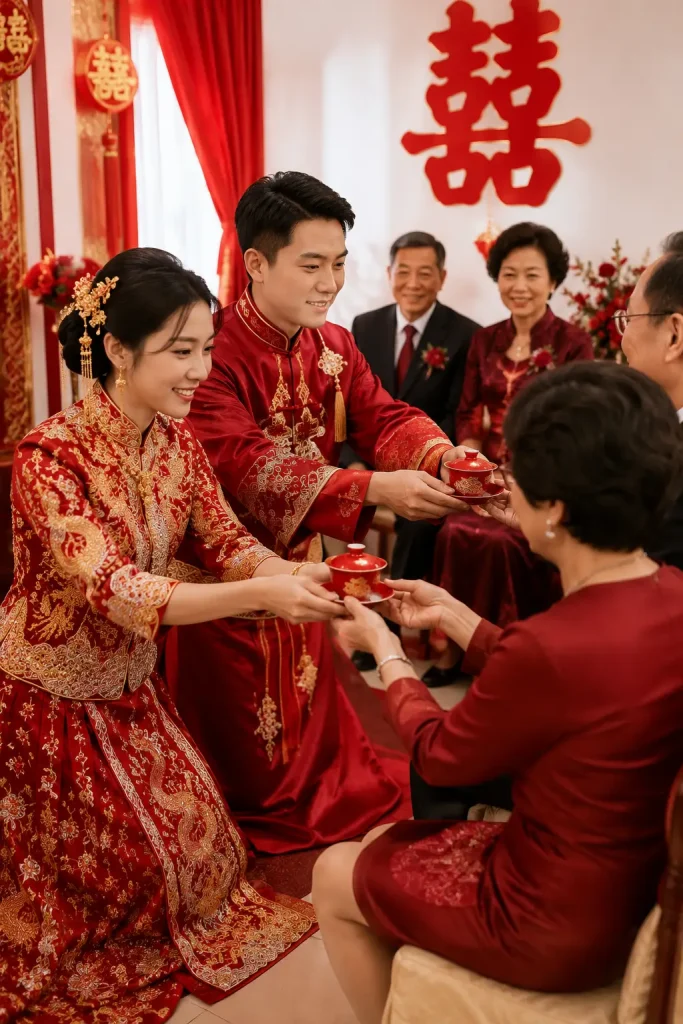
The wedding tea ceremony is a deeply symbolic family ritual performed during Chinese weddings. The bride and groom serve tea to parents, grandparents, and senior relatives from both families. In return, they receive blessings, wisdom, and often gifts of red envelopes or jewelry.
It represents:
- Respect and gratitude to elders
- The official welcoming of a new family member
- The union of two families, not just two individuals
The rest of this guide focuses primarily on Gongfu Tea, with a dedicated section on the wedding ceremony further below.
The right equipment is fundamental to an authentic Gongfu Tea experience. Here is everything you need:
The Brewing Vessel: Teapot or Gaiwan?
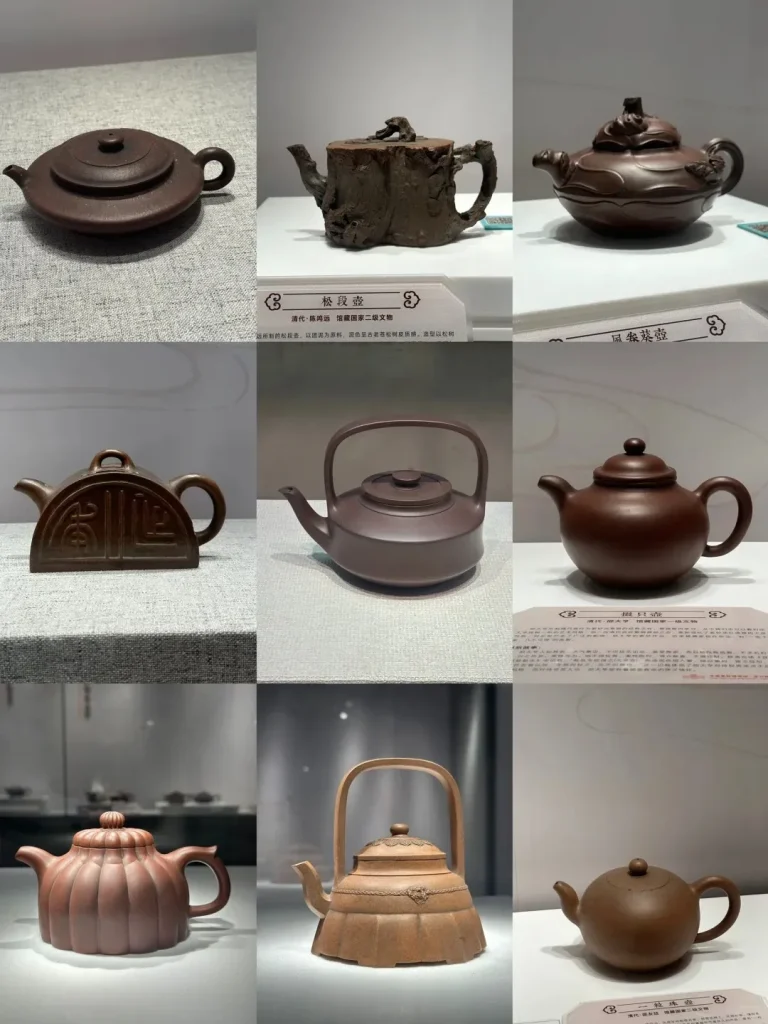
Yixing Clay Teapot (宜兴紫砂壶) The most prized vessel for Gongfu Tea. Made from the porous purple clay found only in Yixing, Jiangsu Province, these small teapots (typically 100–200ml) absorb tea oils over time, seasoning the pot and subtly enriching future brews. Yixing teapots are best used with a single type of tea — most commonly oolong or pu-erh.
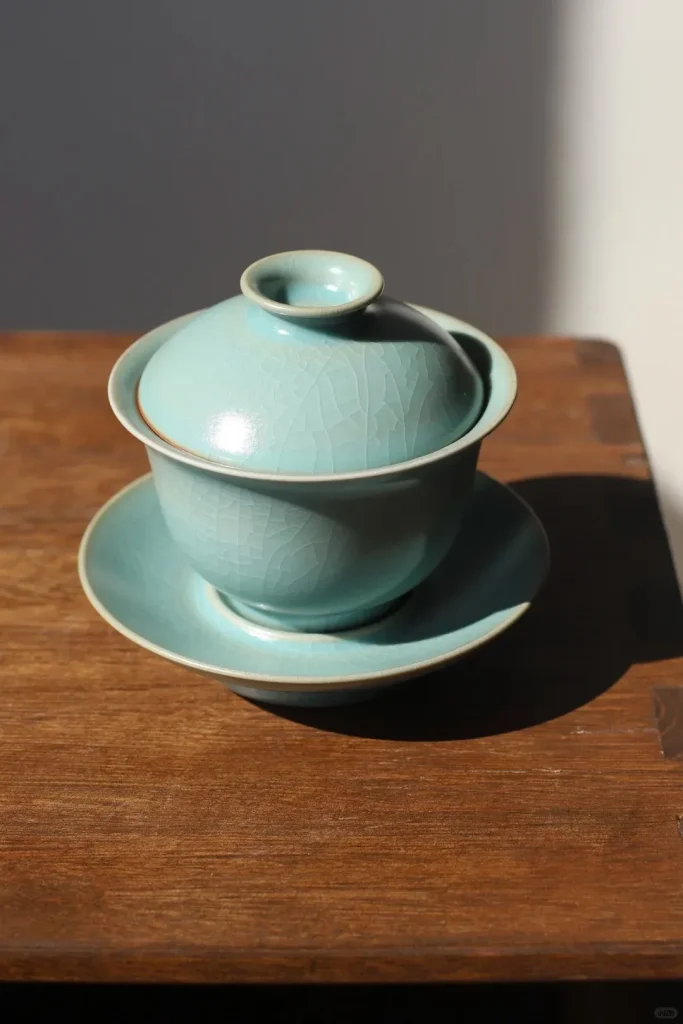
Gaiwan (盖碗) A lidded bowl used for both brewing and drinking. More versatile than a Yixing pot, a gaiwan works well with any tea type and is ideal for beginners. The lid, bowl, and saucer together represent heaven, humanity, and earth.
Essential Supporting Vessels
- Cha Hai / Pitcher (公道杯): After brewing, tea is poured from the teapot into this vessel to homogenize the strength before being distributed into individual cups. This ensures every guest receives tea of the same quality.
- Tea Tray / Cha Pan (茶盘): A wooden or bamboo tray with a drainage system to catch spilled water and tea — very common during Gongfu Tea.
- Small Serving Cups (品茗杯): Typically very small — often holding just 30–60ml of tea. Small cups encourage mindful sipping.
- Snifter Cups / Wen Xiang Bei (闻香杯): Tall, narrow cups used to appreciate the tea’s lingering aroma. Traditionally paired with a serving cup.
- Tea Strainer: Placed over the Cha Hai to catch fine tea particles.


A set of six bamboo tools traditionally used to handle tea:
- Tea Scoop (茶则) — for measuring and scooping dry tea leaves from the tin.
- Tea Spoon / Scraper (茶匙) — for guiding leaves from the scoop into the teapot and clearing tea leaves.
- Tea Tongs (茶夹) — for handling hot cups hygienically without touching them.
- Tea Needle (茶针) — for clearing blockages in the teapot spout or filter.
- Tea Funnel (茶漏) — for guiding leaves into a small-mouthed teapot to prevent spilling.
- Tea Holder (茶筒) — the cylindrical vase that holds the other five tools.
Water Quality and the Kettle
Water quality is taken extremely seriously in Chinese tea culture. Spring or filtered water is strongly preferred over tap water, as minerals and chlorine can significantly affect flavor. A temperature-controlled electric kettle is ideal, since different teas require different water temperatures.
Not all teas are equally suited to the Gongfu method. The ceremony shines brightest with whole-leaf teas that can withstand multiple steepings without turning bitter.
Oolong Tea (乌龙茶) — Most Traditional Choice The classic choice for Gongfu Tea. Famous varieties include:
- Tieguanyin (铁观音) — floral and creamy, from Anxi, Fujian
- Da Hong Pao (大红袍) — rich and roasted, from Wuyi Mountain, Fujian
- Dan Cong (单枞) — fragrant and complex, from Guangdong
Brewing temperature: 95°C–100°C for darker oolongs; 85–90°C for greener ones.
Pu-erh Tea (普洱茶) — Earthy and Aged A fermented tea from Yunnan Province, often aged for years or decades. Known for its deep, earthy flavor and celebrated health benefits. Ripe (shou) pu-erh is smooth and mellow; raw (sheng) pu-erh can be complex and evolving.
Brewing temperature: 100°C (full boiling).
Chinese Black Tea (红茶) Known as hongcha (literally “red tea”) in Chinese, varieties like Keemun (祁门红茶) and Dianhong (滇红) work beautifully in the Gongfu style. Black tea is also the most common choice for Chinese wedding tea ceremonies, symbolizing prosperity and warmth.
Brewing temperature: 95–100°C.
White Tea (白茶) and Green Tea (绿茶) These more delicate teas can be brewed Gongfu style, but require lower water temperatures to avoid bitterness.
Brewing temperature: 70–85°C.
Here is how to perform a Gongfu Tea ceremony at home. Don’t worry about perfection — the philosophy is to honor the tea and the moment, not to follow a rigid script.
Before You Begin
Choose a clean, calm space. Many practitioners burn a stick of incense beforehand to create a relaxed, meditative atmosphere. Lay out all your teaware on the tea tray. Wash your hands — this is both hygienic and symbolic.
Step 1 — Boil the Water
Heat fresh spring or filtered water to the appropriate temperature for your chosen tea:
| Tea Type | Water Temperature |
|---|---|
| Green & White Tea | 70–85°C (158–185°F) |
| Light Oolong | 85–90°C (185–195°F) |
| Dark Oolong & Black Tea | 95–100°C (200–212°F) |
| Pu-erh | 100°C / Full boil |
Step 2 — Appreciate the Dry Leaves (Cha He)
Using a bamboo scoop, place the tea leaves (typically 5–7 grams per 100ml of teapot capacity) into a Cha He — an open display vessel. Pass it around so all guests can observe the leaves and inhale their dry fragrance. This sets an appreciative, contemplative tone.
Step 3 — Warm the Teaware
Pour hot water into the teapot or gaiwan, swirl gently, then pour that water into the Cha Hai, and from there into each small cup. Discard all the water. This step warms the vessels to maintain brewing temperature, and ensures cleanliness.
Step 4 — Load the Tea Leaves
Pour the tea leaves from the Cha He into the warmed teapot or gaiwan. The heat from the warmed vessel will begin to release the dry aroma of the leaves — appreciate this briefly before moving on.
Step 5 — Rinse the Tea (First Wash)
Pour hot water over the leaves just enough to cover them, then immediately discard this water (within 3–5 seconds). This step awakens the leaves, allows tightly rolled oolong or pu-erh leaves to begin unfurling, and washes away any dust. This water is never served.
Step 6 — First Infusion
Pour hot water again into the teapot. Steep for a very short time — typically 10–20 seconds for the first infusion. Gongfu Tea uses a much higher leaf-to-water ratio than Western brewing, so short steeping is essential to avoid bitterness.
Pour the brewed tea immediately into the Cha Hai through the strainer. This stops the steeping and ensures uniform flavor.
Step 7 — Serve the Tea
From the Cha Hai, pour tea evenly into each small serving cup. Offer each cup to your guests with both hands — a gesture of respect fundamental to Chinese tea etiquette.
If using snifter cups, pour tea into the tall snifter cup first, then cover it with the shorter drinking cup, flip them together, and let the guest lift the snifter cup to inhale the trapped fragrance before drinking.
Step 8 — Taste and Savor
Encourage guests to hold the cup with both hands, appreciate the color of the liquor, inhale the steam, and sip slowly. The tea should be experienced across all senses — color, aroma, flavor, and the warmth felt through the cup.
Step 9 — Repeat Infusions
The same leaves are steeped multiple times. Add 3–10 seconds to each subsequent infusion. With quality whole-leaf teas, you can typically complete 4–8 infusions, with each round offering a subtly different flavor profile. Many tea lovers find that the third or fourth infusion is the most balanced and complex.
Step 10 — Close the Ceremony
When the leaves are exhausted, thank your guests for sharing the session. It is a common practice to turn your cup upside down when you are finished, signaling that you need no more tea. Exchange impressions of the tea and the experience.
The wedding tea ceremony is one of the most emotionally significant moments in a traditional Chinese wedding. While practices vary by region and family, the core meaning is universal: honoring elders and uniting two families.
What Happens During the Wedding Tea Ceremony?
The bride and groom kneel before their parents and senior relatives, serving tea as a formal act of respect and gratitude. In return, elders offer blessings and often gifts — typically red envelopes (hongbao) filled with money, or jewelry such as gold bangles.
The order of service matters. The couple typically serves:
- The groom’s parents first
- The groom’s grandparents and senior relatives
- Then the bride’s parents and relatives
Each family member is addressed by their new title as they receive the tea — the groom calls his new in-laws “Mom” and “Dad” for the first time. This is a profoundly emotional moment for many families.
What Tea is Used?
The tea is typically a Chinese black tea (red tea), sometimes sweetened with red dates (jujubes) and lotus seeds, symbolizing a sweet marriage, fertility, and abundance. The tea is served in a red lacquer gaiwan or ornate teapot, with red cups — red being the color of luck and celebration in Chinese culture.
When Does It Take Place?
There is no fixed rule. Some couples hold the tea ceremony at home on the morning of the wedding, as a private family ritual before the main event. Others incorporate it during the cocktail hour or reception. Some hold it a day before.
What Should Guests Wear?
For guests attending a Chinese wedding, traditional or formal attire is appropriate. Avoid wearing white or black, as these colors are associated with mourning in Chinese culture. Red and gold are auspicious choices.
The Difference from a Japanese Tea Ceremony
It’s worth noting that the Chinese tea ceremony is quite different from the Japanese tea ceremony (Chanoyu). The Japanese ceremony is more formalized and structured, rooted in Zen Buddhism, and typically involves matcha. The Chinese Gongfu Tea is more relaxed and conversational, focused on savoring multiple infusions of whole-leaf tea and enjoying the company of guests.
Whether you are a host or a guest, a few simple customs will help you participate respectfully:
For the Host:
- Always use both hands when offering tea cups to guests
- Pour tea in a low, steady stream — pouring from a great height is considered careless
- Never let a guest’s cup sit empty for long
- Present dry leaves for guests to appreciate before brewing
For the Guest:
- Receive the cup with both hands
- A common gesture of thanks: tap two fingers on the table lightly when tea is poured for you (this comes from a Qing Dynasty story where subjects would silently bow this way in gratitude to an emperor who was traveling incognito)
- Sip slowly and mindfully — rushing through tea is considered disrespectful to the host’s effort
- Turn your cup upside down on the tray when you’ve had enough
You don’t need to travel to China or a tea house to experience an authentic Chinese tea ceremony. Here’s how to set one up at home.
What You’ll Need:
- A gaiwan or small Yixing teapot (100–150ml is ideal for 2–4 people)
- A Cha Hai
- 2–4 small tea cups
- A tea tray or a large bowl to catch rinse water
- A bamboo tea scoop
- Quality whole-leaf oolong or pu-erh tea (5–7g per 100ml of teapot volume)
- Spring or filtered water
- A temperature-controlled kettle
Setting the Atmosphere:
- Choose a quiet, uncluttered space
- Optional: light incense, play soft traditional Chinese music
- Turn off your phone and minimize distractions
- Invite 1–3 guests — Gongfu Tea is best enjoyed in small, intimate groups
A Beginner-Friendly Approach: If you’re new to Gongfu Tea, start simple. Use a gaiwan with a good-quality oolong tea. Don’t worry about getting every step perfect. The philosophy of Gongfu is learning through practice — brew, taste, adjust, and repeat. Over time, the movements become natural and intuitive.
Q: What is the difference between Chinese and Japanese tea ceremonies? A: The Chinese Gongfu Tea emphasizes savoring multiple infusions of whole-leaf tea in a relaxed, social setting. The Japanese tea ceremony (Chanoyu) is a more formalized ritual centered on matcha, rooted in Zen Buddhism, with strict prescribed movements and aesthetics.
Q: What tea is best for a Chinese tea ceremony? A: Oolong tea — especially Tieguanyin, Da Hong Pao, or Dan Cong — is the most traditional choice. Pu-erh and Chinese black teas also work beautifully. For wedding ceremonies, Chinese black tea is most commonly used.
Q: Can I do a Chinese tea ceremony at home without specialized equipment? A: Yes. A simple gaiwan (readily available online for $15–$40) and a handful of quality loose-leaf tea are enough to get started. The spirit of the ceremony matters far more than having a complete professional tea set.
Q: How long does a Chinese tea ceremony take? A: A Gongfu Tea session typically lasts 30 minutes to an hour, though there’s no fixed duration. You can brew the same leaves through 4–8 infusions, pausing to appreciate each round.
Q: What is the finger-tapping gesture I’ve seen during Chinese tea ceremonies? A: When tea is poured for you, tapping two fingers lightly on the table is a gesture of thanks — a silent bow of gratitude. It originated from a Qing Dynasty legend and remains common today in Cantonese and Fujian tea culture.
Q: What do you say during a Chinese tea ceremony? A: There’s no mandatory script. Light, pleasant conversation is welcome. For a wedding tea ceremony, elders typically offer verbal blessings to the couple after receiving their tea.
The Chinese tea ceremony is one of humanity’s most elegant traditions — a ritual that turns the simple act of brewing leaves into a meditation on respect, mindfulness, and human connection. Whether you experience it in a traditional tea house, learn the Gongfu Tea method at home, or participate in a wedding ceremony steeped in cultural meaning, the experience rewards patience and presence.
Start simply. A gaiwan, a handful of quality oolong leaves, and a quiet afternoon are all you truly need.
Explore more about Chinese traditional culture on our site, including guides to Hanfu clothing, and other aspects of China’s rich cultural heritage.