

The Chinese umbrella — known in Mandarin as yóuzhǐsǎn (油纸伞), or “oil paper umbrella” — is one of the most iconic symbols of Chinese traditional culture. More than a rain tool, it is a handcrafted work of art with over two thousand years of history, carrying deep cultural meaning across weddings, festivals, and everyday life.
Traditional Chinese umbrellas are made entirely from natural materials:
- Frame: Thin, flexible bamboo ribs and a bamboo or wooden handle
- Surface: Handmade cotton paper, mulberry paper, or silk
- Waterproofing: Tung oil (tongyou, 桐油), extracted from the fruit of the tung tree
This combination of natural materials produces an object that is functional, beautiful, and biodegradable — one that has inspired cultures across Asia for millennia.
Chinese tradition credits the umbrella’s invention to Lu Ban (鲁班), a legendary craftsman of the late Spring and Autumn period (770–476 BC). According to the folk legend recorded in the ancient text Jade Chips, it was Lu Ban’s wife who first devised the idea: tired of watching her husband work in the rain, she split bamboo into thin strips and stretched animal skin over them to create a portable shelter that could open and close like a stick — the world’s first umbrella.
The first oil paper umbrellas appear in historical records during the Eastern Han Dynasty. After the widespread adoption of papermaking in China, craftsmen began stretching paper over bamboo frames and sealing it with tung oil to achieve waterproofing. Scholars loved to paint landscapes and write poetry on the paper surface before the oil was applied, turning each umbrella into a personal artwork.
By the Tang Dynasty, oil paper umbrellas had become objects of status and cultural refinement, carried by noblewomen in imperial processions. Chinese traders brought them to Japan and ancient Korea (then Gojoseon), where they were called “Tang umbrellas” (唐傘). Japanese traditional performances still feature these parasols for female roles to this day.
Umbrella production reached its peak during the Song Dynasty. Specialized craft workshops emerged in Fujian, Zhejiang, and Sichuan. Umbrellas evolved beyond practical tools into symbols of luck and prosperity, with red umbrellas becoming essential wedding accessories.
Regional production centers refined their signature styles during the Ming and Qing dynasties. The Luzhou oil paper umbrella tradition in Sichuan, dating to the late Ming period, eventually earned recognition as a national intangible cultural heritage of China.
The 20th century brought synthetic materials and mass-produced modern umbrellas, which gradually displaced oil paper umbrellas from daily use. Today, traditional Chinese umbrellas are primarily valued as artisan collectibles, wedding accessories, cultural souvenirs, and props in Hanfu photography and dance performances.
The most iconic type. The surface is made from cotton or mulberry paper coated with tung oil. There are two subtypes:
- Tung oil umbrella: The traditional variety — handmade with pure cotton paper and real tung oil. Lightweight, packable, and eco-friendly.
- Stone-rubbed umbrella: A later development using chemically treated surfaces with brighter printed colors and more vivid decorative patterns.
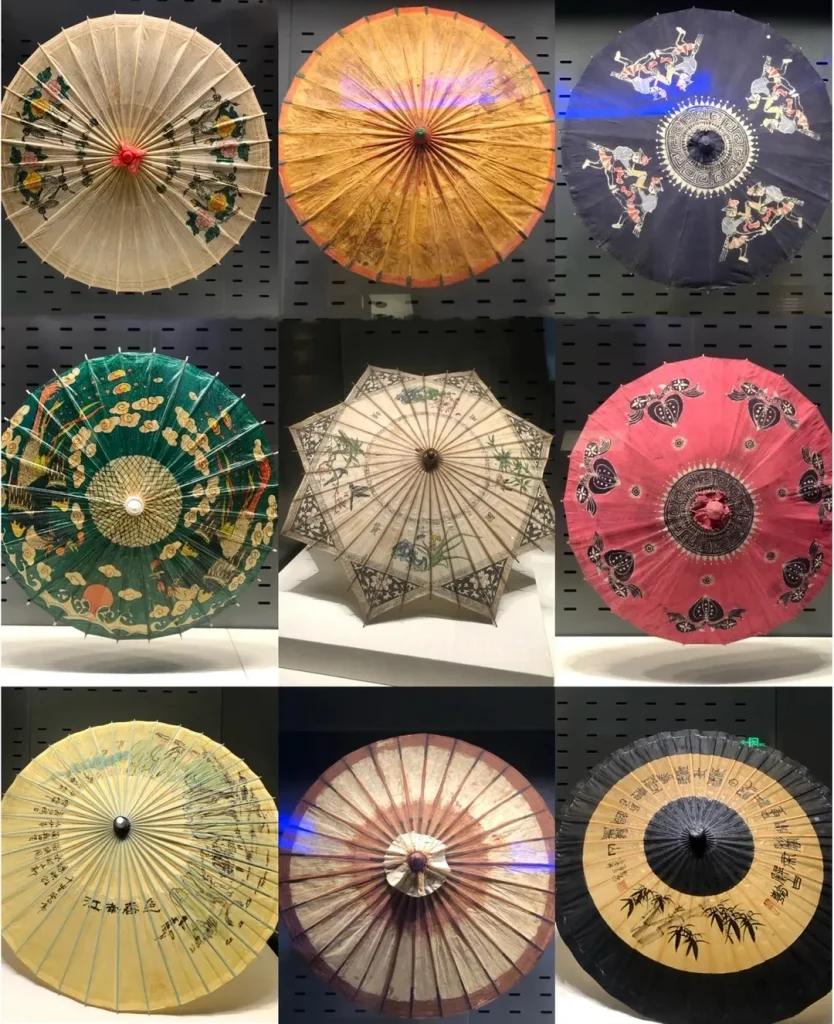
Silk parasols are the most luxurious Chinese umbrellas. The finest examples come from Hangzhou, where silk as thin as a cicada’s wing is printed with the celebrated “Ten Views of West Lake” or embroidered with peonies and phoenixes. These are primarily sun parasols and are closely associated with feminine elegance in Chinese culture.
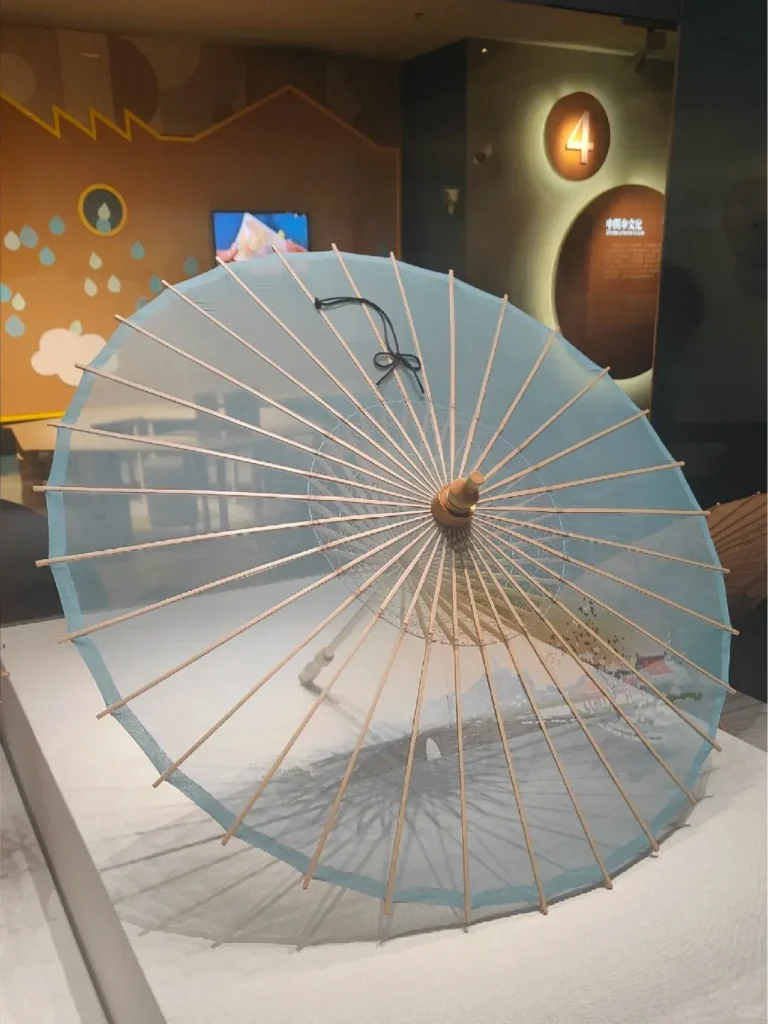
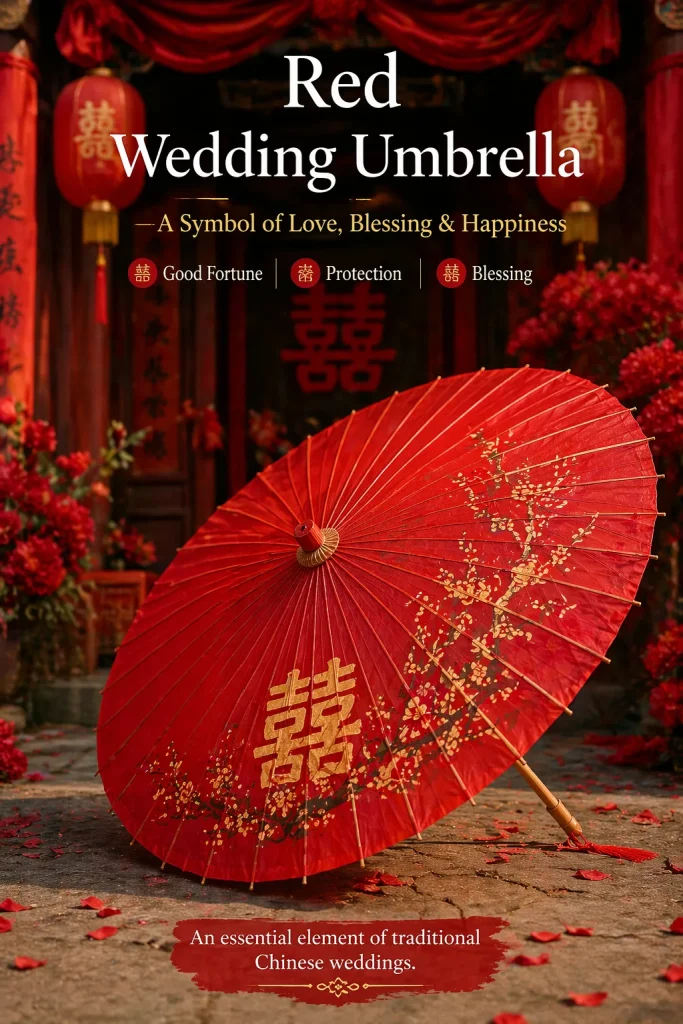
A ceremonial variant used in traditional Chinese weddings. The red color symbolizes joy, good fortune, and prosperity. In many regional customs, a red oil paper umbrella is held over the bride during the wedding procession to protect her from evil spirits and bless the marriage with happiness.
Large, vividly painted oil paper umbrellas used as stage props and parade accessories during festivals like the Lantern Festival and Dragon Boat Festival. These prioritize visual impact over practical function.
The Chinese umbrella carries rich symbolic layers that go far beyond weather protection.
- Good fortune and blessing: The round canopy symbolizes completeness, harmony, and heavenly protection. Gifting a red umbrella is a gesture of wishing someone luck and prosperity.
- Wedding symbolism: Held above the bride during the wedding procession, the red umbrella shields her from evil spirits, symbolizes the groom’s protection, and brings blessings of fertility and marital happiness.
- Status symbol: Historically, the type and decoration of one’s umbrella communicated social rank. Wealthy families commissioned highly decorated umbrellas to showcase artistic taste and standing.
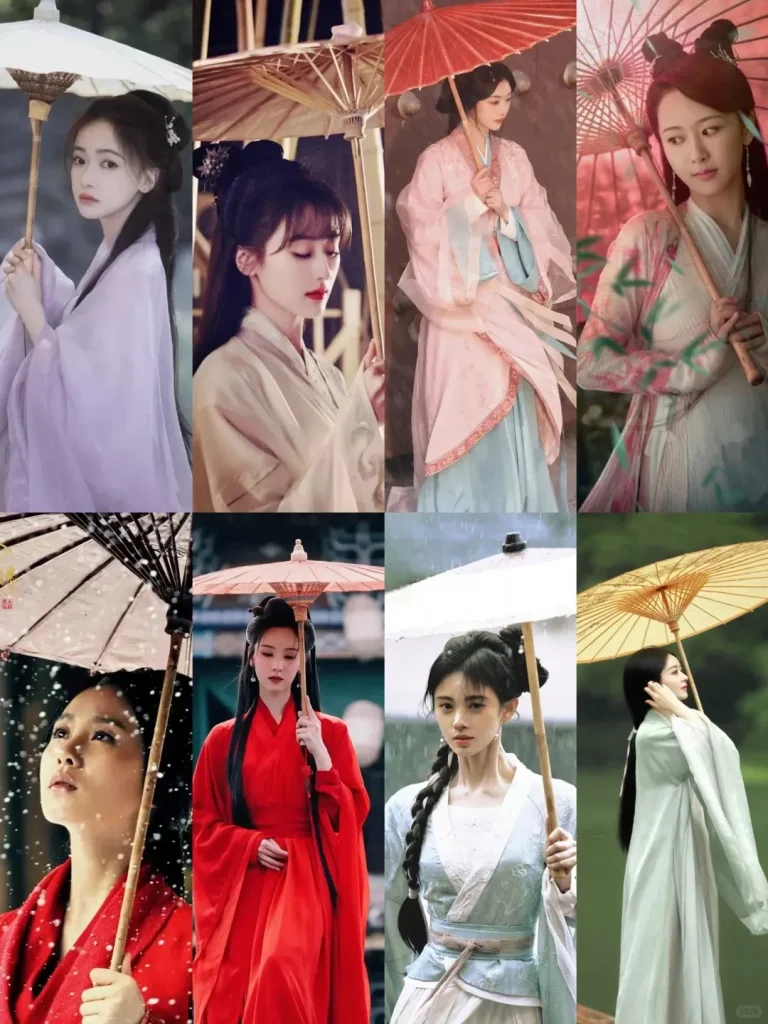
- Hanfu culture: The oil paper umbrella is one of the most popular accessories in modern Hanfu (汉服) culture, appearing in countless Tang, Song, and Ming dynasty-inspired photoshoots and cultural events.
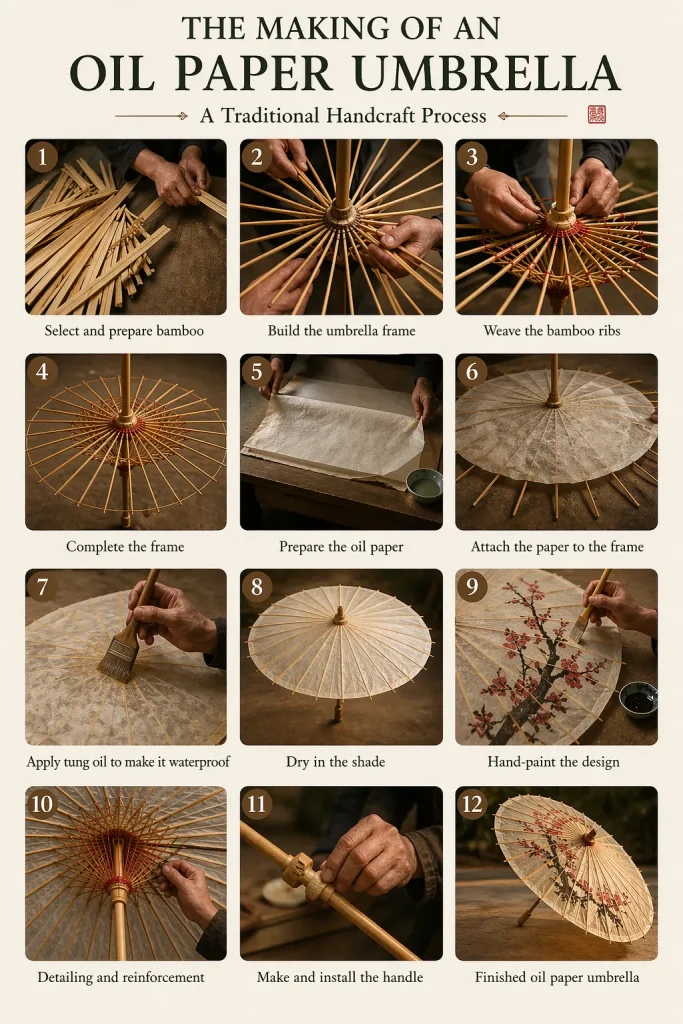
The making of a traditional oil paper umbrella is an entirely handcrafted process. Master craftspeople in Luzhou, Sichuan — the craft’s most celebrated home — follow a process that has changed little in 400 years.
- Bamboo frame construction: Bamboo is split into precise thin ribs, sanded to uniform thickness, and assembled around a central handle using silk or cotton thread binding.
- Paper application: Sheets of handmade cotton or mulberry paper are cut to shape and glued to the bamboo ribs with plant-based adhesive.
- Decoration: Before oiling, the umbrella surface is hand-painted with traditional motifs — plum blossoms, lotus flowers, birds, landscapes, and classical figures. Some workshops invite calligraphers to inscribe poetry.
- Tung oil coating: Multiple layers of tung oil are applied and dried in sunlight between coats, waterproofing the paper and giving the finished umbrella its warm, translucent glow.
- Final assembly: The handle is fitted, the opening mechanism tested, and the umbrella receives a final quality inspection.
A single hand-crafted oil paper umbrella requires dozens of individual steps and skilled artisans for each phase of production.
| Region | Known For |
|---|---|
| Luzhou (泸州) | National intangible cultural heritage; 400+ year tradition |
| Yuhang (余杭) | Durability and exquisite craftsmanship |
| Hunan | Vivid hand-painted patterns |
| Fujian | Fine craftsmanship; historical export trade |
| Hangzhou (杭州) | Luxury silk parasols |
Luzhou’s Fenshuiling Town is the most historically significant production center. Its Fenshui Oil-paper Umbrella Factory is the only surviving enterprise still using fully traditional tung oil and stone-rubbed methods.
The oil paper umbrella is a must-have Hanfu accessory. Held in delicate poses against garden backdrops, ancient city walls, or cherry blossom trees, it has become one of the defining visual elements of the Hanfu revival movement that swept China in the 2010s and continues to grow globally.
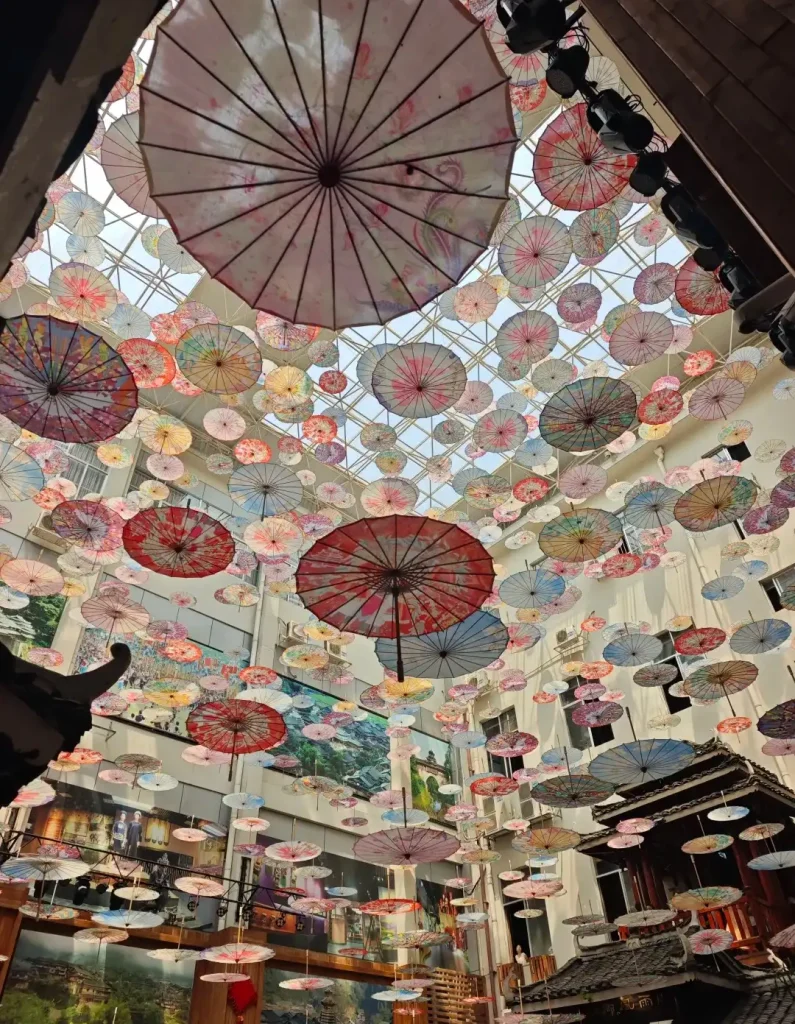
Traditional Chinese umbrellas are widely used as wall décor, ceiling installations at Chinese-themed restaurants, and studio props. Their translucent, paper-lantern quality gives interiors warmth and cultural character.
At major tourist destinations — West Lake in Hangzhou, Jinli Ancient Street in Chengdu, and Fenghuang Ancient Town in Hunan — oil paper umbrellas are among the top-selling crafts for international visitors seeking an authentic cultural memento.
- All-bamboo frame: Real traditional umbrellas use bamboo, not metal or plastic ribs.
- Paper surface: Authentic oil paper umbrellas use cotton or mulberry paper, not polyester fabric.
- Tung oil finish: The surface should have a warm, slightly translucent quality.
- Hand-painted decoration: Mass-produced printed patterns indicate a lower-quality souvenir piece.
- Origin: Look for products from Luzhou (Sichuan) or Yuhang (Zhejiang) for authentic craft pedigree.
- Souvenir / decorative grade: $10–$30 USD (printed patterns, mixed materials)
- Mid-range artisan piece: $40–$100 USD (hand-painted, genuine bamboo frame)
- Premium collector’s piece: $100–$300+ USD (master craftsman, intricate painting, heritage provenance)
The traditional Chinese oil paper umbrella is called yóuzhǐsǎn (油纸伞) in Mandarin. Silk parasols are called sīchóu sǎn (丝绸伞). The general Mandarin word for umbrella is sǎn (伞).
Chinese tradition attributes the invention to Lu Ban’s wife during the late Spring and Autumn period (around 500 BC). The first oil paper umbrellas specifically are traced to the Eastern Han Dynasty (25–220 AD).
Yes. The tung oil coating makes traditional oil paper umbrellas fully waterproof. However, high-quality artisan pieces are often treated as decorative objects and kept away from heavy rain to preserve their painted surfaces.
Chinese umbrellas symbolize protection, good fortune, completeness, and blessings. Red umbrellas specifically symbolize joy and prosperity and are central to wedding ceremonies across many Chinese regional traditions.
Japanese oil paper umbrellas (wagasa, 和傘) are directly descended from Chinese umbrellas introduced during the Tang Dynasty, which is why they were historically called “Tang umbrellas” in Japan. Both share the same bamboo-frame, oiled-paper construction, but Japanese designs developed distinct regional aesthetics over the centuries.
Absolutely. The oil paper umbrella is one of the most popular Hanfu accessories and pairs beautifully with Tang, Song, and Ming dynasty-inspired outfits in both casual styling and formal photoshoots.
