

A Brief History of Chinese Hairstyles
Hair in Chinese culture has never been merely decorative. For thousands of years, a person’s hairstyle communicated their age, marital status, social class, and even their moral character. The Li Ji (Book of Rites) held that hair was a sacred gift from one’s parents and should not be cut carelessly — a philosophy that shaped hair culture across many dynasties.
Each imperial period left its own distinct aesthetic:
- Han Dynasty (206 BC – 220 AD): Simple central-parted buns held with bone or jade hairpins.
- Tang Dynasty (618 – 907 AD): Elaborate high buns, butterfly-wing shapes, and heavy floral ornaments — considered the golden age of Chinese hair fashion.
- Song Dynasty (960 – 1279 AD): More restrained elegance; low coiled buns secured with long hairpins called ji.
- Ming & Qing Dynasties (1368 – 1912 AD): The Qing-era banner hairstyle (旗头, qítóu) for Manchu noblewomen — a dramatically wide, flat structure worn across the top of the head.
Today, modern Chinese hairstyles blend this rich heritage with global beauty trends, creating a uniquely layered aesthetic that is gaining international attention.
Perhaps the most recognizable of all traditional Chinese hairstyles, the high phoenix bun piles hair upward into a rounded crown, often secured with ornate gold or jade hairpins. Associated with the Tang Dynasty’s taste for dramatic beauty, this style symbolized femininity and noble status. It is frequently seen in Chinese historical dramas (guzhuang ju) and is a popular choice for Hanfu photoshoots.
How to achieve it: Gather all hair into a high ponytail, twist into a bun, and secure with decorative hairpins or zan accessories. Add silk flowers or tasseled ornaments for an authentic look.

Literally meaning “falling horse bun,” this asymmetric, loosely coiled updo was fashionable during the Han Dynasty. Its deliberately relaxed appearance was considered alluring rather than careless — an ancient version of “effortlessly undone” styling. The duoma ji sits low and slightly off-center at the back of the head.
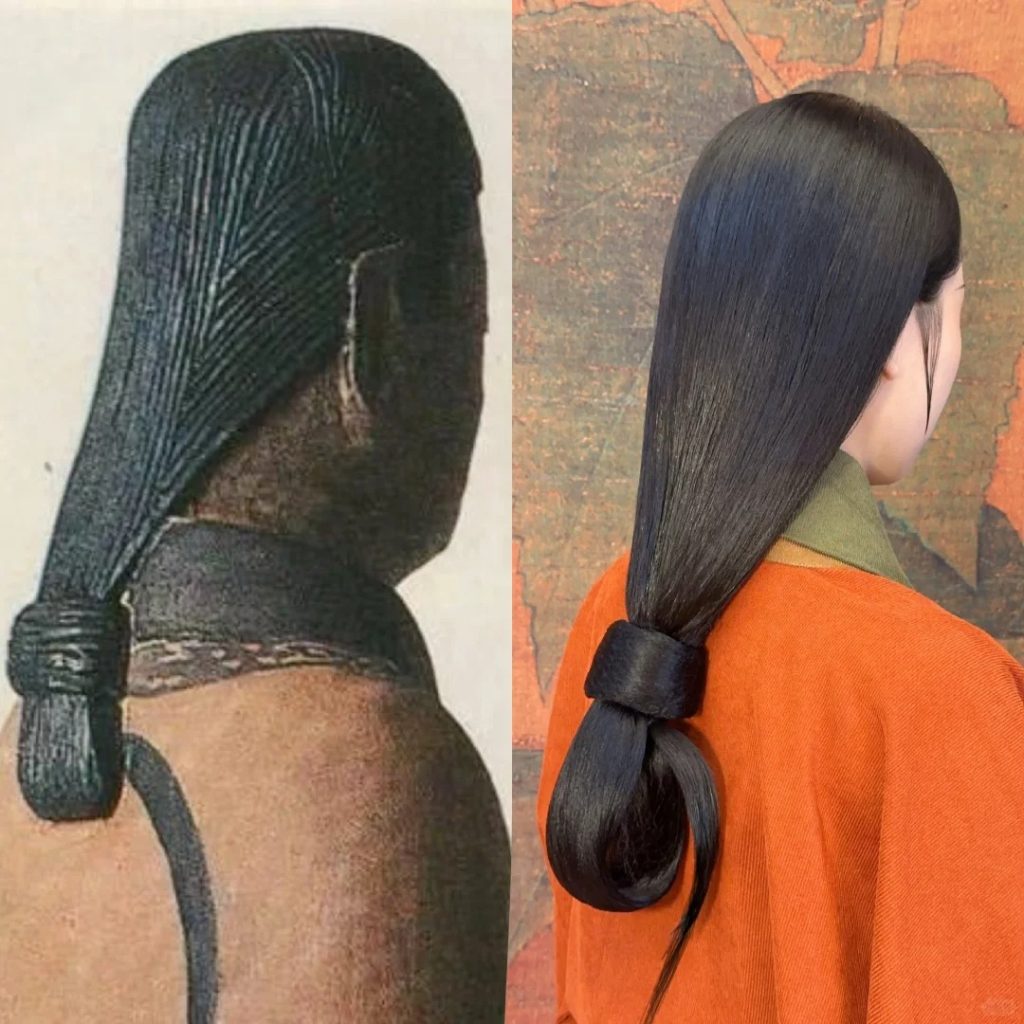
An intricate ceremonial hairstyle featuring multiple interlocking loops stacked vertically. The nine rings symbolized longevity, virtue, and spiritual elegance. This style required skilled hands to construct and was reserved for festivals, court ceremonies, and weddings. It appears frequently in Tang Dynasty murals and contemporary Hanfu revival events.

Two small symmetrical buns placed on either side of the top of the head — a style historically worn by young girls and unmarried women to indicate their status. The double bun has enjoyed a major revival in the modern Hanfu movement and is one of the most accessible traditional styles to recreate at home.
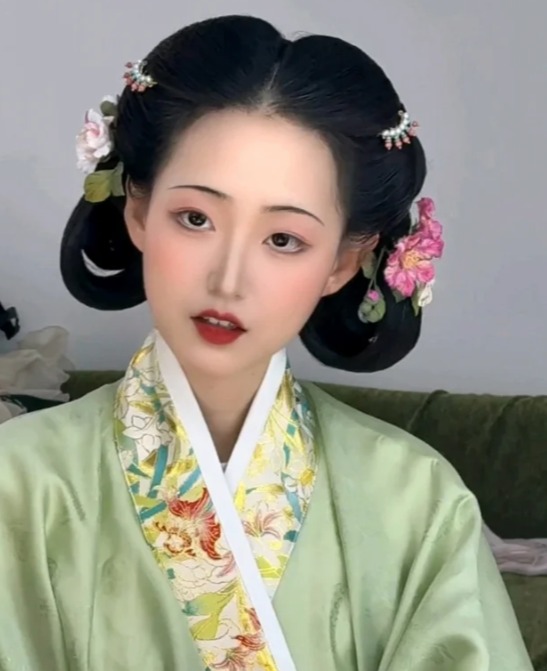
Characterized by soft, voluminous hair swept to one side and shaped to resemble drifting clouds, the yún bìn was a hallmark of refined Tang Dynasty beauty. Poetry of the era frequently described a beautiful woman’s hair as “dark as clouds” (云鬓花颜). This style pairs beautifully with a Hanfu robe and delicate floral accessories.
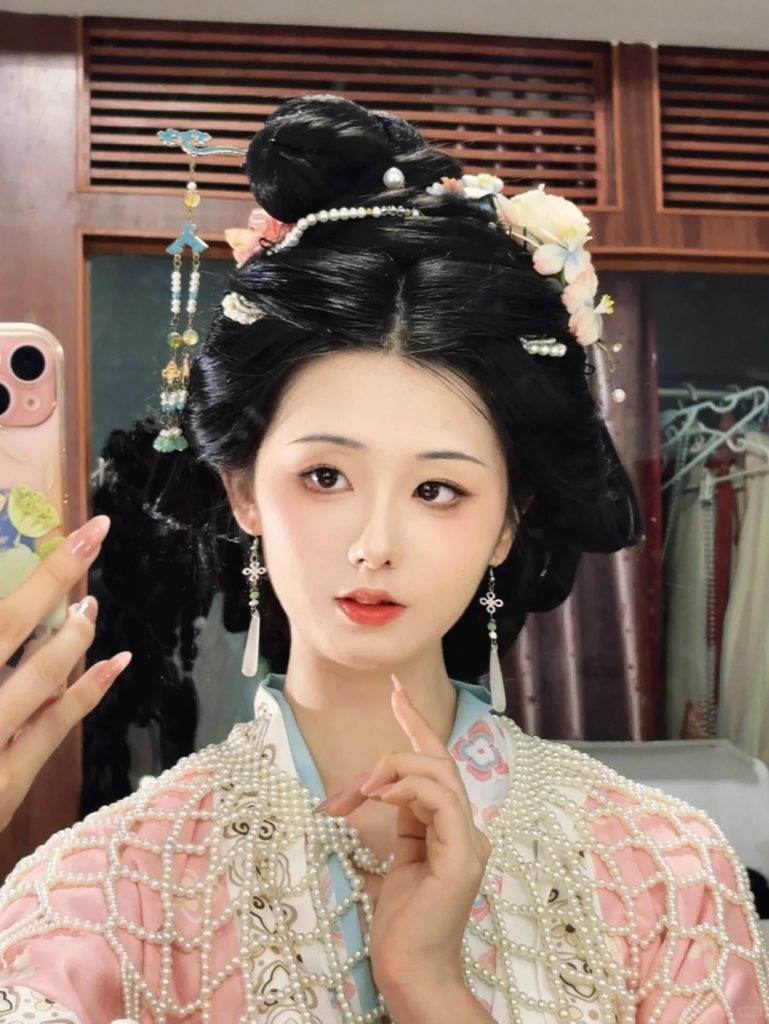
A practical evolution of classical styles, the half-up Hanfu bun gathers the top section of hair into a small, neat bun while leaving the rest flowing loose. It is one of the most popular hairstyles in the contemporary Hanfu community because it is both visually elegant and easy to maintain throughout the day.
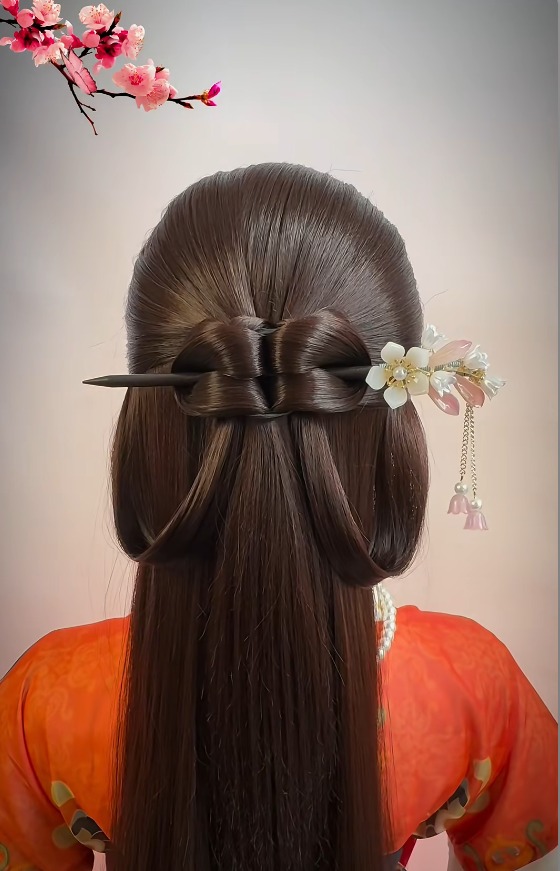
A sinuous, twisting updo fashioned to resemble a coiling snake, the Linghe Ji was popular during the Wei-Jin period (220–420 AD) and is closely associated with the era’s romantic, free-spirited aesthetic. Unlike the structured buns of the Han and Tang courts, this style embraced organic asymmetry — each iteration looked slightly different, as if the hair had wound itself naturally into place. It is frequently depicted in Wei-Jin figure paintings alongside flowing robes and an air of scholarly elegance.
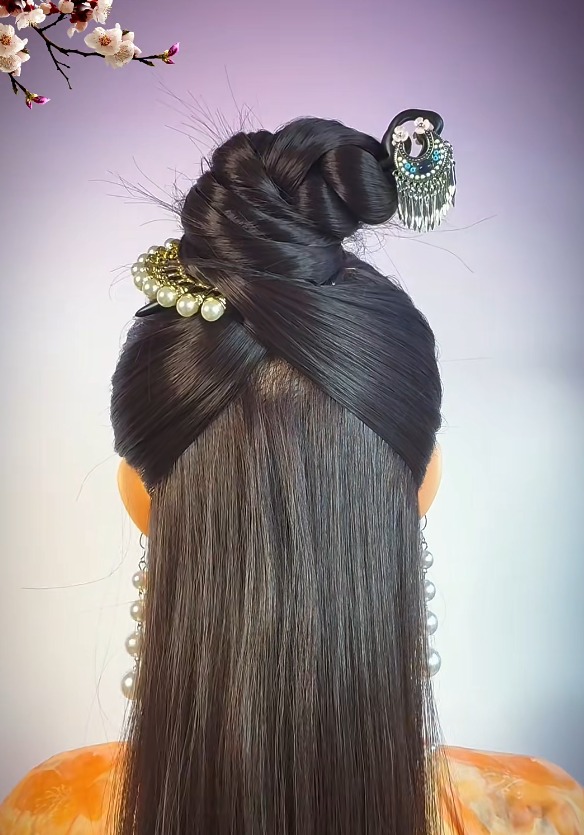
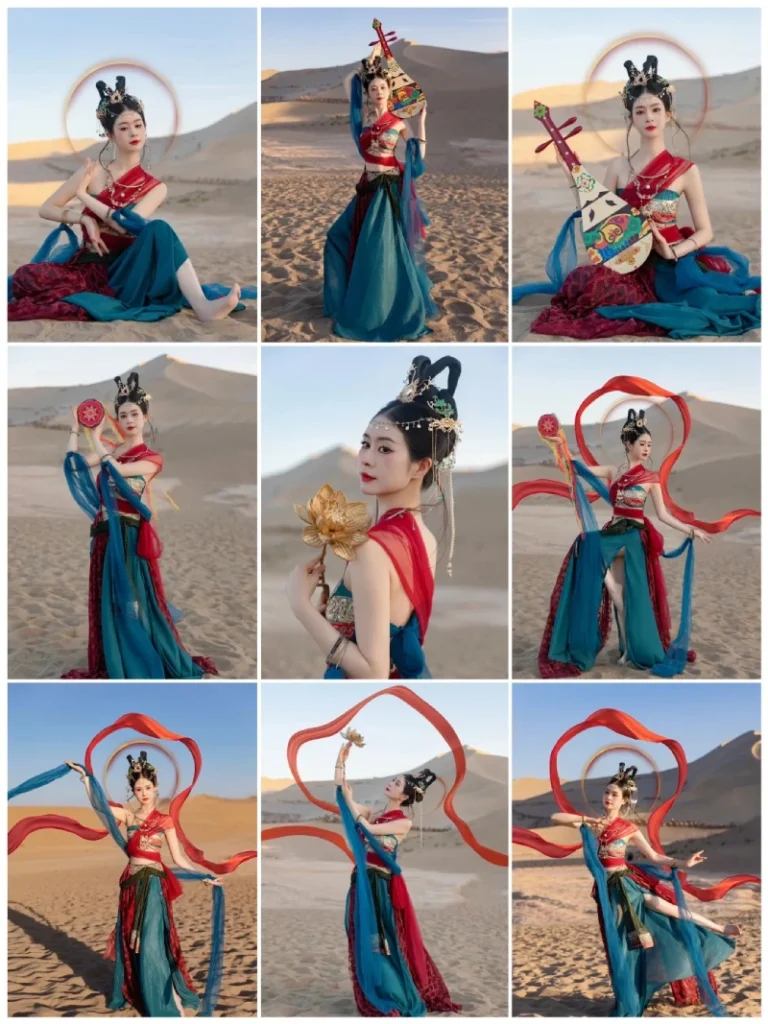
Named after the celestial beings painted across the walls of the Dunhuang caves, the Feitiang Ji features two or three small buns stacked vertically on top of the head, creating an upward, ascending silhouette. The style was favored in Tang Dynasty court circles and carries strong associations with Buddhist art and spiritual refinement. Its dramatic vertical structure made it one of the most visually striking hairstyles of the ancient world, and it remains a popular choice for Hanfu photography and Tang-era costume recreations today.
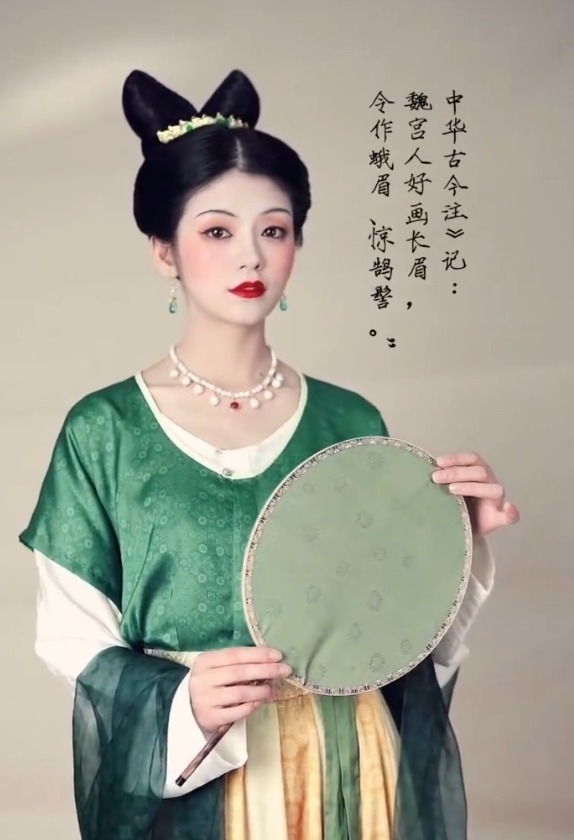
Literally meaning “the bun of a startled swan,” this Han Dynasty style features hair swept upward and outward on both sides of the head, mimicking the spread wings of a bird taking flight. The Jinghu Ji required considerable skill to construct and was considered a symbol of vitality and grace. It appears in Han Dynasty tomb figures and is one of the more dramatic silhouettes in classical Chinese hair history.
A small, tightly coiled bun shaped to resemble a conch shell or snail spiral, the Luo Ji carries deep roots in Buddhist culture — the same spiral form appears on statues of the Buddha as a symbol of wisdom and enlightenment. The style was worn by women across multiple dynasties as a modest, refined alternative to more elaborate court updos. Its compact, geometric elegance makes it one of the most timeless silhouettes in traditional Chinese hair history, and it translates beautifully to modern Hanfu styling with a single decorative hairpin.
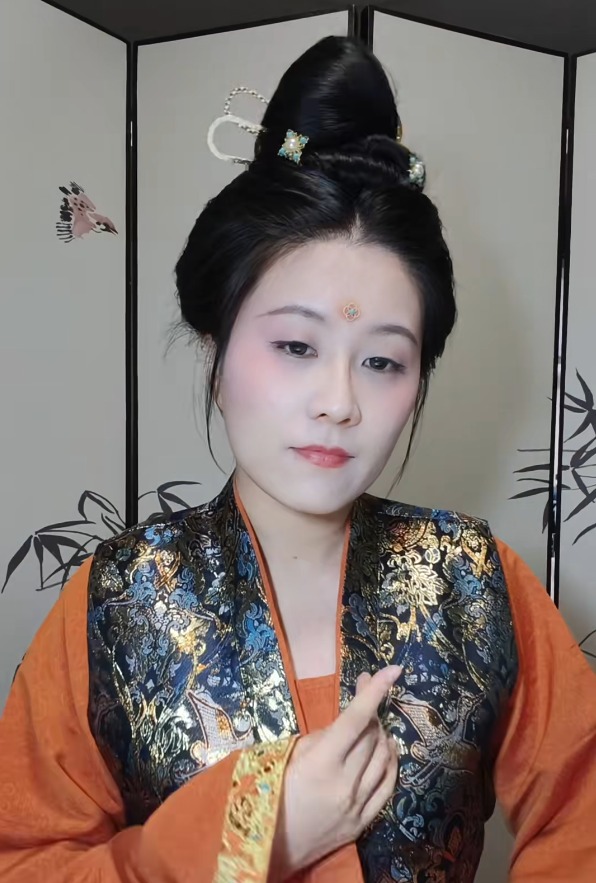
For men participating in the Hanfu movement, the half-up bun — gathering the top half of hair into a small topknot while the rest hangs loose — is the most common traditional male hairstyle recreated today. In ancient China, men wore their hair fully up (as cutting it was taboo), but the half-up version is a practical modern compromise.
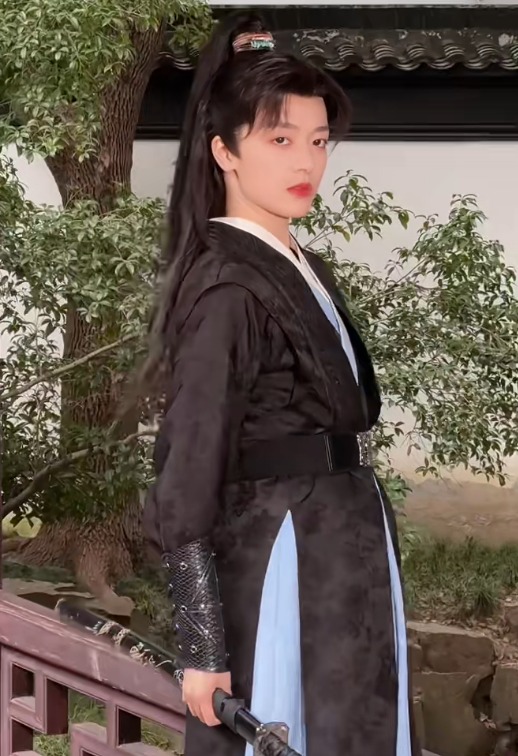
Hanfu Hairstyles: Matching Your Hair to Your Outfit
The resurgence of the Hanfu movement has driven enormous interest in historically accurate hair styling. Choosing the right hairstyle for your Hanfu depends on the dynasty the garment represents:
- Han Dynasty Hanfu: Simple cloud buns or low coiled buns with minimal accessories.
- Wei-Jin Period Hanfu: Loose, flowing hair with a few strands tucked back — an ethereal, poetic aesthetic.
- Tang Dynasty Hanfu: High buns, elaborate phoenix structures, and heavy ornaments — the most theatrical option.
- Song Dynasty Hanfu: Neat, restrained low buns with long silver hairpins (ji).
- Ming Dynasty Hanfu: Structured mid-level buns with crown accessories and silk ribbons.
If you are new to Hanfu hairstyling, the half-up bun is the safest starting point: it works across most Hanfu styles, is easy to achieve, and looks effortlessly elegant in photographs.
Traditional Chinese Hair Accessories
No guide to Chinese hairstyles would be complete without discussing the accessories that bring them to life:
- Zan (簪): Long decorative hairpins, often topped with carved jade, gold phoenixes, or pearl clusters. The most essential traditional hair accessory.
- Buyao (步摇): Dangling hairpins designed to sway with the wearer’s movement — the word literally means “as you walk, it trembles.” Associated with elegance and noble status.
- Fa Guan (发冠): A structured hair crown worn by women of high status during ceremonies.
- Silk Ribbons and Tassels: Woven through buns and braids to add color and movement.
- Floral Accessories: Fresh flowers (notably peonies and plum blossoms) tucked into updos have been used since the Tang Dynasty and remain popular in Hanfu photography today.
The high bun (gaoji) secured with a decorative hairpin is arguably the most widely recognized traditional Chinese hairstyle for women. It appears across multiple dynasties and is the default “historical Chinese woman” hairstyle in popular culture. For men, the fully pinned-up topknot was the traditional style of the Han Chinese before the forced adoption of the Manchu queue in the Qing Dynasty.
Hanfu hairstyles refer to hairstyles that complement Han Chinese traditional clothing (Hanfu). They are typically historically inspired updos, buns, and braids drawn from the Han, Tang, Song, and Ming dynasties, styled with traditional accessories like hairpins and silk ribbons.
The most important accessories are the zan (hairpin), buyao (dangling step-trembling pin), silk ribbons, jade ornaments, and floral decorations. Gold and jade were associated with noble status, while silver was more common among ordinary women.
Traditional Chinese hairstyles span thousands of years, with evidence of elaborate hair culture dating back to the Shang Dynasty and even earlier Neolithic periods. Each dynasty developed its own distinct aesthetic language, shaped by social hierarchy, philosophy, and artistic sensibility. The styles introduced in this guide represent some of the most iconic and culturally significant looks from Chinese history — but they are by no means exhaustive. The full spectrum of traditional Chinese hair culture is extraordinarily rich and continues to be explored and revived by the modern Hanfu community today.
Whether you are styling for a Hanfu photoshoot, looking for everyday inspiration, or simply curious about one of the world’s oldest hair traditions, Chinese hairstyles reward exploration. Start with a style that matches your face shape and lifestyle, invest in a beautiful hairpin or two, and let thousands of years of elegance speak for themselves.