

When we speak of China’s golden age, few eras shine as brightly as the Tang Dynasty (618–907 CE). This was a time when poetry flowed like wine, Buddhism bloomed alongside Daoism and Confucianism, and Chang’an—the capital—stood as the most cosmopolitan city on Earth. But beyond its philosophical depth and political might, the Tang era also revolutionized one of humanity’s most intimate expressions: clothing.
The Tang dynasty outfit was not merely attire—it was a language. Through color, cut, fabric, and ornamentation, it communicated rank, region, gender, ethnicity, and even mood. Women wore skirts so wide they required two hands to hold; men donned robes whose hues declared their place in the imperial bureaucracy; foreign merchants strutted through markets in hybrid fashions that blended Sogdian flair with Chinese elegance.
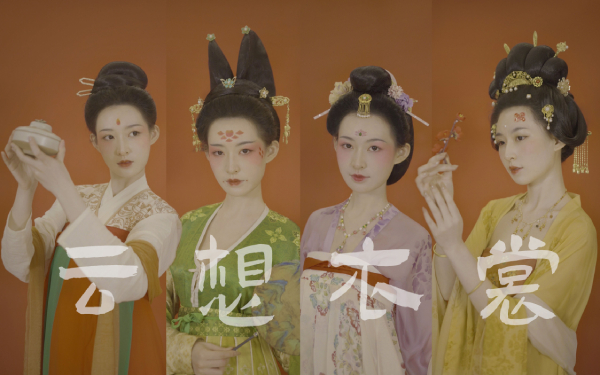
Today, this sartorial legacy is experiencing a renaissance. From blockbuster dramas to street fashion in Shanghai, from museum exhibitions to TikTok tutorials, the Tang aesthetic captivates global audiences. Yet to truly appreciate it, we must journey back—not just to admire its beauty, but to understand the world that made it possible.
This article explores the history, design, symbolism, evolution, and modern revival of Tang dynasty clothing in unprecedented depth—drawing on archaeology, literature, art, and contemporary scholarship to weave a full portrait of fashion in China’s most open and opulent age.
Following centuries of fragmentation after the fall of the Han Dynasty, the Tang reunified China under a strong central government. Emperors like Li Shimin (Emperor Taizong) and Li Longji (Emperor Xuanzong) presided over an empire stretching from Korea to Central Asia, with a population exceeding 80 million.
Economic stability, efficient taxation (the equal-field system), and a merit-based civil service exam created a flourishing urban culture. Artisans, poets, merchants, and scholars thrived. And with prosperity came the luxury of self-expression—especially through dress.
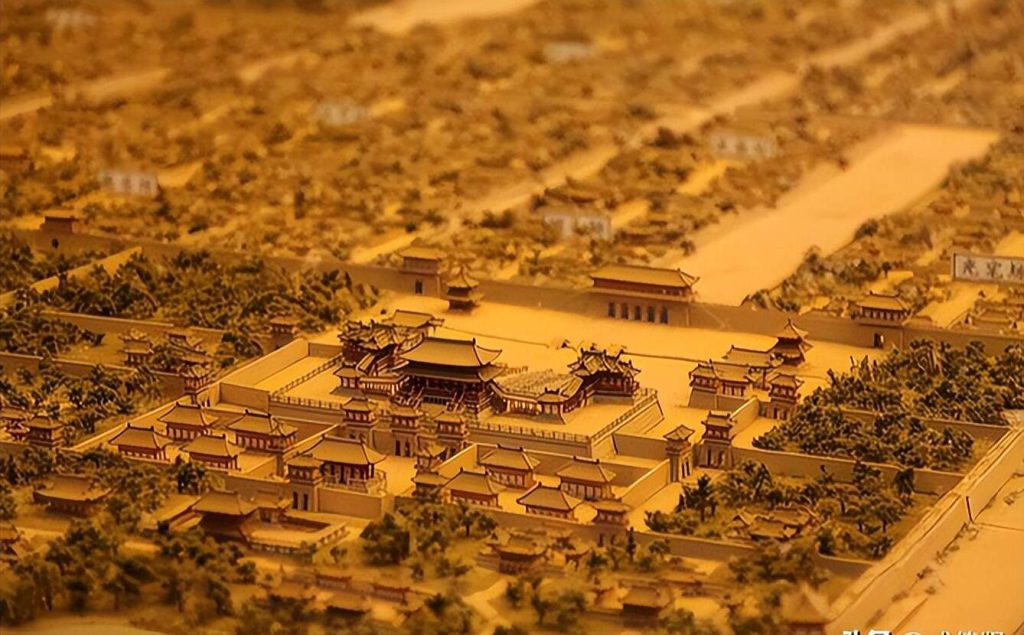
At its peak, Chang’an (modern Xi’an) housed over one million people within walls spanning 84 square kilometers. Divided into 108 walled wards (fang), it featured:
- The East and West Markets, where Persian perfumes, Roman glass, Indian spices, and Central Asian horses were traded;
- Buddhist monasteries hosting monks from Nepal and Sri Lanka;
- Nestorian churches and Zoroastrian fire temples.
This multicultural environment made fashion fluid and experimental. As historian Valerie Hansen notes in The Open Empire, “No other pre-modern city matched Chang’an’s ethnic and cultural diversity.”
Tang artisans perfected techniques that defined East Asian textile history:
- Silk weaving: Complex patterns like kesi (cut-silk tapestry) and jin (brocade with gold thread) became status symbols.
- Dyeing: Natural dyes yielded over 30 stable colors—safflower for red, indigo for blue, gardenia for yellow.
- Embroidery: Used not just for decoration but as coded messaging—phoenixes for empresses, cranes for longevity.
The state even operated imperial textile workshops (zhijin yuan) employing thousands of weavers, many of them women, to produce court garments.
Tang women enjoyed unprecedented social freedom. They could inherit property, initiate divorce, ride horses unescorted, and—most shockingly to later Confucian moralists—wear revealing clothing.
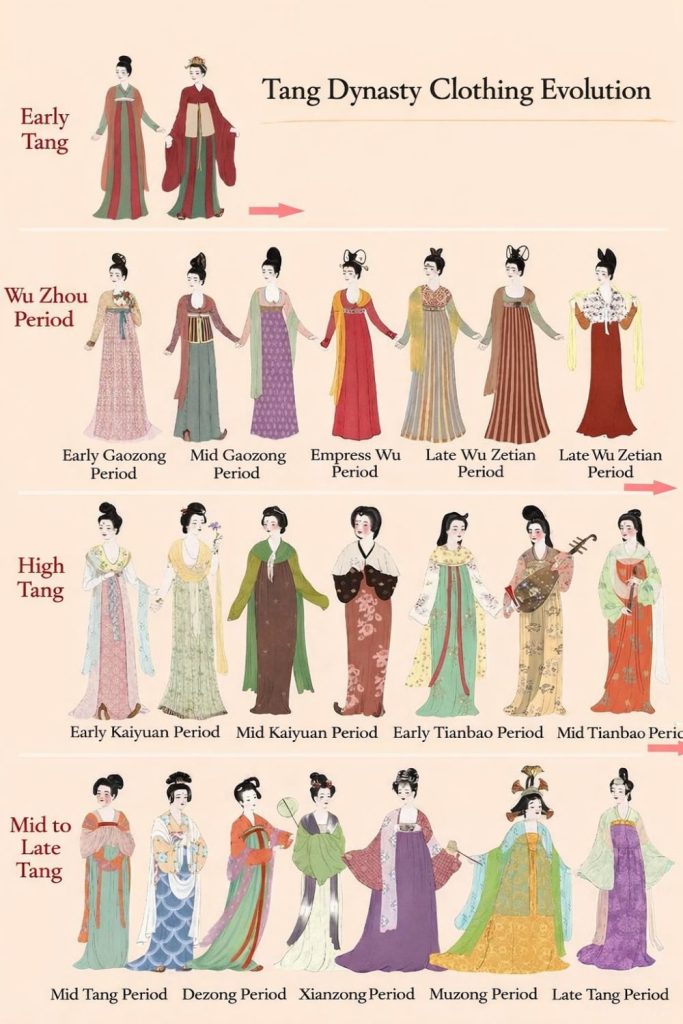
The ruqun—a two-piece ensemble of blouse (ru) and skirt (qun)—was the cornerstone of female dress. But its form evolved dramatically across the dynasty:

Timeless Tang-Style Chest-High Ruqun
- Style: Iconic high-waisted silhouette from the Tang Dynasty.
- Design: Elegant flowing skirt paired with a delicate, embroidered wrap blouse.
- Vibe: Ethereal and regal—designed to create a tall, graceful stature.
👉 [View Details & Price on AliExpress]
- Skirts: High-waisted but narrow, often solid-colored.
- Blouses: Long sleeves, high necklines, influenced by Sui Dynasty austerity.
- Colors: Earth tones—ochre, olive, slate—reflecting post-war restraint.
- Skirts: Extremely high-waisted (tied just below the bust), floor-length, and wide—some measured over 3 meters in circumference. Striped (jianqun) and floral-patterned skirts dominated.
- Blouses: Short-sleeved or sleeveless, with low, U-shaped necklines that exposed the upper chest—a style immortalized in poet Zhang Xie’s lines:“Her skin white as snow, her collar low as spring mist.”
- Outerwear: Light gauze jackets (banbi) worn over the ru for modesty or style.
After the An Lushan Rebellion (755–763), which killed millions and shattered imperial confidence, fashion grew conservative:
- Necklines rose.
- Sleeves narrowed.
- Darker, more somber colors prevailed.
The pibo—a long, sheer silk scarf—was draped over the shoulders and arms, sometimes looped around the elbows. Made of lightweight gauze (sha), it fluttered with movement, symbolizing grace and ethereality.
In Dunhuang cave murals (e.g., Cave 112), celestial dancers are shown mid-leap, pibo swirling like clouds—proof that this accessory was both practical and performative.

Tang Dynasty “Dunhuang” Inspired Set
Style: Iconic Tang-style Chest-High Ruqun with a majestic large-sleeve robe.
Highlight: Features a stunning gradient Pibo (silk wrap) that creates an ethereal, flowing silhouette.
👉 [View Price & Colors on AliExpress]
Tang beauty standards prized pale skin, arched brows, and delicate features—but achieved through elaborate artifice:
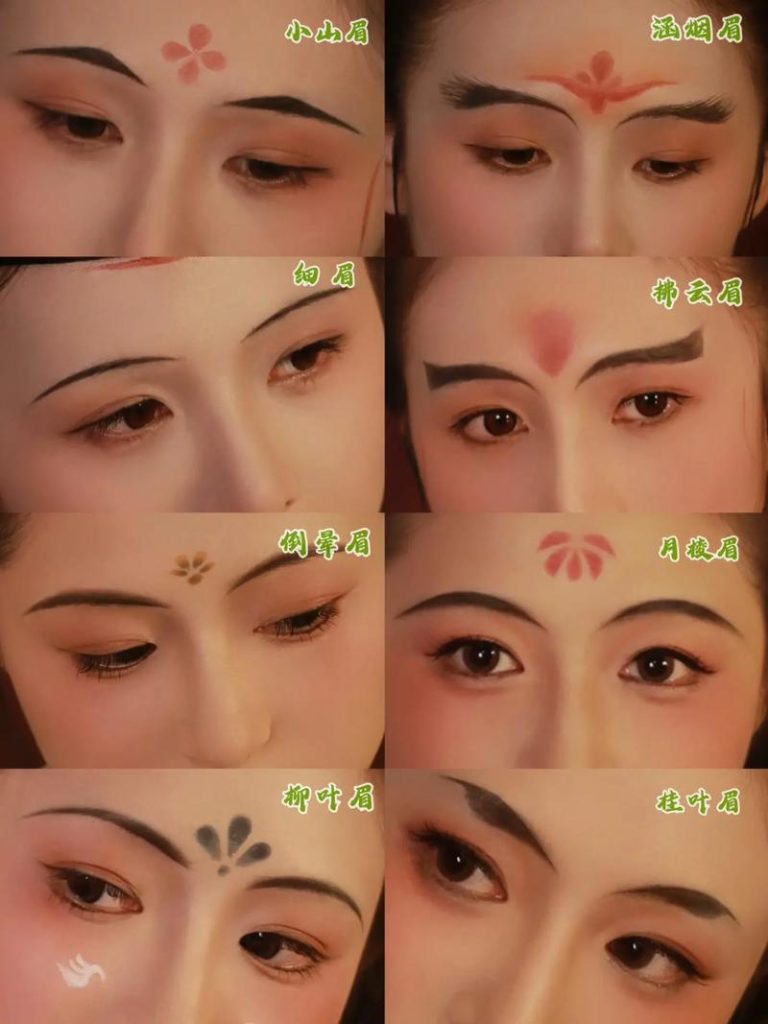
- Hairstyles: Over 30 documented styles, including:
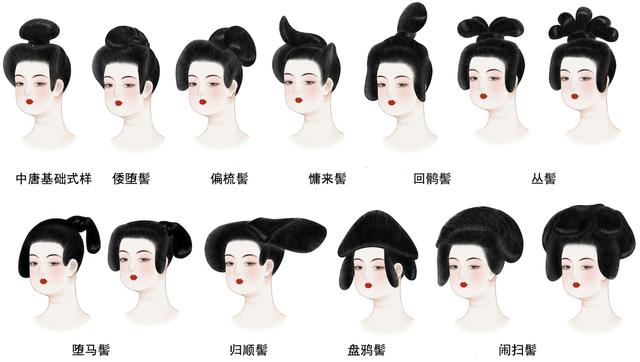
- Woduo ji (“fallen chignon”): Loose, romantic, favored by courtesans.
- Jiuchou ji (“nine-knot bun”): Structured and regal, worn by noblewomen.
- Hairpins: Crafted from gold, jade, or kingfisher feathers (diancui technique).
- Makeup:
- Huadian: Decorative forehead appliqués—often red flowers or crescent moons—inspired by a legend of a princess who touched her brow with plum blossom petals.
- Rouge circles: Applied to cheeks to mimic youthful blush.
- Blackened teeth: A rare but documented practice among elite women, possibly influenced by Southeast Asian customs.
Women wore soft silk slippers with upturned toes. Underneath, they used belly bands (dudou)—diamond-shaped cloth wraps tied at the back—to support the torso, though foot binding had not yet begun (it emerged in the Song Dynasty).
While women’s fashion embraced fluidity, men’s dress emphasized order, rank, and ritual propriety.
The round-collared robe originated from nomadic steppe cultures but was Sinicized during the Northern Dynasties and perfected in the Tang. Key features:
- Knee- or ankle-length.
- Narrow sleeves for practicality.
- Fastened with hidden ties or buttons on the right side (following traditional youren closure).
- Slits on both sides for ease of movement—essential for horseback riding.
Commoners wore plain versions in hemp or coarse silk; officials wore refined silk with symbolic embroidery.

Style: Tang-style round-collar robe with elegant silver embroidery.
Feature: Lightweight, flowing fabric perfect for a “Wuxia” or “Immortal” look.
👉 [View Details on AliExpress]

The Tang legal code (Tang Liudian) strictly regulated official attire:
| Rank | Robe Color | Belt Material |
|---|---|---|
| 1st–3rd | Purple | Jade |
| 4th–5th | Crimson/Red | Gold-inlaid |
| 6th–7th | Green | Silver |
| 8th–9th | Blue/Black | Iron/Wood |
Only the emperor could wear bright yellow after Empress Wu Zetian decreed it imperial in the late 7th century.
Originally a simple black headwrap tied at the back, the futou evolved into a rigid cap using lacquered frames or wire supports. By the mid-Tang, its “wings” pointed upward or sideways—a style said to prevent officials from whispering during court sessions.
Civil officials wore rounded futou; military officers preferred angular ones.
- Scholars: Favored wide-sleeved, cross-collared robes (shenyi) in white or grey, embodying Confucian humility.
- Merchants & Artisans: Restricted to dark blues, browns, and greys in coarse fabrics—despite often being wealthier than low-ranking officials.
- Farmers: Wore short jackets and trousers in undyed hemp, practical for labor.
The Tang state used clothing to reinforce hierarchy:
- Peasants forbidden from wearing silk.
- Only nobles allowed dragon motifs (though less codified than in later dynasties).
- Foreigners required to wear distinct styles in certain contexts.
Yet enforcement was inconsistent. Wealthy merchants routinely flouted rules, and frontier regions developed hybrid fashions that defied central norms.
Cross-dressing was not uncommon. In palace performances, male actors played female roles in full ruqun—and vice versa. Empress Wu Zetian herself adopted male-style robes during her reign, visually asserting imperial authority.
Poetry and paintings suggest that androgynous beauty—slender figures, delicate features—was admired in both sexes.
The Tang was remarkably open to external influence:
- Sogdians (from modern Uzbekistan): Introduced tight-sleeved jackets, flared pants, and lapel robes (hufu – “barbarian dress”), popular among dancers and soldiers.
- Persians: Brought floral boteh (paisley) motifs and pearl roundels.
- Indians: Influenced textile patterns and jewelry styles.
- Koreans & Japanese: Adopted Tang fashion wholesale—Japan’s junihitoe court dress derives directly from Tang models.
Archaeological finds from the Astana Tombs (Turpan, Xinjiang) reveal textiles with Sasanian Persian inscriptions woven into Chinese silk—a literal fusion of civilizations.
Our knowledge of Tang fashion comes from multiple sources:
- Poetry: Du Fu, Bai Juyi, and Yuan Zhen described clothing in vivid detail.
- Paintings: Zhou Fang’s Court Ladies Adorning Their Hair with Flowers shows noblewomen in ruqun and pibo.
- Pottery Figurines: Thousands of sancai (three-color glazed) tomb figurines depict servants, dancers, and foreigners in period dress.
- Murals: Dunhuang caves offer the most complete visual archive of Tang costume.
Dramas like The Longest Day in Chang’an (2019) employed historians to ensure costume accuracy, sparking nationwide interest. Yang Guifei’s iconic look—high-waisted striped skirt, low-necked blouse, elaborate hairpins—became a viral template.
Since the early 2000s, young Chinese have embraced Hanfu (traditional Han clothing), with Tang-style ruqun among the most popular. Events like the Xi’an Hanfu Festival attract tens of thousands annually.
Designers like Guo Pei and Ma Ke integrate Tang elements:
- Guo Pei’s 2016 Met Gala gown referenced Tang cloud collars and phoenix embroidery.
- Shanghai Fashion Week regularly features Tang-inspired collections.
Platforms like Xiaohongshu (Little Red Book), Bilibili, and Instagram host tutorials on:
- How to tie a historical pibo
- DIY huadian application
- Sewing ruqun from scratch
Hashtags like #TangDynastyFashion (#唐朝服饰) have millions of views.
As interest grows, so does the need for ethical engagement:
- Avoid “costume” versions with zippers, polyester, or inaccurate cuts.
- Support brands that cite archaeological sources (e.g., garments from the Famen Temple or Astana Tombs).
- Understand that Hanfu is cultural heritage, not cosplay.
Museums like the Shaanxi History Museum and Palace Museum offer digital archives for reference.
The Tang dynasty outfit was more than fabric—it was philosophy made visible. In its wide sleeves, high waists, and vibrant dyes, we see a society confident enough to absorb foreign ideas, bold enough to let women lead, and refined enough to turn daily dress into art.
In our own age of globalization and identity politics, the Tang offers a powerful model: openness does not dilute culture—it enriches it. To wear a ruqun today is not nostalgia—it’s a quiet act of reclaiming a legacy of elegance, intelligence, and connection.
As the Tang poet Li He once wrote:
“She ties her pibo with moonlight, steps on clouds of silk.”
Perhaps, in reviving these ancient threads, we too can walk on clouds.
- Books:
- Chinese Dress: From the Qing Dynasty to the Present – Valery M. Garrett
- The Open Empire: A History of China to 1600 – Valerie Hansen
- Silk and Religion: An Exploration of Material Life in Medieval China – Angela F. Howard
- Museums:
- Shaanxi History Museum (Xi’an) – Tang textile collection
- British Museum – Stein Collection (Central Asian Tang fragments)
- Metropolitan Museum of Art – Asian Art Wing
- Digital Archives:
- International Dunhuang Project (idp.bl.uk)
- Palace Museum Digital Collections (intl.dpm.org.cn)