
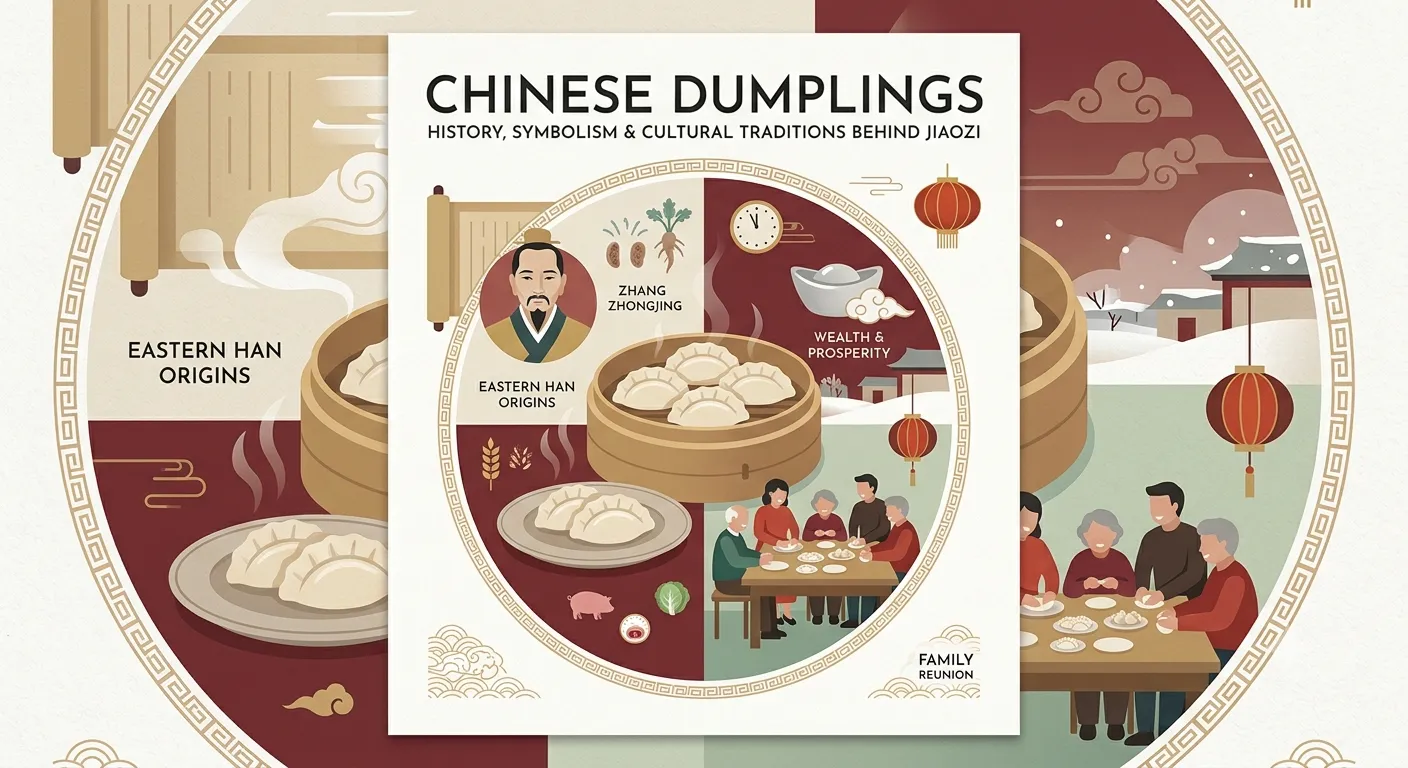
Few foods carry as much cultural weight in China as the humble dumpling. Known as jiaozi (饺子) in Mandarin, this crescent-shaped parcel of dough and filling has been a fixture of Chinese life for nearly two thousand years — served at family reunions, wrapped by hand before Lunar New Year, and passed down through generations as both comfort food and cultural ritual.
But what exactly makes a dumpling “Chinese”? Where did jiaozi come from, and why are they shaped the way they are? This guide walks through the history, symbolism, and living traditions behind one of China’s most enduring culinary exports.
At their simplest, Chinese dumplings are small pockets of dough filled with a mixture of meat, vegetables, or both, then boiled, steamed, or pan-fried. The dough is typically unleavened wheat flour, rolled thin and pleated closed by hand — a technique passed down within families rather than taught from a cookbook.
Jiaozi differ from other Chinese dumpling-adjacent foods like baozi (steamed buns with a thicker, leavened dough) or wontons (thinner-skinned and typically served in soup). While Western menus often lump all of these under the single English word “dumpling,” each has a distinct texture, preparation method, and cultural role within Chinese cuisine.
The most widely told origin story credits jiaozi to Zhang Zhongjing, a physician during the Eastern Han Dynasty (25–220 CE), often regarded as one of the fathers of Chinese medicine. According to legend, Zhang returned to his hometown during a brutal winter and found villagers suffering from frostbitten ears. He devised a remedy: mutton, chili, and warming herbs minced together, wrapped in dough shaped like little ears, then boiled and distributed to the sick.
He called the dish jiao’er — “tender ears” — and the treatment became so beloved that people began recreating it every winter, particularly around the new year, to ward off cold and illness. Over centuries, the name evolved into jiaozi, and the dish shed its medicinal origins to become a staple of festive cuisine.
Archaeological evidence supports a long history for the dish: dumpling-like remains have been found in tombs dating back to the Tang Dynasty, suggesting the food (or something very close to it) predates even the Zhang Zhongjing legend in some form.
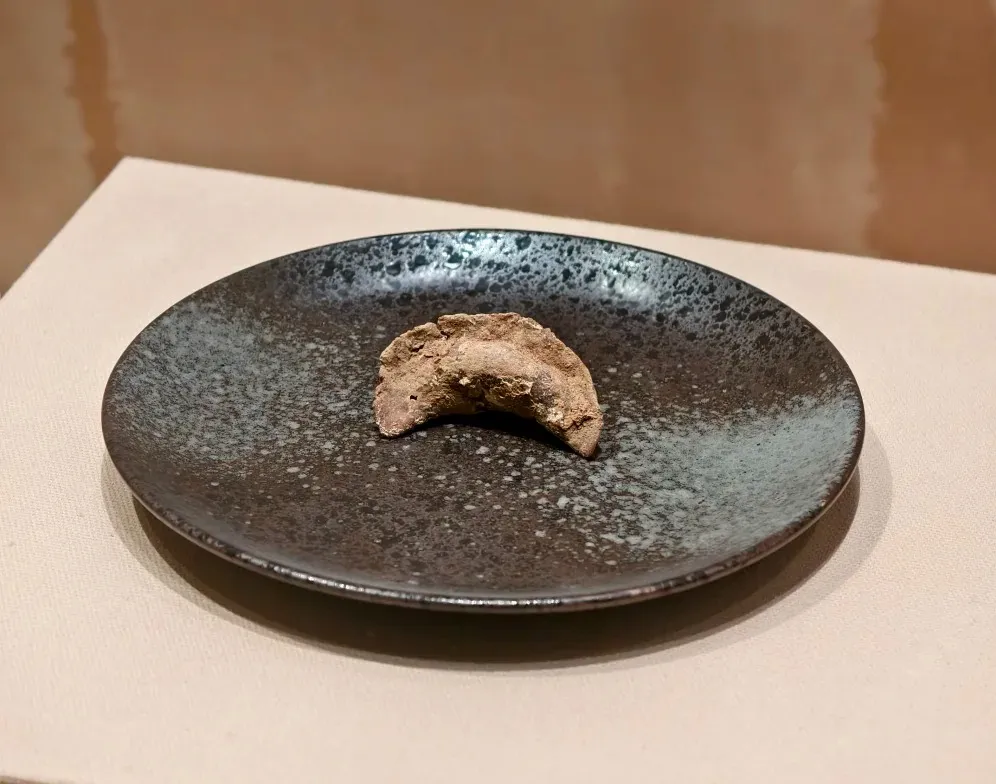
It’s a fair question, and one that trips up a lot of people: are dumplings actually Chinese, or did they originate elsewhere?
The short answer is that jiaozi — the specific dish most people picture when they think of a “Chinese dumpling” — did originate in China, with roots tracing back roughly 1,800 years to the Han Dynasty. However, the broader concept of a “dumpling” — dough wrapped around a filling — appears independently in food cultures around the world, which is why the English word “dumpling” gets applied so loosely.
Here’s how jiaozi compares to its closest relatives:
- Japanese gyoza: Introduced to Japan from China in the 20th century, gyoza are a direct descendant of jiaozi, typically thinner-skinned, more garlic-forward, and almost always pan-fried rather than boiled.
- Korean mandu: Also derived from Chinese dumpling traditions but adapted with distinct fillings (often including kimchi or glass noodles) and a slightly thicker wrapper.
- Italian ravioli and Polish pierogi: These developed independently in European food traditions, sharing the “dough plus filling” concept but with no direct culinary lineage to jiaozi.
So while dumplings as a broad food category exist worldwide, jiaozi specifically is Chinese in origin, and its influence spread outward into neighboring East Asian cuisines through centuries of trade and cultural exchange — most visibly in gyoza and mandu.
Chinese dumplings are almost always folded into a curved, pouch-like shape with pinched, pleated edges — and this isn’t just for aesthetics or sealing in the filling. The traditional jiaozi shape is meant to resemble yuanbao (元宝), the gold and silver ingots used as currency in imperial China.
Eating dumplings, especially at New Year, is therefore considered a symbolic act of inviting wealth and prosperity into the coming year. The more dumplings eaten, the more fortune one is thought to accumulate. Some families take the symbolism further by hiding a single coin inside one dumpling in a batch — whoever finds it in their bowl is said to enjoy extra luck in the year ahead.
The act of making dumplings together is symbolic too. Because wrapping jiaozi is labor-intensive and traditionally done by hand as a group, it has become a ritual of family unity, particularly around Lunar New Year’s Eve, when multiple generations gather around a table to fold dumplings together late into the night.

Dumpling culture isn’t uniform across China — it shifts noticeably by region, largely tracking the country’s north-south wheat-versus-rice divide.
Northern China, where wheat has historically been the dominant staple grain, treats jiaozi as a central, everyday food and the star of major celebrations. Fillings tend toward pork and cabbage, or mutton with scallion, and dumplings are most often boiled.
Southern China, where rice is the traditional staple, treats dumplings more as a festive specialty than a daily food. Southern fillings often lean toward shrimp, pork with bamboo shoots, or more delicate, sweeter flavor profiles, and dumplings are more likely to be steamed or served in soup form, closer to wonton traditions.
This regional divide is one reason dumpling recipes vary so widely even within China itself — there is no single “authentic” filling or cooking method, only regional traditions shaped by geography and available ingredients.
While regional geography shapes broad tendencies, a handful of filling combinations have become classics recognized across China, each carrying its own flavor logic and, in some cases, symbolic meaning.
- Pork and chive (猪肉韭菜): Perhaps the most iconic jiaozi filling of all. Chinese chives have a sharper, more pungent flavor than Western chives, and their pairing with fatty ground pork is considered a benchmark combination — the filling most people picture when they imagine a “classic” dumpling.
- Lamb and carrot (羊肉胡萝卜): Especially popular in northern and northwestern China, where lamb has long been a dietary staple among both Han and ethnic minority communities. The natural sweetness of carrot balances the richness and slight gaminess of the lamb, and this pairing is closely associated with winter eating, tying back to the dish’s cold-weather origins.
- Pork and cabbage (猪肉白菜): A humble, everyday combination found across northern households, valued for its simplicity and the way napa cabbage’s mild sweetness offsets the pork.
- Shrimp and pork with bamboo shoots: More common in southern and coastal regions, reflecting easier access to seafood and a general preference for lighter, more delicate flavors.
- Egg and chive (鸡蛋韭菜): A popular vegetarian option, often eaten during fasting periods or simply as a lighter alternative to meat-based fillings.
Filling choice in China is rarely arbitrary — it reflects regional ingredient availability, seasonal eating habits, and in some cases, subtle beliefs about which combinations are most “balanced” according to traditional food pairing logic. Lamb and carrot, for instance, is often specifically sought out in the depths of winter, when warming ingredients are considered especially beneficial.

Jiaozi are closely tied to specific points on the Chinese lunar calendar, most notably:
- Chinese New Year’s Eve: The most significant dumpling occasion of the year. Families gather to wrap and eat jiaozi together at midnight, symbolizing the transition from the old year to the new and the wish for wealth in the year ahead.
- Dongzhi (Winter Solstice): Particularly in northern China, eating dumplings on this day is tied directly back to the Zhang Zhongjing legend — a way of protecting against the cold and honoring the dish’s medicinal origins.
These calendar traditions are part of why dumplings hold a different cultural status in China than in countries where they’re simply everyday food — they function as an edible marker of time, family, and seasonal transition.
As Chinese communities established themselves abroad over the past two centuries, dumplings traveled with them, becoming one of the most recognizable touchpoints of Chinese food culture internationally. In cities with large overseas Chinese populations, dumpling houses and family-run restaurants have long served as informal cultural anchors, and the practice of wrapping dumplings together at Lunar New Year remains a way for diaspora families to maintain a tangible link to tradition, even generations removed from mainland China.
Today, “dumpling” has become something of an umbrella term in English, but for the millions of people who trace the dish back to its Chinese roots, jiaozi remains distinct — carrying centuries of medicine, mythology, symbolism, and family ritual folded into every pleat.