
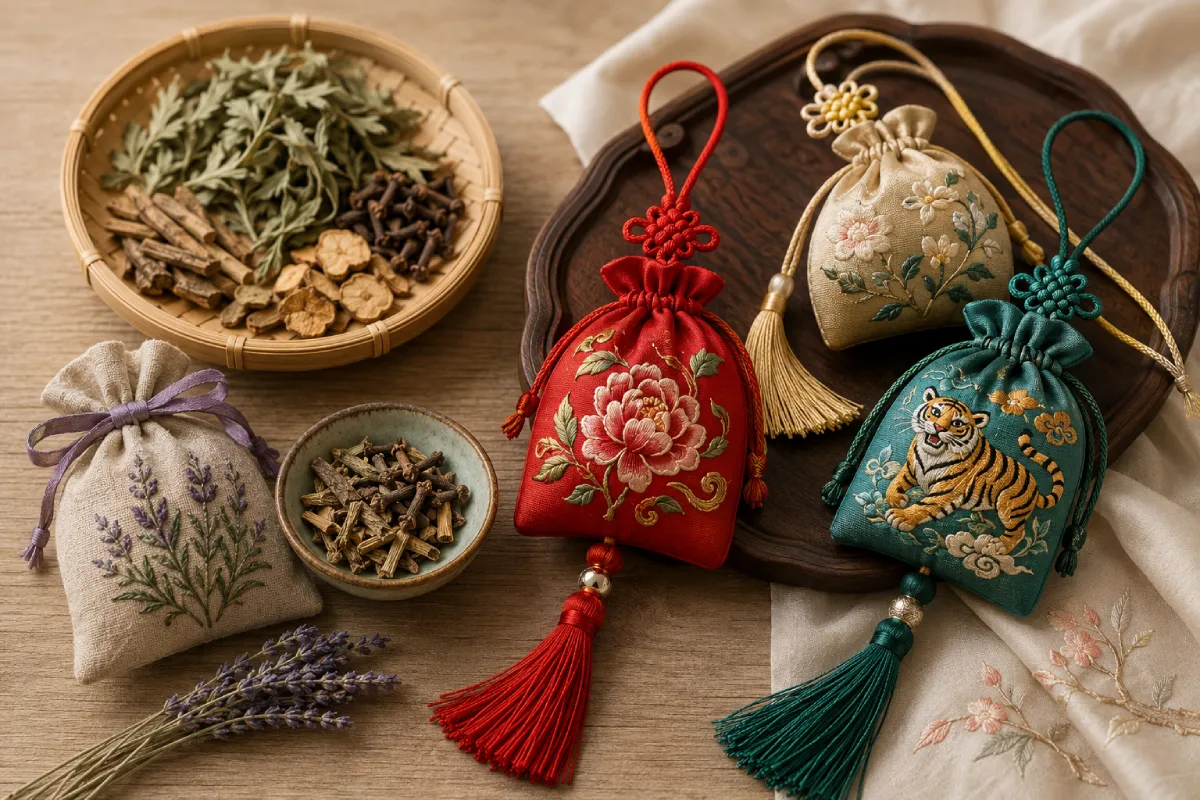
A sachet is a small fabric pouch filled with dried herbs, flowers, spices, or other fragrant materials. Unlike a spray or candle, a sachet releases scent slowly and passively over weeks or months, making it a popular way to freshen closets, drawers, cars, and small rooms. Sachets are also used to repel moths, absorb moisture, or simply serve as a decorative, wearable accessory.
Most people encounter sachets in one of a few everyday forms: lavender sachets tucked into linen closets, cedar sachets in shoe drawers, or small packets of silica gel and seasoning included with packaged food. But the idea of carrying a scented pouch is far older than any of these modern uses, and nowhere is that tradition richer than in China.
Before looking at the Chinese version, it helps to know the general categories people search for:
Herbal and floral sachets — filled with lavender, rose petals, or dried herbs, mainly for scenting drawers and closets.
Moth-repellent sachets — usually cedar or cloves, used to protect wool and other fabrics.
Cosmetic and single-use sachets — small sealed packets of skincare samples, shampoo, or condiments, a completely different (non-fragrant) use of the word.
Tea sachets — a term sometimes used interchangeably with tea bags.
All of these share the same basic idea: a small pouch or packet holding something in a controlled, portable amount. China took this concept and turned it into a wearable cultural object thousands of years ago — the xiangnang (香囊).
In Chinese culture, a sachet is called xiangnang (香囊), literally “fragrance bag.” It is a small pouch, usually made of silk or brocade, filled with aromatic herbs such as agarwood, cloves, angelica root, or mugwort, then embroidered and worn on the body — typically hung from a belt, tucked into a sleeve, or carried on a cord around the neck.
Unlike a drawer sachet meant to sit quietly in storage, the xiangnang was designed to be seen and worn. It functioned at the same time as perfume, protective charm, fashion accessory, and, in many periods of Chinese history, a token of affection between lovers or family members.
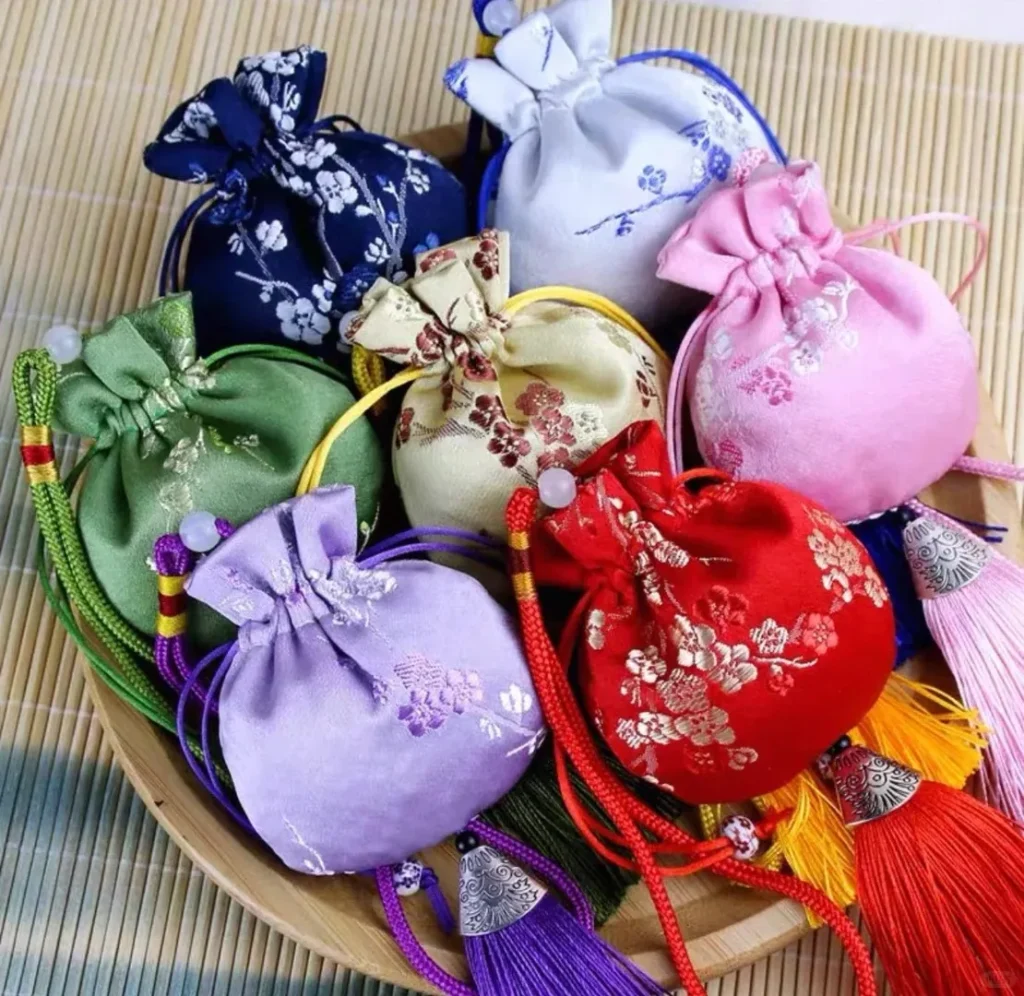
The practice of carrying fragrant herbs on the body dates back over 2,000 years in China, with early references appearing in Warring States period texts and the poetry of Qu Yuan, who wrote about wearing fragrant plants as a symbol of moral purity. By the Han and Tang dynasties, xiangnang had become a common accessory among both nobility and commoners, crafted from silk and stuffed with herbs believed to ward off illness and evil spirits.
During the Tang and Song dynasties, xiangnang making developed into a refined embroidery art. Wealthy families commissioned elaborate pouches with intricate needlework, while young women often embroidered them by hand as gifts for the people they loved — a practice that gave the xiangnang a lasting association with romance and devotion in Chinese literature and opera.
The xiangnang is most closely associated today with the Dragon Boat Festival (Duanwu Festival), held on the fifth day of the fifth lunar month. According to tradition, early summer was considered a season when disease and insects were most active, so people wore herb-filled sachets — often containing mugwort, realgar, or angelica — to ward off illness and “evil qi.”
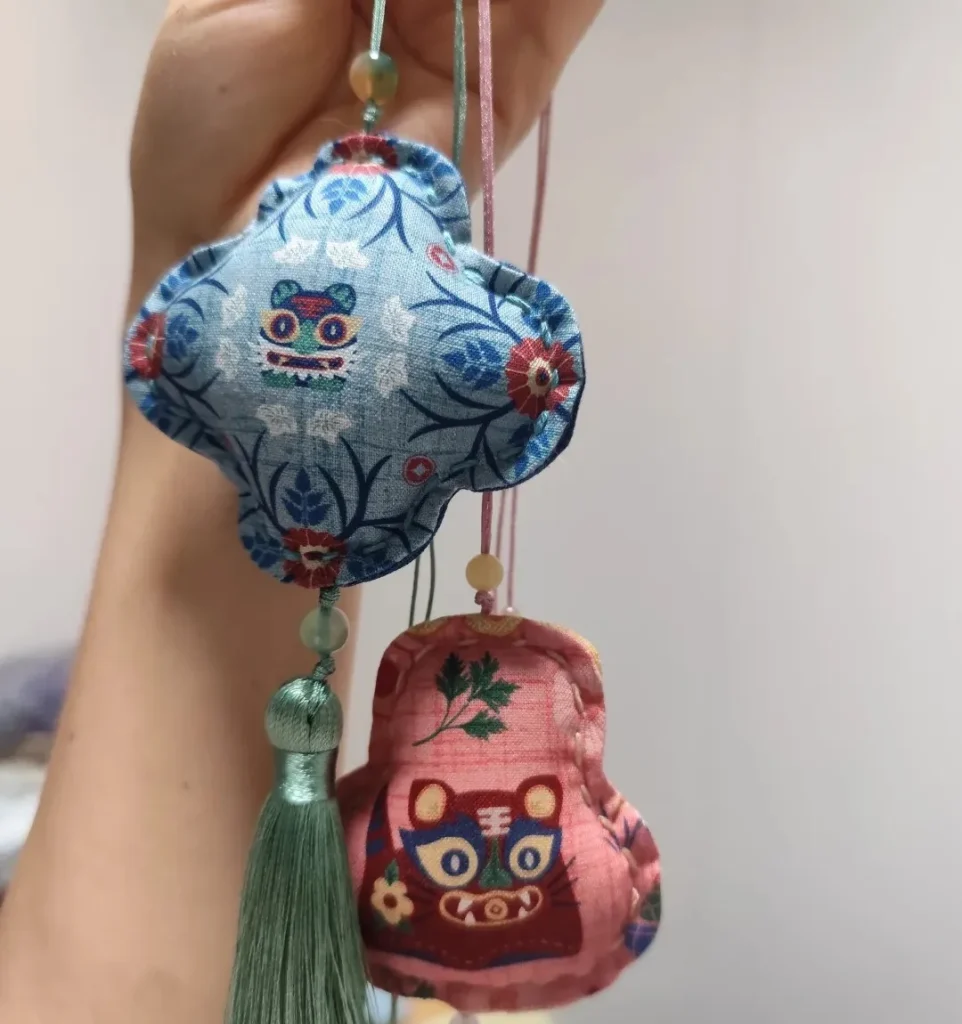
Children in particular were given brightly colored, embroidered xiangnang to wear during this festival, sometimes shaped like animals, fruits, or auspicious symbols such as tigers (believed to be protective) or peaches (symbolizing longevity). This custom continues in many parts of China today, and modern xiangnang are widely sold as festival gifts and souvenirs.
A traditional xiangnang typically involves several layers of craftsmanship:
Outer fabric — silk, satin, or brocade, often in auspicious colors like red, gold, or vibrant multicolor combinations.
Embroidery — hand-stitched patterns featuring flowers, animals, clouds, or characters symbolizing good fortune, health, or love.
Filling — a mixture of dried herbs, which historically could include mugwort, agarwood, angelica dahurica, cloves, and calamus root, chosen both for scent and their traditional medicinal associations.
Cord and tassels — a decorative string for hanging the pouch from clothing, a belt, or a bag, frequently finished with tassels or small beads.
| Western Sachet | Chinese Xiangnang |
|---|---|
| Placed in drawers or closets | Worn on the body or hung from clothing |
| Mainly lavender or cedar | Mugwort, agarwood, angelica, cloves, and other herbs |
| Simple cloth pouch | Hand-embroidered silk with symbolic patterns |
| Purely functional (scent, moth control) | Functional plus symbolic — protection, romance, festival tradition |
Beyond its practical fragrance, the xiangnang carries deep symbolic weight in Chinese culture. In classical literature and opera, exchanging a xiangnang was a quiet declaration of affection — a handmade one, in particular, was seen as a deeply personal gift, since the embroidery reflected the maker’s skill and feelings.
Certain motifs carry specific meanings: mandarin ducks for marital devotion, peonies for prosperity, bats (a homophone for “fortune” in Chinese) for luck, and tigers for protecting children from harm. Even the color of the sachet often carries meaning, with red commonly used for celebration and protection.
Modern xiangnang are worn in a few common ways:
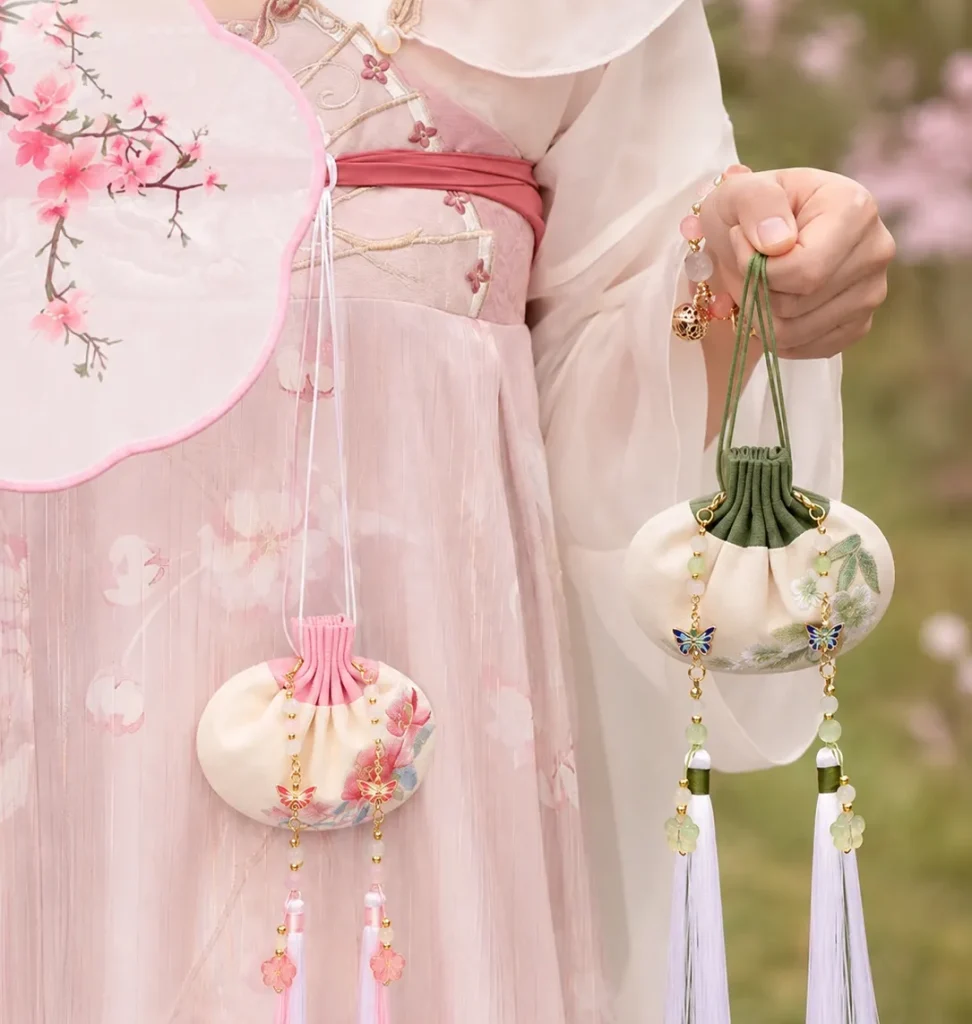
Hanfu accessory — hung from a belt or sash as part of a full hanfu outfit, continuing a look that dates back over a thousand years.
Festival wear — given to children and worn during the Dragon Boat Festival.
Car and bag charms — smaller versions are now popular as decorative, fragrant accessories for cars, backpacks, and keychains.
Home décor — larger or more decorative xiangnang are displayed rather than worn, similar to a Western sachet but with far more visual craftsmanship.
Is a xiangnang the same as a regular sachet?
They share the same basic idea of a scented pouch, but a xiangnang is traditionally worn on the body, hand-embroidered, and tied to specific cultural meanings — closer to a piece of jewelry than a drawer freshener.
What herbs go inside a traditional xiangnang?
Common choices include mugwort, agarwood, cloves, angelica root, and calamus, though modern versions may use lavender or other fragrant herbs for a milder scent.
When are xiangnang traditionally given as gifts?
Most commonly during the Dragon Boat Festival, but also as personal gifts between loved ones, historically as a token of romantic affection.
Can I wear a xiangnang with modern clothing?
Yes — many people today wear smaller xiangnang as a bag charm or necklace even outside of hanfu or festival settings.