
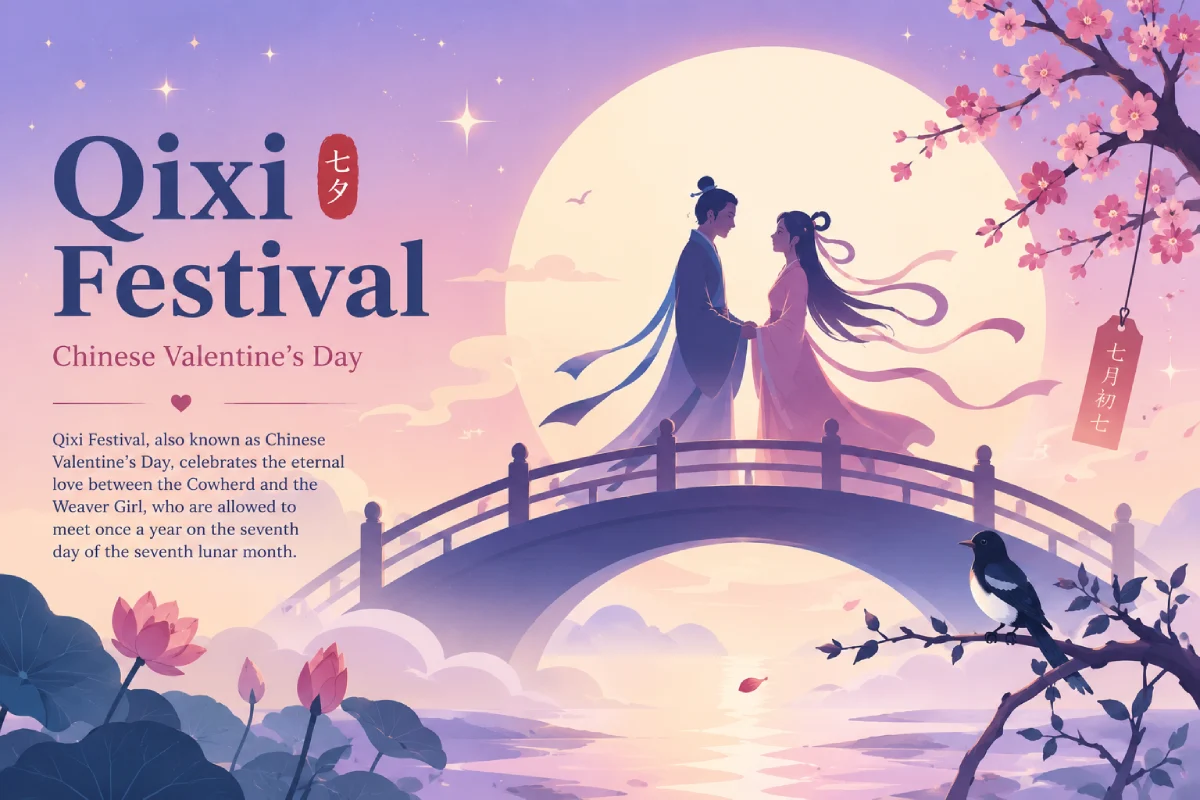
Every year, on the seventh day of the seventh lunar month, China celebrates one of its most romantic and poetic holidays: Qixi Festival (七夕节), often called “Chinese Valentine’s Day.” But Qixi is far more than a single day of gift-giving — it’s a centuries-old tradition rooted in astronomy, mythology, and the enduring hope that love can overcome even the vastness of the heavens.
Qixi Festival, also known as the Double Seventh Festival, falls on the 7th day of the 7th month in the Chinese lunar calendar, typically landing in August on the Gregorian calendar. The date’s symmetry — seven and seven — has long been considered auspicious in Chinese culture, tied to numerology and celestial alignment.
Historically, Qixi began as a festival celebrating women’s skills, particularly needlework and weaving, before evolving into the romantic celebration it’s best known as today. Young women would pray to the star Vega for wisdom, dexterity, and a good marriage — a practice called “begging for skills” (乞巧), which is actually the origin of the festival’s alternate name.
At the heart of Qixi is one of China’s four great folk tales: the story of Zhinü (织女), the Weaver Girl, and Niulang (牛郎), the Cowherd.
Zhinü was a celestial weaver, a fairy who wove clouds and stars in the heavens. Niulang was a humble mortal cowherd. Despite their different worlds, the two fell deeply in love, married in secret, and had two children together.
When the Queen Mother of Heaven discovered that a celestial being had married a mortal, she was furious. She dragged Zhinü back to the heavens, using her hairpin to scratch a great silver river across the sky — the Milky Way — to separate the lovers forever.
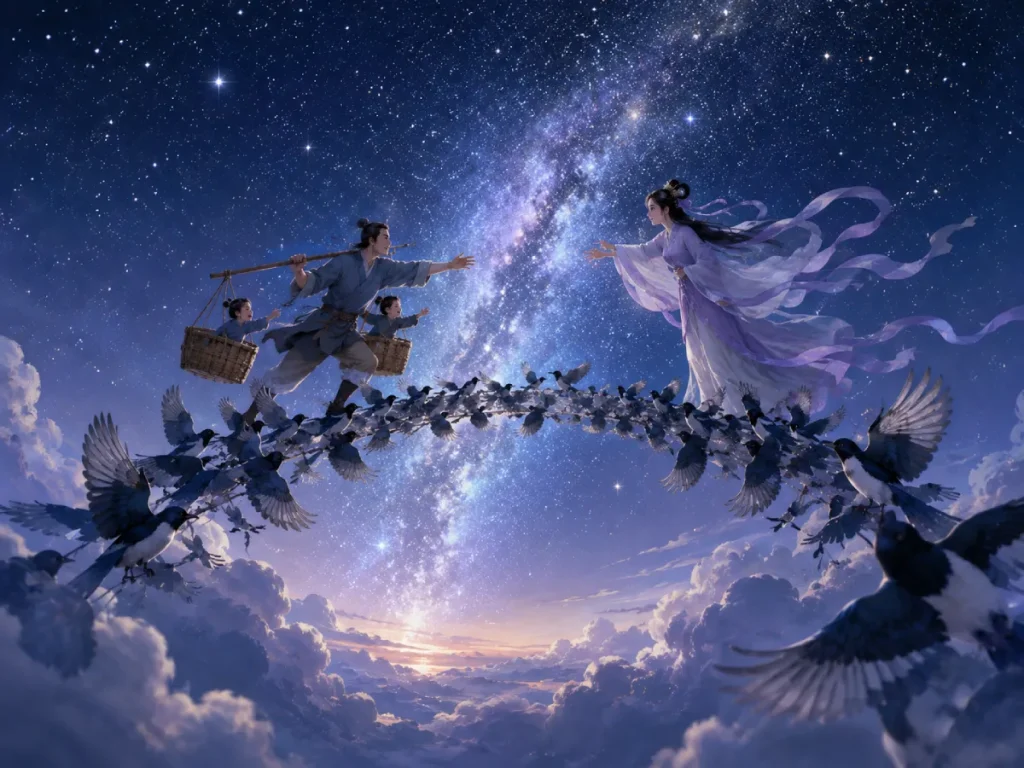
Heartbroken, Niulang draped himself in a magical cowhide left behind by his faithful ox, which let him fly into the heavens after her. He carried their two children in baskets balanced on a shoulder pole, desperately chasing after his wife. But the Milky Way proved too wide and powerful to cross.
Moved by their devotion, magpies across the world took pity on the couple. Each year, on the seventh day of the seventh month, thousands of magpies fly up into the sky and form a bridge — known as the Magpie Bridge (鹊桥) — allowing Niulang and Zhinü to reunite for one single night.
This is why Qixi is celebrated on that specific date: it marks the one night a year when the stars Vega (Zhinü) and Altair (Niulang), separated by the Milky Way, are said to be closest — and when their love story briefly comes true again.
While ancient Qixi traditions centered on needlework and stargazing, modern celebrations blend old customs with new ones:
- Stargazing: Many people still look to the night sky on Qixi, trying to spot Vega and Altair across the Milky Way and imagining the magpies building their bridge.
- Exchanging gifts: Couples exchange flowers, chocolates, and jewelry, much like Valentine’s Day in the West.
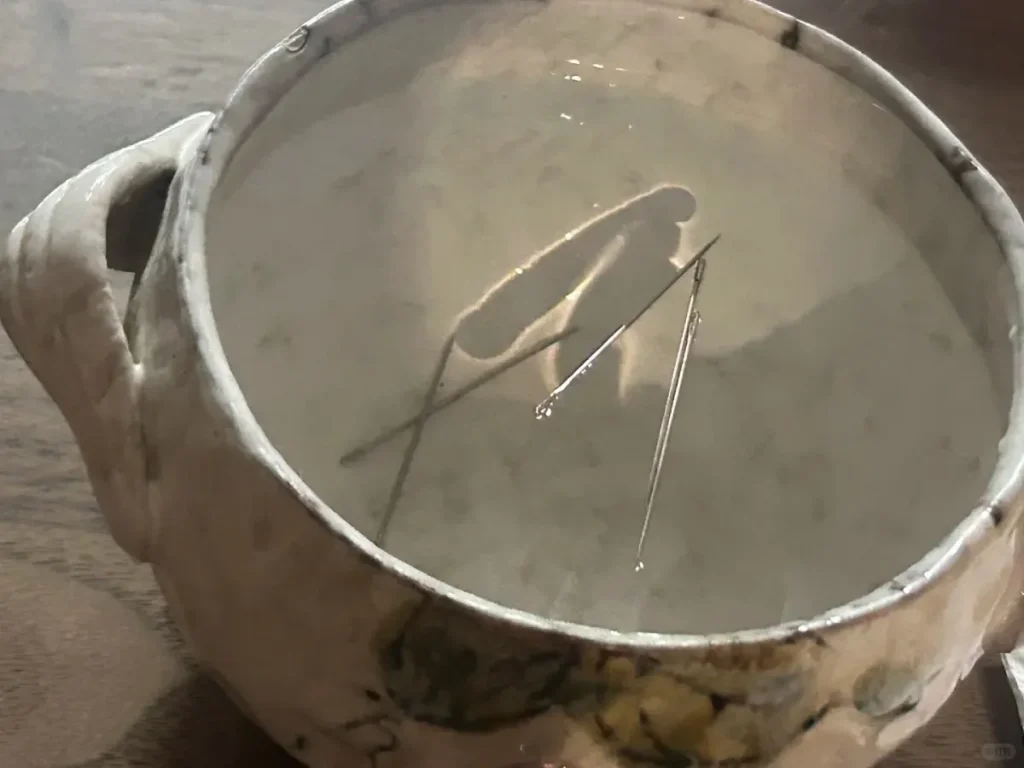
- Praying for skill and love: In some regions, young women still practice “begging for skills” — threading needles under moonlight or floating needles on water as a test of dexterity and a wish for a good marriage.
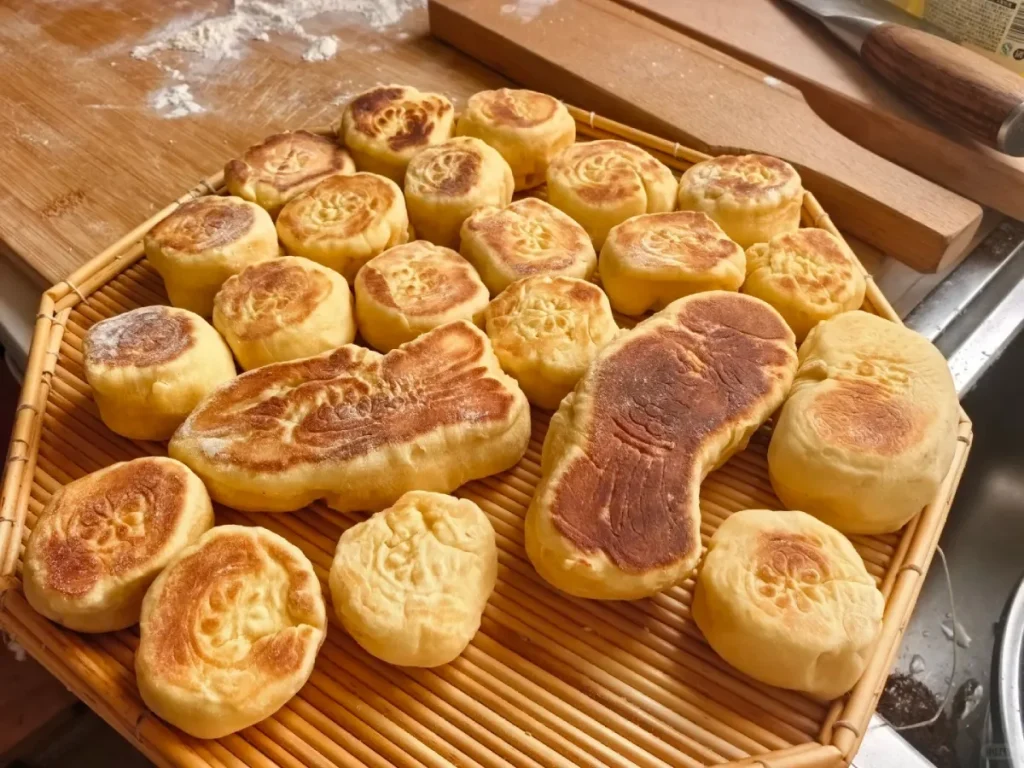
- Eating Qiaoguo (巧果): These are intricately shaped, flour-based pastries — baked or fried, often stamped with delicate patterns — eaten specifically during the festival.
- Writing wishes: Some celebrants write love letters or wishes on paper lanterns or red cards, echoing the romantic themes of the holiday.
- Modern commercial celebrations: In recent years, Qixi has also become a major retail moment in China, with luxury brands releasing limited-edition Qixi gift sets and restaurants offering special couples’ dining menus — much like Valentine’s Day marketing in the West.
It’s easy to see why Qixi earned the nickname “Chinese Valentine’s Day,” but the two holidays carry different emotional textures. Valentine’s Day, rooted in Western tradition, tends to emphasize romantic gestures and consumer gift-giving. Qixi, by contrast, is steeped in themes of separation, sacrifice, and reunion — reflecting a distinctly Chinese sensibility about love as something patient, enduring, and often bittersweet.
Where Valentine’s Day celebrates romance in the present, Qixi commemorates devotion across time and distance — a story about lovers who are only granted one night together each year, yet remain faithful for eternity.
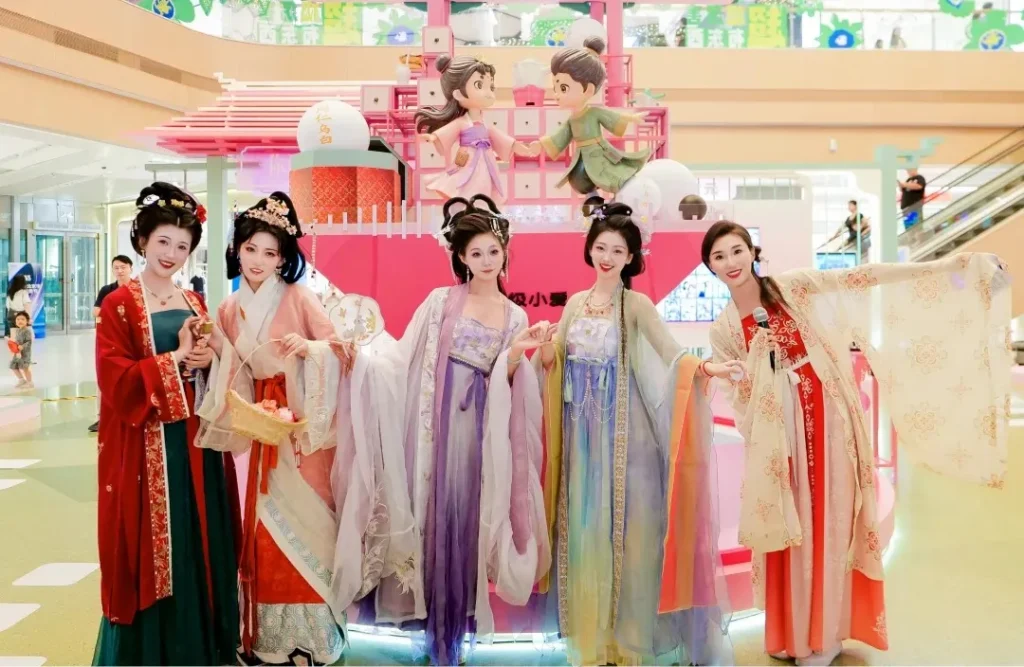
Because Qixi draws directly from ancient Chinese mythology, it has become a popular occasion for wearing hanfu (汉服), traditional Chinese clothing. Many young people in China now mark the festival by dressing in Tang or Song dynasty-style hanfu, visiting temples, taking photos beside lanterns, or attending Qixi-themed cultural events.
This connection makes Qixi one of the most visually rich festivals in the Chinese calendar — a day where mythology, romance, and traditional dress come together in celebration.
In a fast-changing world, Qixi endures because its central message resonates across generations and cultures: love that is patient, love that waits, and love that finds a way to bridge even the widest divide. Whether you’re drawn to the festival for its mythology, its romance, or its rich cultural traditions, Qixi Festival offers a beautiful window into how ancient China understood love — as something written in the stars.