

Across China and the global Chinese diaspora, more men are embracing hanfu male styles not as costume, but as a meaningful return to cultural roots, aesthetic refinement, and quiet confidence.Yet many outside the community still assume hanfu is exclusively feminine—flowing skirts, floral embroidery, and delicate accessories. In truth, male hanfu has a rich, dignified history spanning over two millennia, rooted in philosophy, social order, and masculine ideals that valued scholarship, restraint, and harmony with nature.This article explores the world of hanfu for men: its historical evolution, key styles, modern revival, and how any man—regardless of background—can wear it with respect and style.
Hanfu (汉服), literally “Han clothing,” refers to the traditional dress system of the Han Chinese people before the Qing dynasty (1644–1912). It is not the same as the qipao or cheongsam—those are Manchu-inspired garments from the Qing era.
Core features of authentic hanfu include:
- Crossed collar (jiaoling youren) – always right lapel over left
- Wide, flowing sleeves – symbolizing openness and grace
- Tied closures – no buttons or zippers; garments fasten with sashes
- Layered, draped silhouettes – emphasizing balance and modesty
Hanfu was never just about fashion. It reflected Confucian values: hierarchy, propriety (li), and alignment with cosmic order. For men, clothing signaled scholarly achievement, official rank, or seasonal rituals—not vanity.

Get the Look: White Scholar Hanfu
Design: Classic Wuxia style with bamboo embroidery.
👉 View Details & Price on AliExpress
Male hanfu evolved dramatically across dynasties, each reflecting its era’s spirit:
- Zhou to Han Dynasties (c. 1046 BCE–220 CE):
The shenyi (deep robe)—a one-piece garment combining upper and lower sections—was worn by scholars and officials. Its seamless construction symbolized moral integrity and unity of thought and action. - Tang Dynasty (618–907):
Cosmopolitan and bold, Tang men wore vibrant yuanlingpao (round-collar robes) influenced by Silk Road cultures. Officials donned distinctive headwear, and even foreign envoys adopted these styles at court. - Song Dynasty (960–1279):
A shift toward subtlety: muted colors, clean lines, and understated elegance. The zhiduo emerged—a simple, straight-cut robe favored by literati who prized humility over display. - Ming Dynasty (1368–1644):
The golden age of male hanfu. Men wore layered robes like the daopao and tieli, often with horse-hoof cuffs, intricate cloud patterns, and silk belts. Formal attire could include up to five layers, each with symbolic meaning.
After the Manchu conquest in 1644, the Qing government enforced剃发易服 (haircut and clothing change), effectively erasing hanfu from daily life for nearly 300 years.

Thanks to the 21st-century hanfu revival, several historical styles have been faithfully recreated for modern wear:
A minimalist, straight-hemmed robe originally worn by monks and scholars. Ideal for beginners: easy to wear, comfortable, and perfect for casual outings or tea ceremonies.
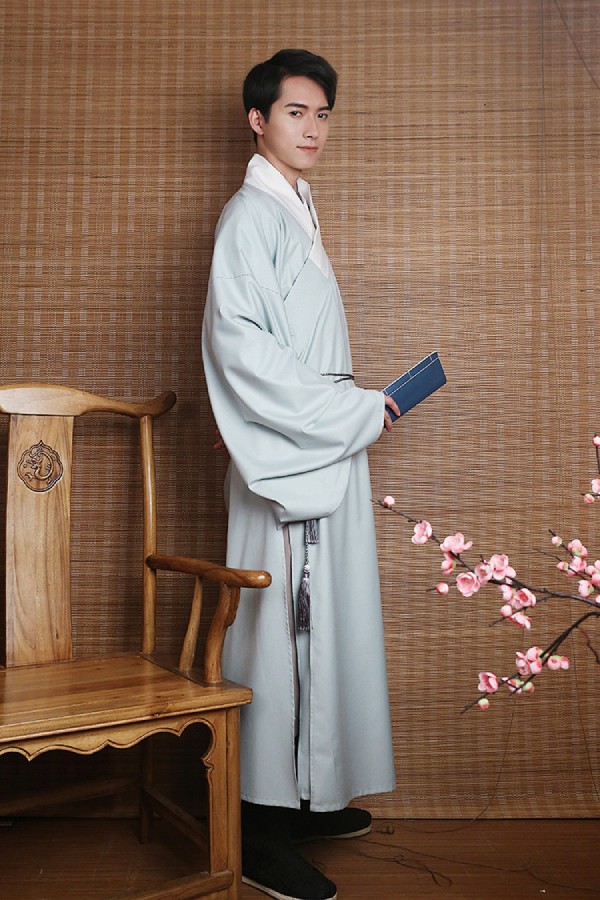
Despite its name (“Daoist robe”), this was actually a refined civilian garment of Ming literati. It features hidden pleats and side panels (anbai) that create graceful movement when walking—elegant yet grounded.

Classic Daopao (Taoist Robe) Set
Feature: Authentic silhouette with premium draping.
👉 View Details on AliExpress
The round-collar official robe, often seen in historical dramas. Worn with a fabric belt and tall boots, it conveys authority and formality—great for weddings or cultural performances.
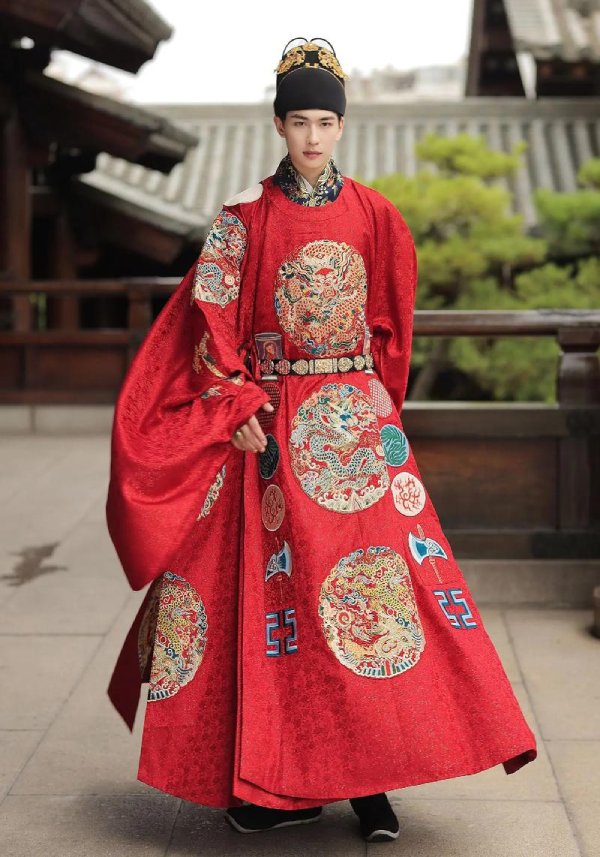
The ancient unisex deep robe, still used in Confucian rites. Its construction follows classical texts: 12 panels representing months of the year, curved hems symbolizing humility.
Accessories matter: Traditional headwear (futou or wangjin), leather waist belts, cloth boots (yunlǚ), and jade pendants complete the look with symbolic depth.

The resurgence of hanfu male is more than a trend—it’s a cultural movement:
- Cultural reclamation: Young Chinese men are reconnecting with pre-Qing identity after decades of Westernized fashion dominance.
- Global appreciation: International audiences admire hanfu’s sustainability, craftsmanship, and gender-fluid elegance.
- Social media visibility: Platforms like Bilibili, Instagram, and TikTok (#hanfumen) showcase stylish, confident male wearers.
- Life milestones: From university graduations to weddings, hanfu offers a meaningful alternative to tuxedos or suits.
As one Beijing-based designer puts it: “Wearing hanfu isn’t about nostalgia—it’s about saying, ‘This is who we are.’”
Starting your hanfu journey? Follow these tips:
- Choose the right style
- Casual: Zhiduo or simple daopao in linen or cotton
- Formal: Brocade yuanlingpao or layered Ming-style daopao
- Mind the fit
Hanfu should drape, not cling. Sleeves typically reach the knuckles; hems fall near the ankle. - Layer correctly
Basic order: undergarment → inner robe → outer robe → belt. Don’t skip the inner layer—it prevents transparency and adds structure. - Tie with care
Use flat knots on the right side (never left!). Watch tutorial videos to master sash techniques. - Buy wisely
Reputable brands include Minghua Tang, Ruifeng Xiang, and Liyue Hanfu. Check reviews for accurate sizing and fabric quality.
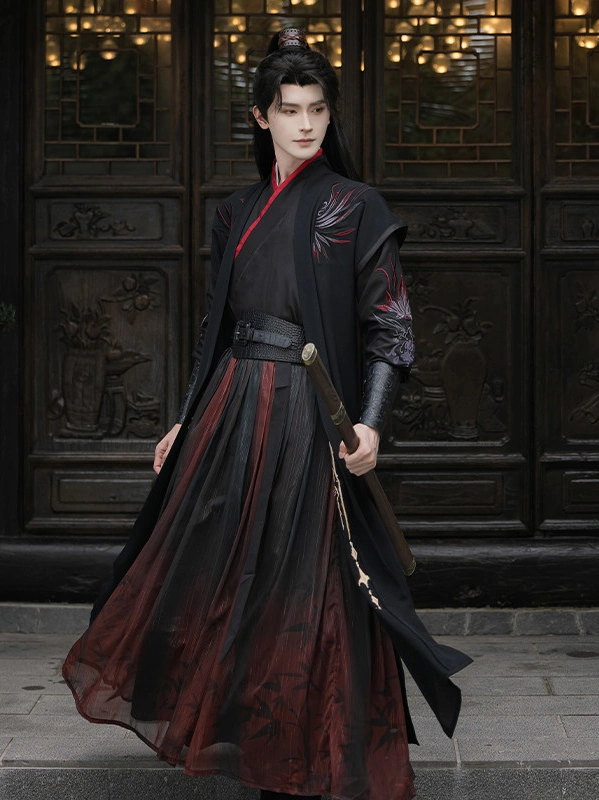
- Style: Bold “Wuxia” aesthetic with a mysterious night-look.
👉 [View Details on AliExpress](https://fas.st/-MzFW)
You don’t need to live in a garden villa to wear hanfu. Many integrate it into urban life:
- Pair a navy zhiduo with minimalist white sneakers for a “neo-Chinese” street look.
- Carry a leather crossbody bag instead of a traditional cloth pouch.
- Keep hair neat—a low bun, top knot, or even short modern cut works.
- Grooming tip: A well-trimmed beard or clean-shaven face enhances the classical aesthetic.
This fusion—called “Xin Zhongshi” (New Chinese Style)—honors tradition while staying relevant.
Let’s clear the air:
- “It’s just cosplay.”
Hanfu is living heritage, worn with cultural intention—not performance. - “Male hanfu looks feminine.”
Traditional Chinese masculinity emphasized wisdom, composure, and moral strength—not broad shoulders or tight fits. Flowing robes conveyed dignity, not delicacy. - “Only Chinese people can wear it.”
Like kimono or kilt, hanfu can be appreciated globally—if approached with respect, understanding, and proper context.
Male hanfu is not a relic behind glass. It’s a living language of fabric, form, and philosophy—one that speaks of balance, reverence, and quiet strength. Whether you’re attending a festival, celebrating a wedding, or simply seeking a deeper connection to heritage, hanfu for men offers a path back to elegance without pretense.
So the next time you see a man in a deep indigo daopao, remember: he’s not playing a role. He’s reclaiming a legacy—and inviting others to see tradition not as burden, but as beauty.