

Rediscover Elegance: The Timeless Allure of Tang Dynasty Hanfu
When we think of ancient Chinese fashion at its most opulent and culturally rich, the Tang Dynasty (618–907 AD) stands as a golden era of artistic expression, cosmopolitan flair, and sartorial sophistication. Today, Tang Dynasty Hanfu—the traditional clothing of the Han Chinese from this period—continues to captivate global fashion enthusiasts, especially among the growing Hanfu revival movement. For those in Europe and North America exploring historical fashion, Tang Hanfu offers not just beauty, but a window into a world where culture, identity, and artistry intertwined.

Why the Tang Dynasty Matters in Fashion History
The Tang Dynasty was more than just a powerful empire—it was a cultural melting pot. With the Silk Road thriving, Chang’an (modern-day Xi’an) became one of the world’s largest and most diverse cities. Traders, scholars, and artists from Persia, Central Asia, India, and beyond brought new ideas, fabrics, and styles. This openness influenced Tang fashion, making it one of the most diverse and expressive in Chinese history.
Women’s fashion, in particular, flourished. With relatively high social mobility and visibility, Tang women embraced bold silhouettes, vibrant colors, and layered elegance—elements that still resonate with modern fashion lovers.

Key Features of Tang Dynasty Hanfu
Tang Hanfu is instantly recognizable for its flowing lines, luxurious fabrics, and graceful proportions. Here are the defining characteristics:
Ruqun (襦裙) – The Iconic Two-Piece Ensemble
The most common style for women, the ruqun consists of:
- A high-waisted skirt tied above the natural waist, often at the bust line.
- A cross-collar upper garment (ru) with wide, flowing sleeves.
- Skirts in rich hues like deep red, emerald green, or peacock blue, often with intricate floral or geometric patterns.
This silhouette elongates the body, creating an ethereal, almost floating appearance—perfect for both ceremonial wear and daily elegance.
Tanling Ruqun (坦领襦裙) – The “Open-Collar” Style
Influenced by Central Asian and Sogdian fashions, this variant features a U-shaped or square neckline that reveals a delicate inner garment or scarf. It reflects the Tang’s embrace of foreign aesthetics while maintaining Han Chinese structure.
Men’s Attire: Simplicity with Dignity
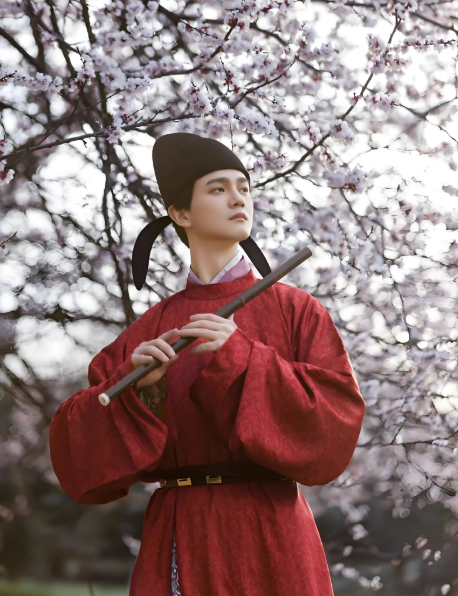
Men typically wore a round-collared robe (yuanlingpao), often in darker, more subdued tones. Paired with a sash and a soft cap, the look was both practical and dignified—ideal for officials, scholars, and poets.
Fabrics & Embellishments
Silk was king. Brocades, damasks, and gauze were woven with gold threads, lotus motifs, and cloud patterns. Dyes from safflower, indigo, and gardenia created vivid, lasting colors. Accessories like beaded necklaces, jade hairpins, and embroidered sashes completed the look.
Tang Hanfu Today: A Global Cultural Revival
Thanks to social media and cultural exchange, Tang Hanfu is no longer confined to history books. From Paris to Los Angeles, enthusiasts are embracing Hanfu as a form of artistic expression, historical appreciation, and even sustainable fashion.
- Photography & Art: Many Western photographers collaborate with Hanfu wearers to create stunning visual narratives blending Eastern tradition with Western aesthetics.
- Festivals & Events: Hanfu meetups, cosplay conventions, and cultural festivals now feature Tang-style garments as highlights.
- Modern Adaptations: Designers are reimagining Tang silhouettes with eco-friendly fabrics and wearable cuts, making them suitable for contemporary lifestyles.
How to Wear Tang Hanfu (Respectfully)
If you’re inspired to try Tang Hanfu:
- Start with a simple ruqun set—many brands offer ready-to-wear versions.
- Pay attention to layering: Inner garments, skirts, and outer robes should drape naturally.
- Respect the culture: Learn the basics of Hanfu history and avoid using sacred symbols (like dragon motifs for non-imperial roles) out of context.
- Style with intention: Soft makeup, natural hairstyles (or wigs with traditional buns), and minimal jewelry enhance authenticity.
Final Thoughts: More Than Just a Costume
Tang Dynasty Hanfu is not merely historical dress—it’s a living art form that bridges past and present, East and West. Its elegance, diversity, and cultural depth invite us to slow down, appreciate craftsmanship, and celebrate beauty in motion.
Whether you’re a fashion historian, a cultural enthusiast, or simply someone drawn to timeless style, the Tang Hanfu offers a journey into one of humanity’s most radiant civilizations.
Step into the legacy. Wear the elegance. Feel the spirit of the Tang.
