
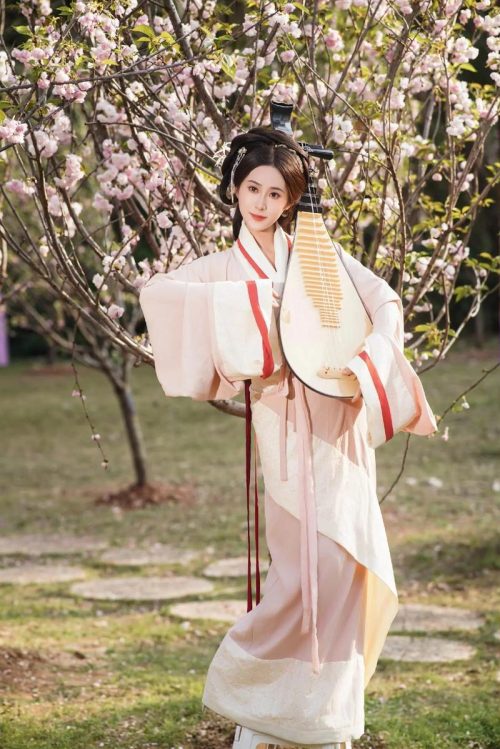
Shenyi (深衣) is one of the earliest and most influential forms of Hanfu, the traditional clothing of the Han Chinese. As a foundational garment in ancient China, Shenyi played a crucial role in shaping later Hanfu styles and reflects the deep connection between clothing, ritual, and philosophy in Chinese civilization.
Understanding Shenyi is essential for anyone interested in Hanfu history, classical Chinese culture, or traditional dress systems.
Shenyi is a one-piece robe that combines the upper garment and the lower skirt into a continuous structure. Unlike later Hanfu styles that separate the jacket and skirt, Shenyi is constructed as a unified whole, symbolizing order, integrity, and propriety.
The word “Shen” (深) literally means “deep” or “extended,” referring to the long, flowing hem and the continuous connection between the upper and lower sections of the garment.
Shenyi is widely regarded as one of the prototypes of Hanfu, influencing both daily wear and formal dress in later dynasties.
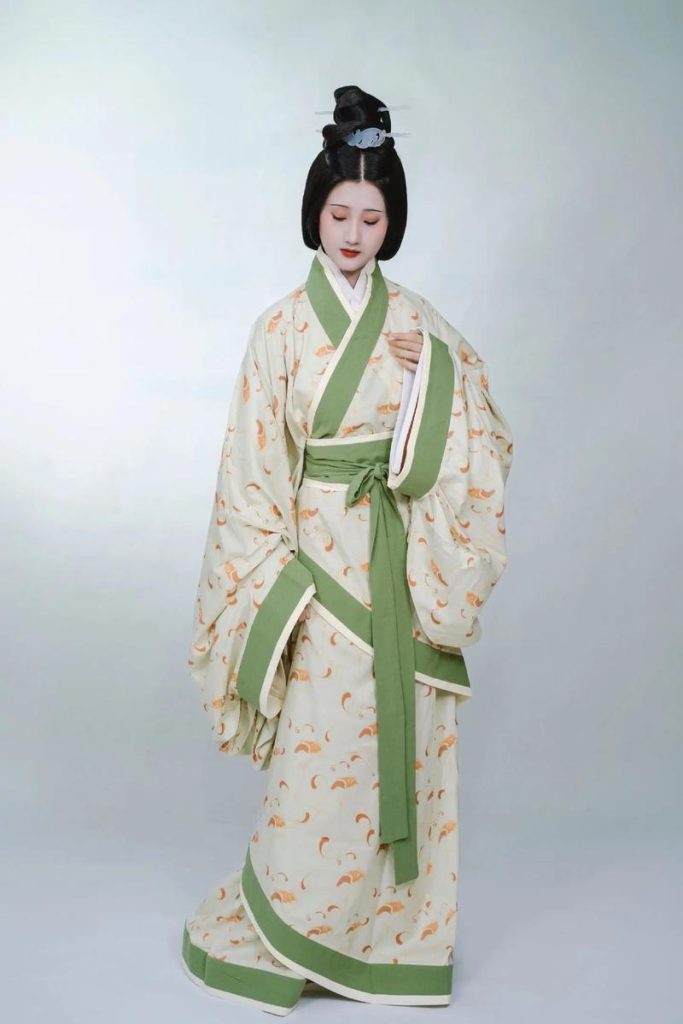
Shenyi first appeared during the Pre-Qin period and became especially popular during the Qin and Han dynasties. During this time, it was commonly worn by scholars, officials, and educated members of society.
In early Chinese society, clothing was not merely functional—it was closely tied to social status, ethics, and ritual behavior. Shenyi, with its structured yet elegant design, embodied these values and became a standard garment associated with civility and learning.
Several defining characteristics distinguish Shenyi from other Hanfu styles:
- One-piece construction: The upper garment and lower skirt are cut and sewn together.
- Cross-collar design (Jiaoling Youren): The collar crosses with the right side covering the left, a defining feature of traditional Han Chinese clothing.
- Long sleeves and floor-length hem: Creating a dignified and flowing silhouette.
- Wrapped structure: The garment encloses the body, emphasizing modesty and formality.
These features reflect both practical considerations and philosophical ideals, particularly those rooted in Confucian thought.
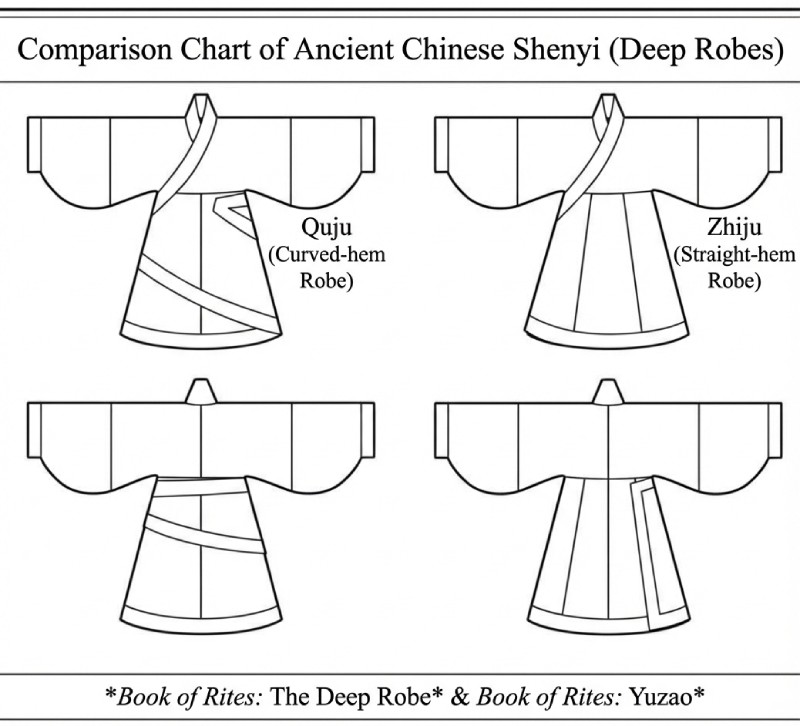
Quju Shenyi is characterized by its wrapped and curved hem, which winds around the body before falling vertically. This style was especially common during the Han Dynasty and is often depicted in historical paintings and archaeological findings.
Its complex structure creates an elegant, layered appearance and is closely associated with classical Han-era aesthetics.
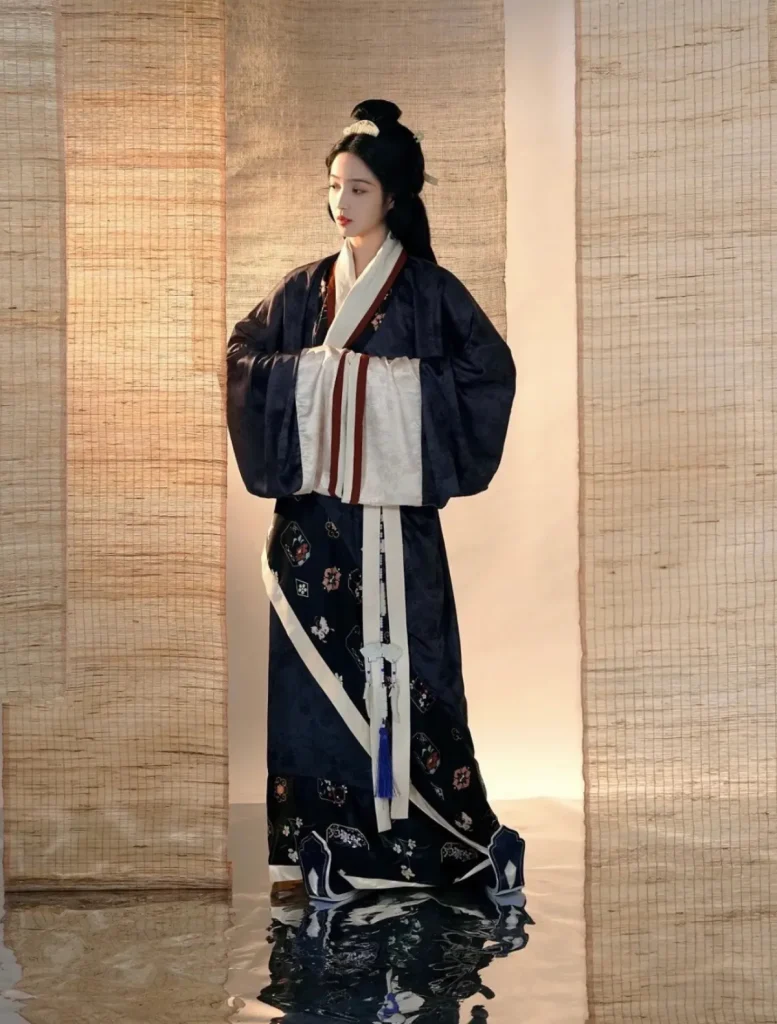
Zhiju Shenyi features a straight hemline with a simpler, more vertical cut. Compared to Quju Shenyi, it is more practical and less elaborate, making it suitable for daily wear.
Both styles follow the same fundamental principles of Shenyi construction but differ in visual effect and complexity.
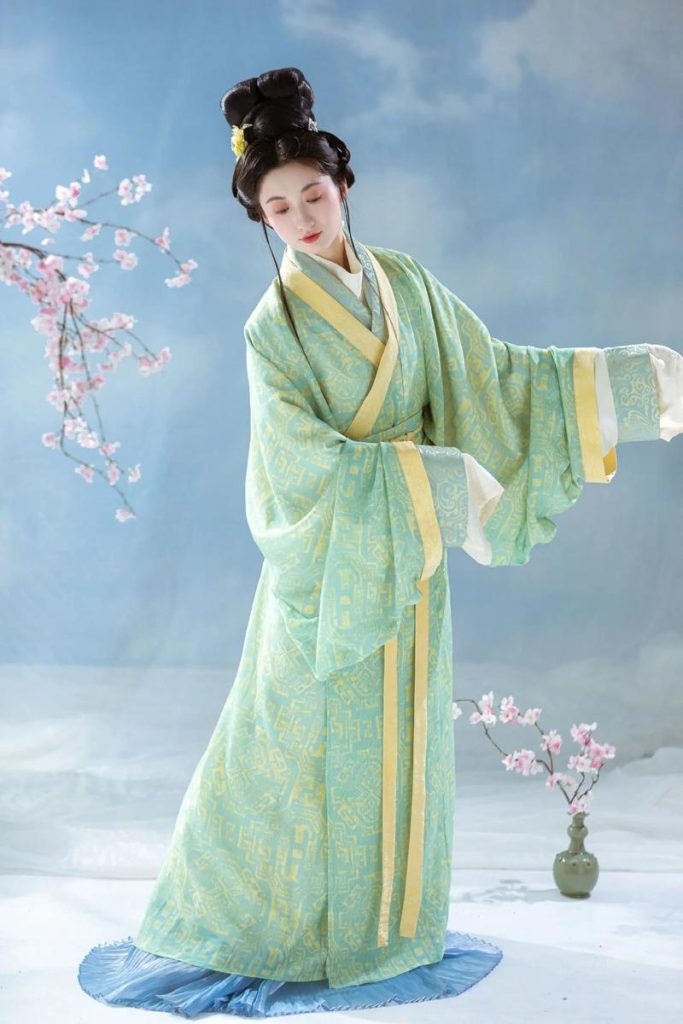
Shenyi holds a special place in Confucian ritual culture. Classical texts emphasize the importance of appropriate dress as a reflection of moral character and social harmony.
The structured form of Shenyi symbolizes:
- Order and discipline
- Modesty and restraint
- Respect for ritual and hierarchy
Because of these values, Shenyi was often worn during ceremonies, scholarly activities, and formal occasions.
- Shenyi vs Ruqun: Ruqun consists of a separate jacket and skirt, while Shenyi is a one-piece garment.

- Shenyi vs Pao (robes): Later robes evolved from Shenyi but often feature simpler construction and different sleeve or collar styles.

Due to its early origin and structural influence, Shenyi is frequently described as the ancestor of many later Hanfu forms.
With the rise of the modern Hanfu movement, Shenyi has regained popularity among enthusiasts and cultural practitioners. Today, it is worn at:
- Traditional festivals
- Cultural ceremonies
- Hanfu photoshoots
- Educational and reenactment events
Modern Shenyi designs often balance historical accuracy with comfort and aesthetics, resulting in both research-based (historical) and modern-adapted versions.
When identifying Shenyi, consider the following:
- Is the garment constructed as a single continuous piece?
- Does it feature jiaoling youren?
- Is the hem structure consistent with Quju or Zhiju styles?
- Are modern elements clearly separated from historical design?
Many modern outfits are “Shenyi-inspired” but do not strictly follow traditional construction methods.
Is Shenyi considered Hanfu?
Yes. Shenyi is a core form within the Hanfu system.
Can modern people wear Shenyi?
Absolutely. Today, Shenyi is worn for cultural appreciation and ceremonial occasions.
Is Shenyi suitable for daily wear?
Historically, yes. Today, it is more commonly worn for formal or cultural events.
Does Shenyi vary by dynasty?
Yes. Details such as length, wrapping style, and sleeve shape evolved over time.
Shenyi is more than an ancient robe—it is a symbol of early Chinese aesthetics, philosophy, and social order. As one of the earliest structured Hanfu garments, it laid the foundation for centuries of traditional clothing design.
By understanding Shenyi, we gain deeper insight into the origins of Hanfu and the cultural values woven into every fold of traditional Chinese dress.