

Imagine a delicate blouse paired with a gracefully flowing skirt—soft fabrics whispering with every step, colors echoing ancient poetry. This is Ruqun (pronounced “roo-chwen”), one of the most iconic and enduring styles in traditional Chinese dress. For centuries, Ruqun has adorned women across dynasties, symbolizing grace, modesty, and cultural refinement. Today, it’s experiencing a vibrant revival among global Hanfu enthusiasts.
Whether you’re new to Hanfu or looking to deepen your appreciation, this guide will walk you through the history, styles, and modern charm of Ruqun—and maybe even inspire you to wear one yourself.
Ruqun’s roots stretch back over 2,000 years. Archaeological finds from the Warring States period (475–221 BCE) already show women wearing short upper garments with long skirts—a foundational silhouette that would evolve dramatically over time.

- During the Han Dynasty (206 BCE -220 CE), Ruqun was simple and modest, often made of plain silk or hemp, reflecting Confucian ideals of humility.
- The Tang Dynasty (618 – 907 CE) brought boldness: high-waisted skirts tied above the bust, low-cut blouses, and vibrant dyes like crimson and turquoise. Tang women embraced fashion as self-expression in a cosmopolitan empire.
- In the Song Dynasty (960 -1279), aesthetics shifted toward restraint—narrower sleeves, softer hues, and refined lines mirrored the era’s scholarly elegance.
- By the Ming Dynasty (1368 – 1644), Ruqun featured structured blouses with stand-up collars and intricately pleated skirts like the famous mamianqun (“horse-face skirt”).
Ruqun faded during the Qing Dynasty (1644 -1912) when Manchu-style clothing became mandatory. But its legacy never disappeared—and today, it’s flourishing once more.
Ruqun literally means “blouse (ru) + skirt (qun).” It’s always a two-piece outfit, distinguishing it from one-piece robes like the shenyi.
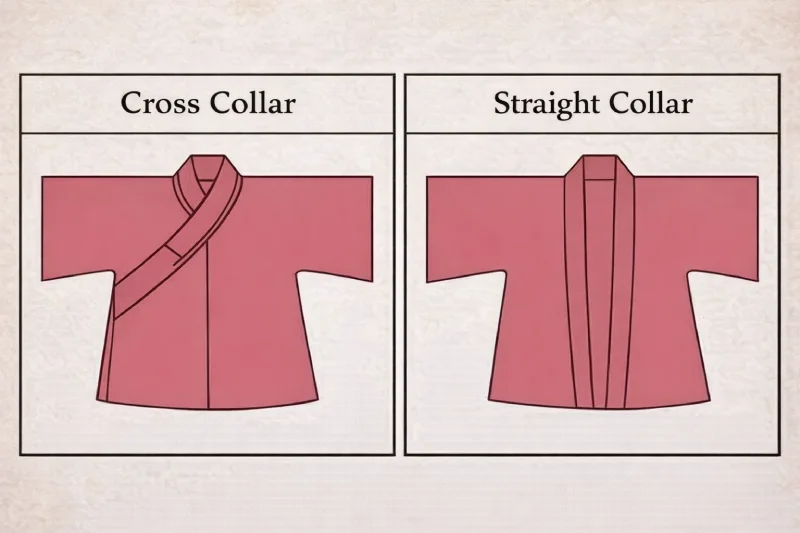
- Collar styles: Most traditional Ru feature a jiaoling youren (crossed collar closing to the right), though duijin (parallel front opening) styles also exist.
- Sleeves: Can be wide and dramatic (popular in Tang-inspired sets) or narrow and practical (common in Song and Ming styles).
- Length: Typically hip-length, though some historical variants are cropped.
- Waist placement:
- Qixiong Ruqun: Skirt tied at chest level (Tang style).
- Qiyao Ruqun: Skirt tied at natural waist (Song/Ming style).
- Skirt types:
- Mamianqun: Panels with flat front/back and pleated sides—elegant and functional for walking.
- Baizhequn: “Hundred-pleat skirt,” lightweight and fluid.
- Fabrics & patterns: Silk, ramie, or cotton; decorated with motifs like peonies (prosperity), clouds (good fortune), or phoenixes (feminine power).
- Qixiong Ruqun (High-Chest Ruqun)
The quintessential Tang look—think flowing sleeves, bright silks, and a sash cinched just under the bust. Often seen in classical paintings and modern dramas like The Longest Day in Chang’an.

Inspired by the Tang-style Ruqun above, here’s a similar style you can shop:
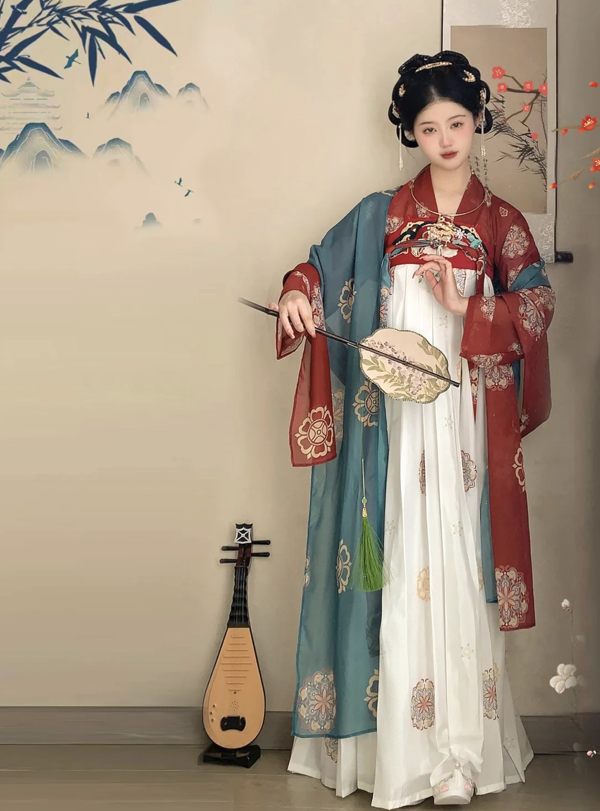
If you also like this Tang-style Ruqun Hanfu, click below to view more details:
👉 https://fas.st/pSQkY
- Qiyao Ruqun (Waist-High Ruqun)
More common from the Song onward, this style emphasizes vertical lines and subtle movement. Perfect for those seeking understated elegance.

- Modern Ruqun
Contemporary designers blend tradition with comfort: elastic waistbands, machine-washable fabrics, and simplified closures make Ruqun wearable for daily life, festivals, or photoshoots.
Wearing Ruqun is easier than it looks! Here’s how:
- Start with the skirt: Wrap it around your waist (or chest, for Qixiong style), secure with ties or hidden hooks.
- Layer the blouse: Put on the ru, cross the left side over the right (never the reverse—that’s reserved for funeral attire!), and tie the inner and outer sashes.
- Add accessories: A light outer jacket (beizi) for cooler days, embroidered shoes, and hairpins complete the look.
- Mind the occasion: Choose pastel tones for tea ceremonies, bold reds for Lunar New Year, or white-and-blue sets for spring outings.
Ruqun isn’t just clothing—it’s a language of values. Its balanced proportions reflect the Chinese ideal of yin-yang harmony. The layered structure embodies modesty, while the freedom of the skirt symbolizes grace in motion.
Historically, Ruqun was worn by women of all classes—from palace ladies to village girls—making it a true people’s garment. Though primarily associated with women today, early forms were sometimes worn by young boys before adulthood.
Ruqun also plays a role in seasonal traditions, especially the Shangsi Festival (Double Third Festival), when people celebrate spring by riversides in flowing Hanfu.

Thanks to social media, Hanfu communities have exploded worldwide. On TikTok and Instagram, #Ruqun has millions of views—showcasing everything from museum-accurate recreations to streetwear-inspired mixes.
Brands now offer Ruqun in sustainable fabrics, inclusive sizes, and travel-friendly designs. Many wearers see it as a form of slow fashion—a conscious choice against fast, disposable trends.
Most importantly, wearing Ruqun has become an act of cultural pride and creative expression—not just for Chinese diaspora, but for anyone drawn to its beauty and history.
Ruqun is more than a historical costume. It’s a living tradition—adaptable, poetic, and deeply human. Whether you’re drawn to the romantic swirl of a Tang-era skirt or the quiet dignity of a Ming-style set, there’s a Ruqun that speaks to you.
So why not take the first step? Explore our curated collection, try on a set, or simply admire the artistry. In every fold and stitch, you’ll find centuries of stories waiting to be worn anew.